• 3 min de lectura
Xiaomi Smart Storage pricing signals a push into the NAS market
Xiaomi has finally stepped into the NAS market with Xiaomi Smart Storage, a home storage box meant to sit at the center of its device ecosystem rather than just swallow files in a corner of the networ
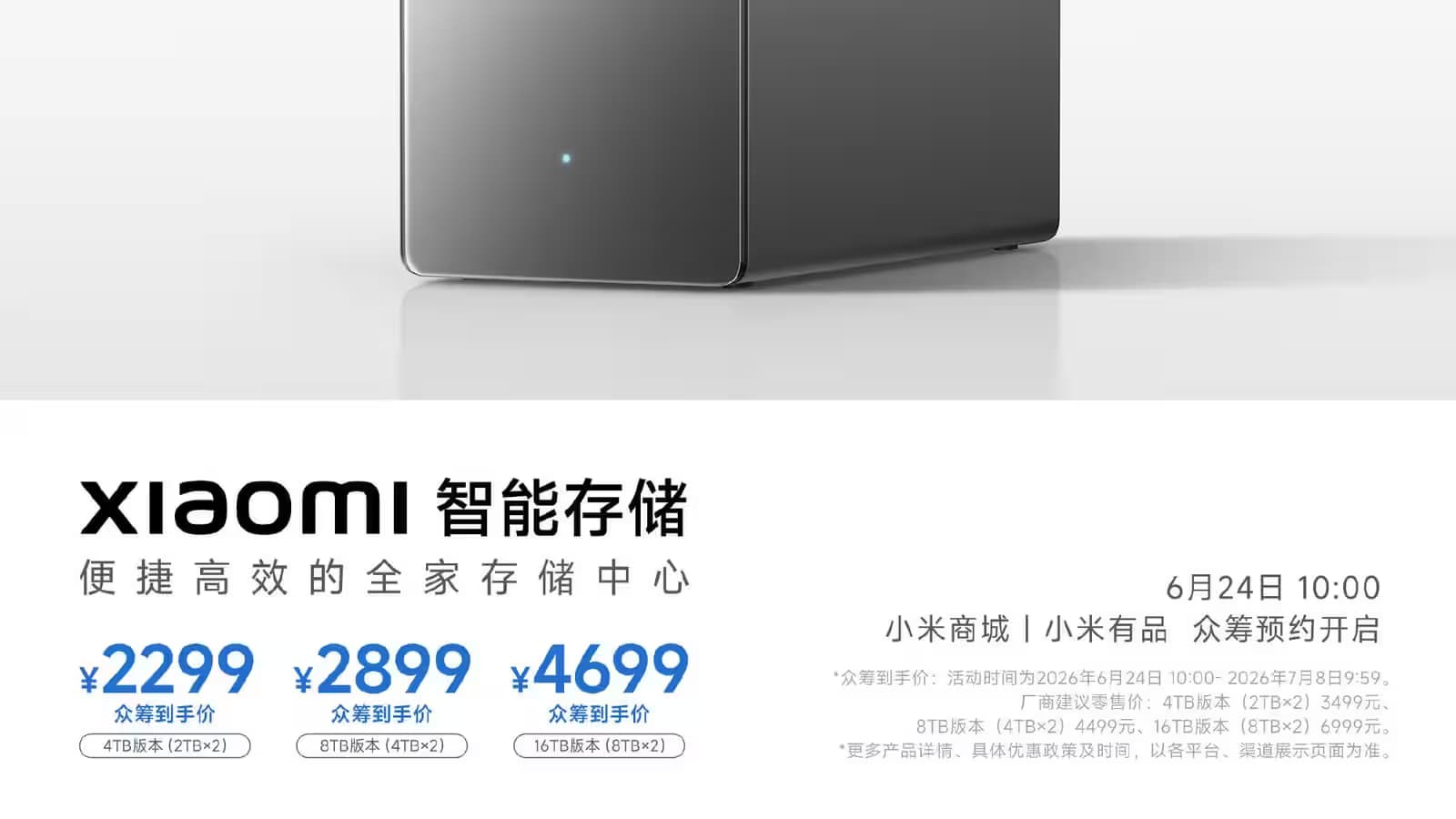
Imagen: ixbt.com
Xiaomi finalmente ha entrado en el mercado de NAS con Xiaomi Smart Storage, una caja de almacenamiento doméstico diseñada para situarse en el centro de su ecosistema de dispositivos en lugar de limitarse a engullir archivos en un rincón de la red. La compañía ha abierto pedidos anticipados a través de Xiaomi Mall y Xiaomi Youpin, y el argumento es sencillo: hacer que el almacenamiento compartido parezca menos un proyecto de aficionado y más parte de la pila de Xiaomi.
El precio parte de 340 dólares, con versiones de mayor capacidad disponibles por 425 dólares y 690 dólares. Eso coloca a Xiaomi en un territorio conocido: no lo bastante barato para ser una compra por impulso, pero tampoco tan caro como para entrar instantáneamente en el terreno empresarial.
Los dispositivos NAS han estado dominados durante mucho tiempo por Synology, QNAP y Western Digital, mientras que las marcas de consumo en su mayoría se mantenían al margen o trataban el almacenamiento en red como una ocurrencia tardía. Xiaomi apuesta a que hay espacio para una alternativa más sencilla y orientada al ecosistema, especialmente para los hogares que ya usan sus teléfonos, televisores y dispositivos de hogar inteligente.

Recomendado
Samsung lanza Music Studio 5 y 7 en India
Xiaomi Smart Storage prices
The pricing is split into three configurations:
- 4 TB: 340 dólares
- 8 TB: 425 dólares
- 16 TB: 690 dólares
That puts Xiaomi in familiar territory: not cheap enough to be impulse-buy hardware, but not so expensive that it instantly plays in the enterprise sandbox. The real test will be whether the software feels polished enough to justify buying into yet another closed ecosystem.
What Xiaomi Smart Storage is for
Xiaomi describes Smart Storage as a centralized home data store designed to make file access easier across its own ecosystem. In practical terms, that means the product is being framed less as a traditional NAS for tinkering power users and more as a shared vault for households that already live inside Xiaomi’s world.
That approach is smart, because the average buyer does not dream about RAID levels or backup rules. They want photos, videos, and documents to show up everywhere without a scavenger hunt. If Xiaomi can make that friction disappear, it has a real shot at turning a niche category into a mainstream appliance.
The challenge for Xiaomi Smart Storage
The hard part is not announcing a NAS. It is convincing people to trust Xiaomi with their data while also delivering enough app support, privacy controls, and speed to stand up against brands that have been refining this category for years. With storage hardware, the box is only half the product; the software experience decides whether the thing gets used or quietly becomes an expensive shelf ornament.
Still, Xiaomi’s move makes sense. As smart homes get denser and cloud storage keeps getting pricier, home NAS devices are due for another push, and Xiaomi is trying to make that push from inside its own ecosystem rather than as a pure storage vendor.

Frontier Editor
Dan is our resident futurist, covering electric mobility, space exploration, and the smart home. He's interested in atoms just as much as bits. Whether it's a new battery chemistry, a reusable rocket, or a protocol that finally makes IoT devices talk to each other, Dan breaks down the engineering that pushes humanity forward.
vía ixbt.com