• 2 min read
ASIC warns Gen Z against trusting finfluencers and AI for financial advice
Australia’s financial watchdog, ASIC, has flagged concerns over young investors relying heavily on social media influencers and AI chatbots for financial guidance. A recent survey reveals that a significant portion of Ge
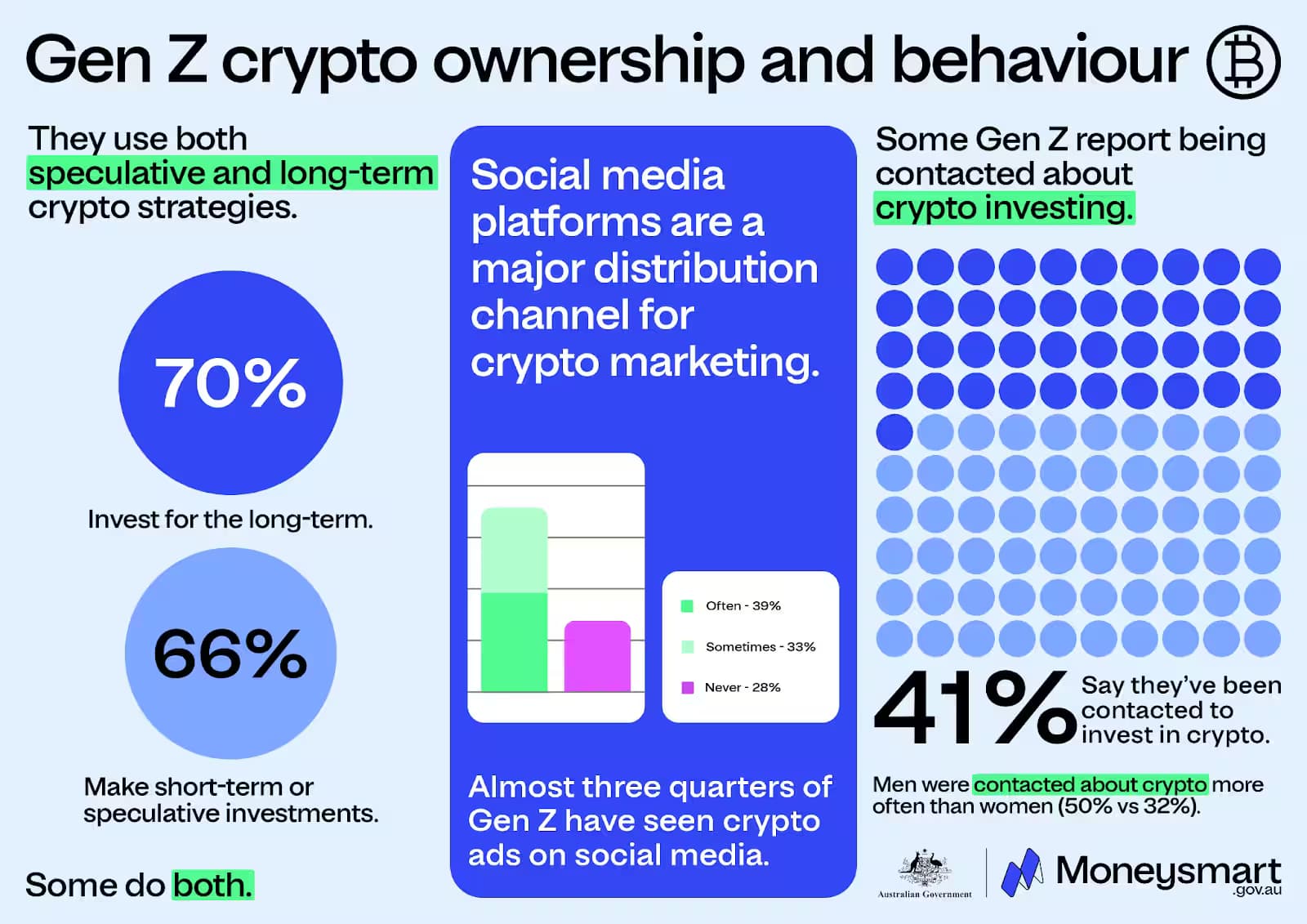
Australia’s financial watchdog, ASIC, has flagged concerns over young investors relying heavily on social media influencers and AI chatbots for financial guidance. A recent survey reveals that a significant portion of Gen Z, aged 18-28, turns to these often unreliable sources-driving riskier investment behaviors, especially in volatile assets like cryptocurrencies.
The ASIC-backed study, surveying over 1,100 young Australians, found that 63% use social media for financial information and 18% consult AI platforms, while 56% trust financial content from social media to some extent. This trust extends to “finfluencers” specifically, with 52% expressing confidence in these self-styled financial gurus. Surprisingly, AI received even higher trust at 64%, though ASIC stresses that AI-derived advice can lack necessary licensing safeguards.
The surge in crypto involvement is notable: nearly one in four Gen Z investors own cryptocurrencies, and approximately 29% of these users trade based on social media or influencer tips. ASIC warns this often leads to unrealistic expectations about sudden profits and downplays long-term market risks. Commissioner Alan Kirkland highlighted that much of the crypto-related marketing on social media can push consumers toward scams or impulsive trades that few fully understand.
Kirkland further pointed out the dangers posed by unqualified advice targeting superannuation funds, a massive $4.5 trillion retirement pot in Australia. Influencers often entice young investors to switch super funds toward riskier investments, placing life savings at unnecessary risk.
Beyond social media, ASIC is keeping a close watch on AI tools dispensing financial advice. Australian law mandates licensing for any entity delivering personal financial recommendations. If AI platforms provide tailored investment advice without proper licensing, they could be operating unlawfully. Several crypto exchanges like MEXC, KuCoin, and Bitget have already integrated AI bots to offer personalized trading tips, prompting regulatory scrutiny.

Recommended reading
Apple broadens OpenAI fight as hardware ambitions grow
While young Australians show remarkable trust in AI financial advice, ASIC reminds that the accuracy and reliability of such information depend heavily on the questions asked and the quality of data AI draws from. The regulator also flagged crypto and AI companies exploiting loopholes in payment regulations as a top focus for enforcement in 2026.
The warnings come amid rising concerns globally about misinformation in financial education through digital channels. ASIC’s early intervention signals a stricter regulatory stance ahead, especially as younger investors with less market experience continue embracing new technologies and fast-paced digital advice sources.

AI Editor
Ava covers the rapidly evolving world of artificial intelligence, from foundational models and research labs to the real-world economics of intelligence. With a background in computational linguistics, she cuts through the hype to find out what actually works. She firmly believes that benchmarks are just marketing until reproduced in the wild.