• 3 min read
ELIZA saw our ChatGPT confessions coming
A book excerpt on ELIZA argues the 1960s chatbot explains why people still project empathy and intelligence onto systems like ChatGPT.
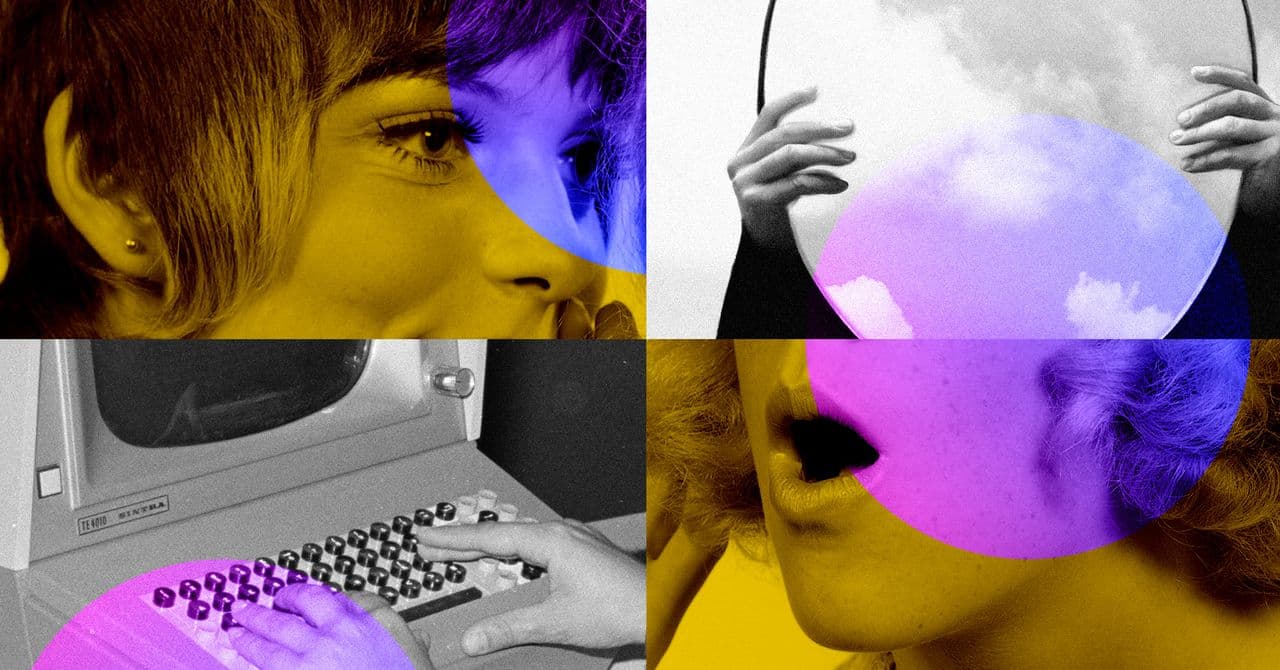
Image: Wired
Long before ChatGPT, ELIZA showed how quickly people would open up to a machine. A new excerpt from Inventing ELIZA argues that the 1960s program did more than launch the chatbot archetype: it exposed a persistent human tendency to read empathy, intelligence, and authority into software that only appears to understand us.
The authors say a key piece of ELIZA’s history has been missing for decades: the original source code, recovered from the MIT Archives. Their research points to not one ELIZA but many versions, built to run different scripts and personas beyond the famous DOCTOR mode. That matters because ELIZA has often been reduced to a simple myth: the first chatbot, supposedly so persuasive it even fooled the secretary watching Joseph Weizenbaum build it.
The better-known sample exchange still lands because of how little it does:
“Men are all alike.” “IN WHAT WAY” “They’re always bugging us about something or other.” “CAN YOU THINK OF A SPECIFIC EXAMPLE” “Well, my boyfriend made me come here.” “YOUR BOYFRIEND MADE YOU COME HERE” “He says I’m depressed much of the time.” “I AM SORRY TO HEAR YOU ARE DEPRESSED”
What fascinated Weizenbaum was not whether ELIZA was intelligent, but why users treated it as if it were. He later described people addressing the computer “in intimate terms,” despite its lack of understanding. That response became known as the ELIZA effect: the tendency to attribute far more intelligence to responsive software than it deserves.

Recommended reading
AI use may erode willingness to say 'I don’t know'
As the excerpt notes, Sherry Turkle defined the term as “our more general tendency to treat responsive computer programs as more intelligent than they really are,” while Douglas Hofstadter described it as reading too much understanding into computer-generated strings of words. The comparison to modern generative AI is explicit.
How ELIZA shaped the chatbot interface
Weizenbaum himself was clear in 1966 that ELIZA was never meant to pass the Turing test. In his paper introducing the system, he wrote that its purpose included concealing “its lack of understanding.” The authors argue that this makes ELIZA a useful lens for current AI systems, whose fluent chatbot interfaces can still hide how much of the output depends on statistical prediction, rules, and human labor.
They also connect ELIZA to questions of gender and performed identity. The program’s name came from Eliza Doolittle in Pygmalion, a character taught to pass through linguistic performance. In that reading, ELIZA did not just simulate conversation; it staged a persona.
The excerpt argues that the same tensions now animate large language models. Their interfaces invite trust and disclosure, while obscuring the machinery underneath and the human labor embedded in their training data. Weizenbaum warned that stripping language from its social context could be dehumanizing, and the authors suggest that warning has only grown more relevant as companies like OpenAI and Anthropic push conversational systems into everyday life.
For all the technical distance between ELIZA and modern models, the continuity is hard to miss: users still meet a chat window, project a mind behind it, and start telling it things they might not tell anyone else.

AI Editor
Ava covers the rapidly evolving world of artificial intelligence, from foundational models and research labs to the real-world economics of intelligence. With a background in computational linguistics, she cuts through the hype to find out what actually works. She firmly believes that benchmarks are just marketing until reproduced in the wild.
via Wired