• 2 min read
Micron’s 245.76TB SSD posts standout benchmark gains
Micron’s 6600 ION packs 245.76TB and 64GB of DRAM, with benchmark results that beat several published specs in enterprise testing.
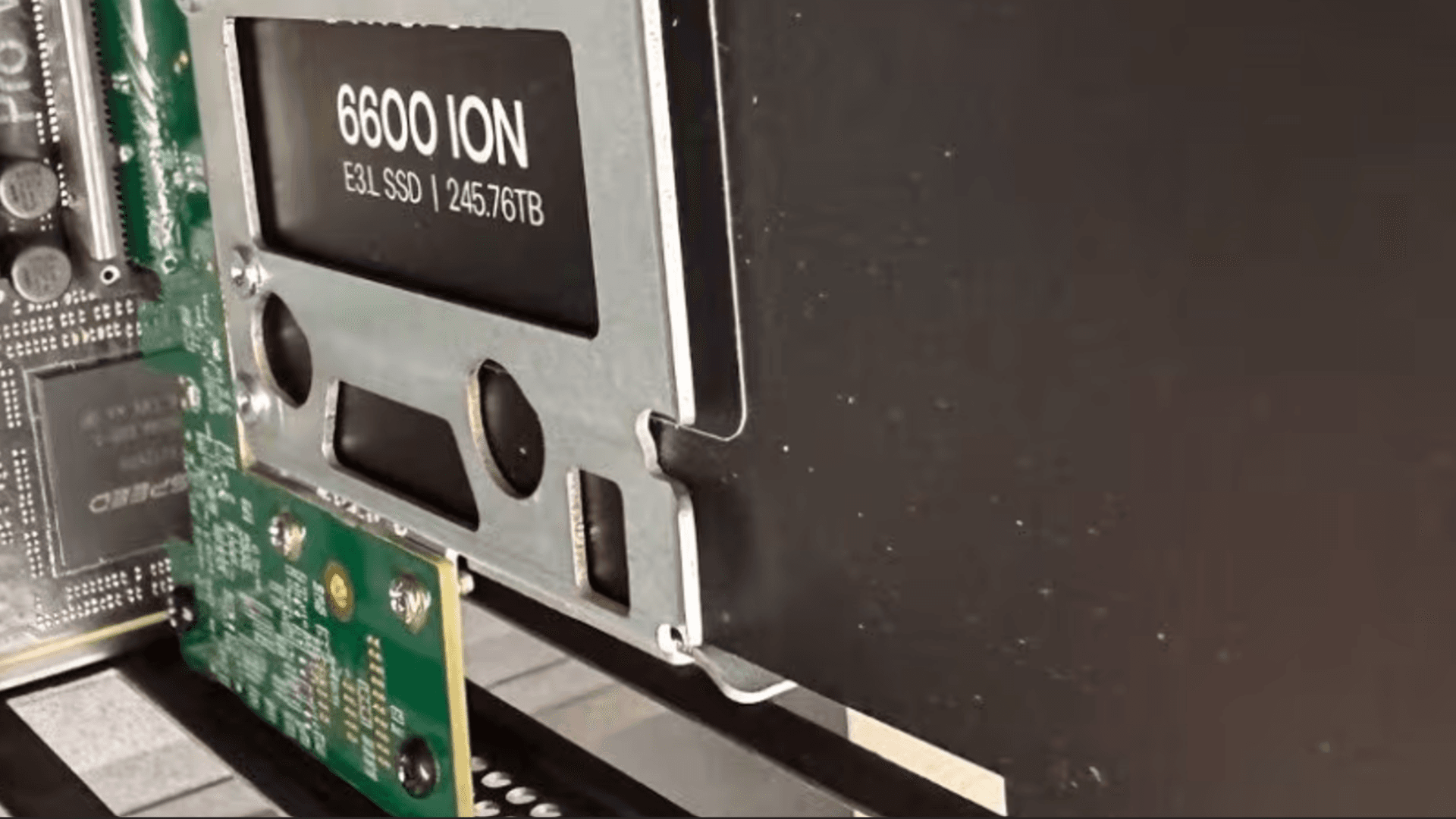
Image: TechRadar
Micron’s 6600 ION is an unusually aggressive take on the ultra-high-capacity enterprise SSD. The 245.76TB drive, built in the E3.L form factor, pairs QLC flash with a notably large 64GB of onboard DRAM—and early testing suggests that design choice gives it a clear edge in random write performance.
In a review for TweakTown, Jon Coulter gave the drive a 99% score and called it “the one to beat in its class.” The main reason is Micron’s memory configuration. While many SSDs near 256TB—including the DapuStor 245.76TB PCIe Gen5 SSD cited by TechRadar—use a 16:1 NAND-to-DRAM ratio, leaving them with around 16GB of onboard memory at this capacity, Micron uses a 4:1 ratio instead.
That larger DRAM pool is used to index random write operations, helping the 6600 ION sustain roughly 50,000 random write IOPS at queue depth 256. That is above Micron’s official 42,000 IOPS specification. TechRadar says rival 245.76TB drives using a 64K indirection unit manage only about 15,000 IOPS for random writes under similar conditions—more than three times slower than Micron’s result.
Sequential throughput was also slightly ahead of spec in the reported tests, reaching up to 13,900 MB/s read and 3,159 MB/s write. Random read performance hit around 1.78 million IOPS, matching Micron’s published figure. The benchmarks were run on a system with an Intel Xeon w7-2495X processor on a PCIe Gen5 platform using Ubuntu Linux.

Recommended reading
AI Coding Agents Keep Babel Standing
Pricing remains the biggest unknown. Micron has not published an official price, and while online reports have suggested the drive could cost more than $100,000, TechRadar notes there is no confirmed listing for that figure. The drive ships with a 5-year limited warranty, supports Linux, Windows Server, and VMware ESXi, and carries a 1-drive-write-per-day endurance rating, along with power-failure protection and full data-path protection.
For now, the headline result is clear: Micron appears to have built a 245.76TB SSD that outpaces several of its own official specs, but its true standing will depend on what customers are actually asked to pay.

Enterprise Editor
Marcus follows the money. He covers enterprise software, cloud architecture, and the tectonic shifts in Big Tech strategy. He translates dense earnings calls and complex M&A activity into actionable insights about where the industry is actually heading. If a tech giant makes a silent pivot, Marcus is usually the first to notice.
via TechRadar