• 2 min read
Russian Transport University patents traction motor with spiral cooling fins
Researchers at the Russian University of Transport (RUT) have secured a patent for a traction electric motor featuring an improved cooling system. The upgrade targets the motor’s hottest spots-the armature and collector-
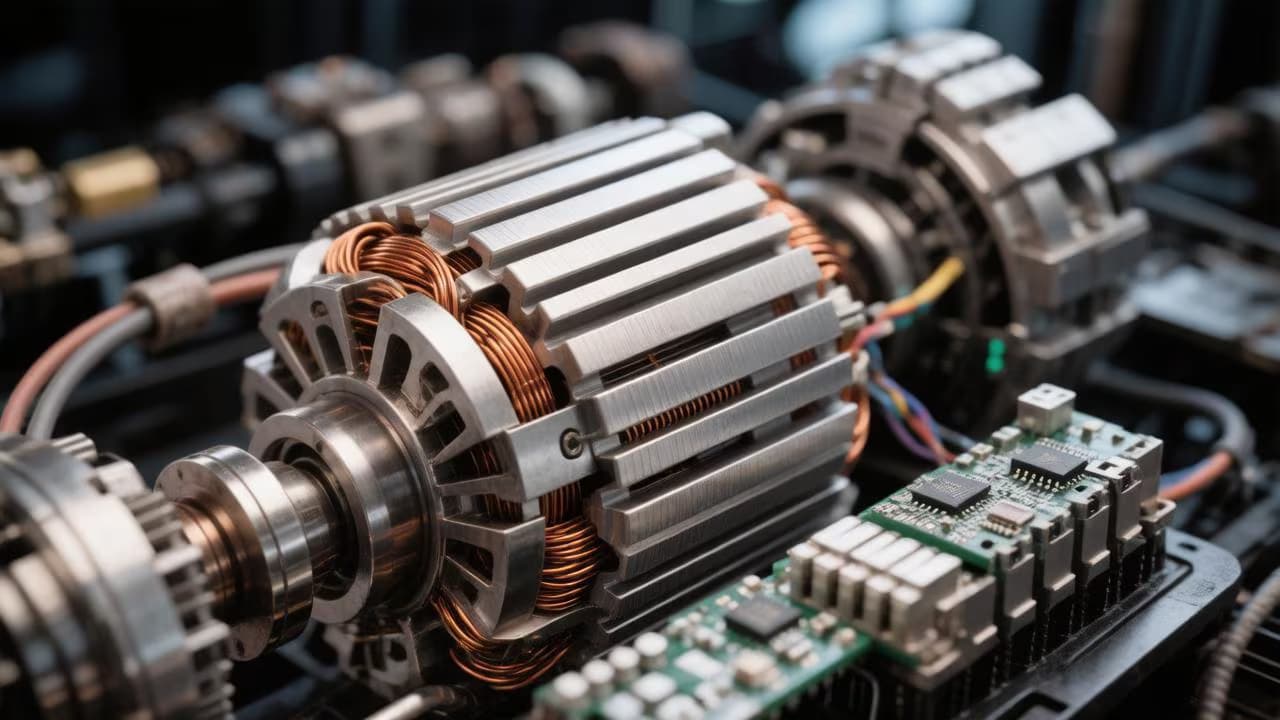
Image: www1.ru
Researchers at the Russian University of Transport (RUT) have secured a patent for a traction electric motor featuring an improved cooling system. The upgrade targets the motor’s hottest spots-the armature and collector-where heat buildup during prolonged heavy use can dramatically reduce lifespan. For railway traction motors, better heat dissipation means less wear, fewer breakdowns, and lower maintenance costs.
The design incorporates an air duct fitted with a box channel that directs cooling air into the motor. On the side facing the collector, engineers added spiral-shaped fins that radiate from the top edge of the box, running tangentially along the collector’s armature surface. This configuration optimizes airflow to the areas experiencing the greatest heat stress, boosting heat transfer efficiency precisely where it is needed most.
The patent explains that this fin shape helps prevent overheating during extended operation-a critical concern for traction motors that face frequent starts, stops, and load fluctuations. Overheating can degrade not just the collector but also the insulation, brushes, and the motor as a whole, shortening service life.
Forced-air cooling through ducts and fans is a well-established method for railway traction motors and serves as an alternative to the more complex and costly liquid cooling systems. While automotive and some industrial electric motors increasingly adopt liquid cooling for stators, large transport machines still rely mainly on air cooling, which offers easier maintenance and simpler design.

Recommended reading
WhatsApp begins enabling usernames on iPhone
Though developed with rail applications in mind, this spiral-fin cooling innovation could benefit any heavy-duty electric motor running continuously under high loads. Prototype testing and bench trials will evaluate metrics such as temperature control, lifespan, and energy losses to determine if this new fin geometry delivers a significant advantage over conventional air duct designs.

Computing Editor
Tomas lives in the terminal. He covers chips, laptops, and operating systems with a focus on performance and efficiency. He reads kernel changelogs the way other people read fiction, and he's always on the hunt for the perfect mechanical keyboard switch. If it processes data, Tomas has an opinion on it.
via www1.ru