• 2 min read
AI spots 3D printers' quirks to reduce factory errors
Researchers at IMDEA Materials and Lawrence Berkeley built an algorithm that profiles nominally identical 3D printers and cuts failed runs.
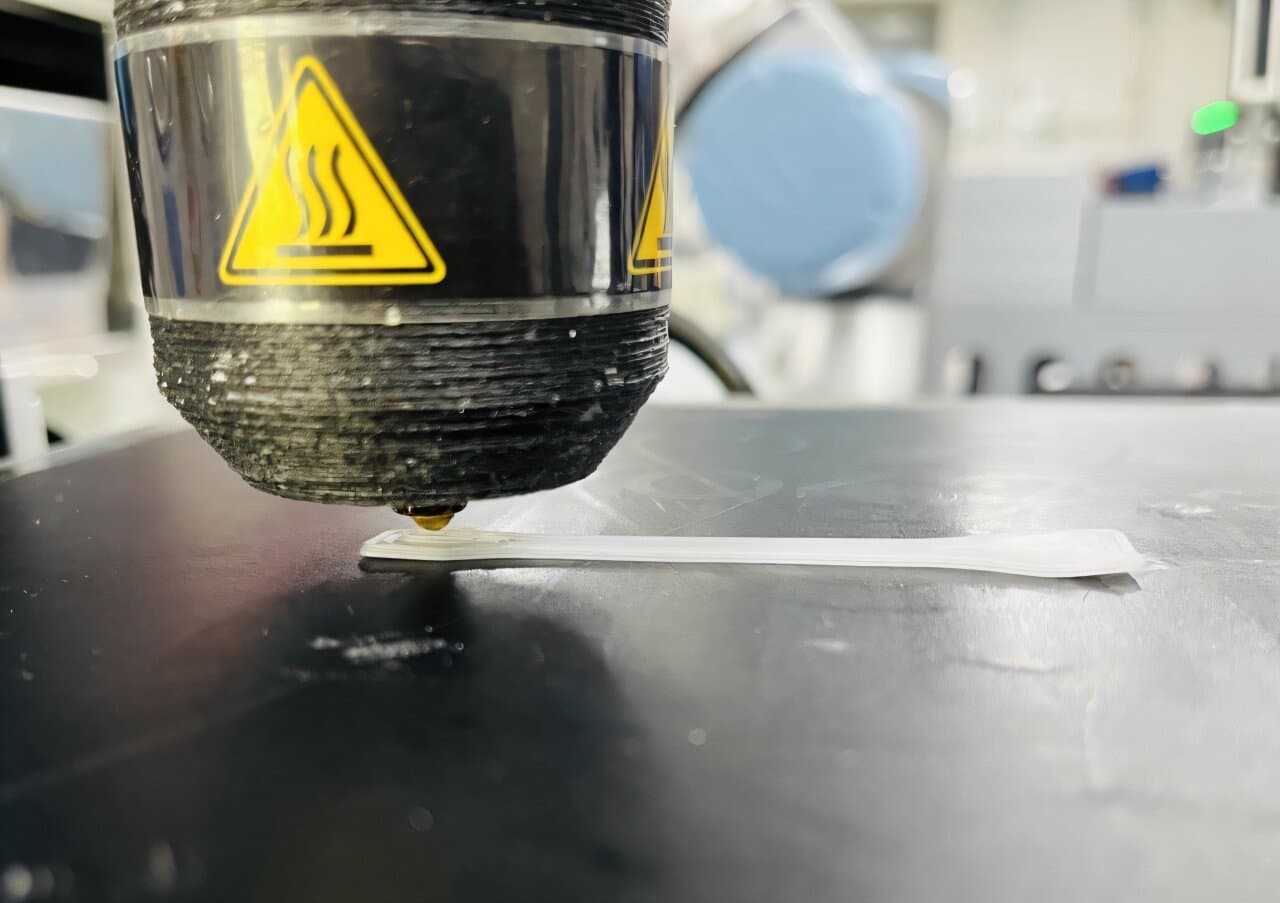
Image: TechXplore
Three supposedly identical 3D printers can behave like three different machines, and that mismatch can quietly snowball into manufacturing defects. Researchers at IMDEA Materials Institute, working with Lawrence Berkeley National Laboratory, say they have built an algorithm that detects each machine’s operational “personality” and chooses the right optimization strategy to improve reliability in automated production.
The system, published in Advanced Engineering Informatics, measures subtle differences between nominally identical machines and decides whether they should be optimized together or treated separately. If the printers are close enough in behavior, it applies a shared optimization approach for efficiency. If their performance diverges, it switches to per-machine optimization to improve accuracy.
In the team’s test, three theoretically identical 3D printers did not, in fact, produce identical results. The algorithm found measurable differences between them and concluded that each printer needed its own optimization strategy. According to the paper, analyses of printed pellet density and pairwise divergence metrics showed that each machine operated in a distinct output regime.
The researchers said this led to faster convergence and a substantial reduction in errors in the weight of printed parts compared with treating all machines the same.

Recommended reading
Microsoft taps Mistral in multi-billion AI infrastructure deal
“Even mass-produced machines may have their own operational 'personality.' Our system learns these differences and uses them to our advantage, determining whether it is more efficient to treat them as a team or as individuals.”
The work is aimed at parallel production systems such as 3D printing farms, where small variations can undermine reproducibility, especially in precision-heavy areas including architecture and the aerospace industry. The same method could also be used in materials discovery, chemical synthesis, and sensor calibration.
The study was conducted by Dr. Christina Schenk, Miguel Hernández del Valle, Luis Calero, Dr. Maciej Haranczyk, and Dr. Marcus Noack. It appears as “Noise-aware optimization in nominally identical manufacturing and measuring systems for high-throughput parallel workflows” with DOI 10.1016/j.aei.2026.104960.

Enterprise Editor
Marcus follows the money. He covers enterprise software, cloud architecture, and the tectonic shifts in Big Tech strategy. He translates dense earnings calls and complex M&A activity into actionable insights about where the industry is actually heading. If a tech giant makes a silent pivot, Marcus is usually the first to notice.
via TechXplore