• 2 min read
Three New Rockets Move Closer to 2026 Debuts
Relativity Space, Rocket Lab, and PLD Space have all hit key test milestones as Terran R, Neutron, and Miura 5 move toward first launches in 2026.
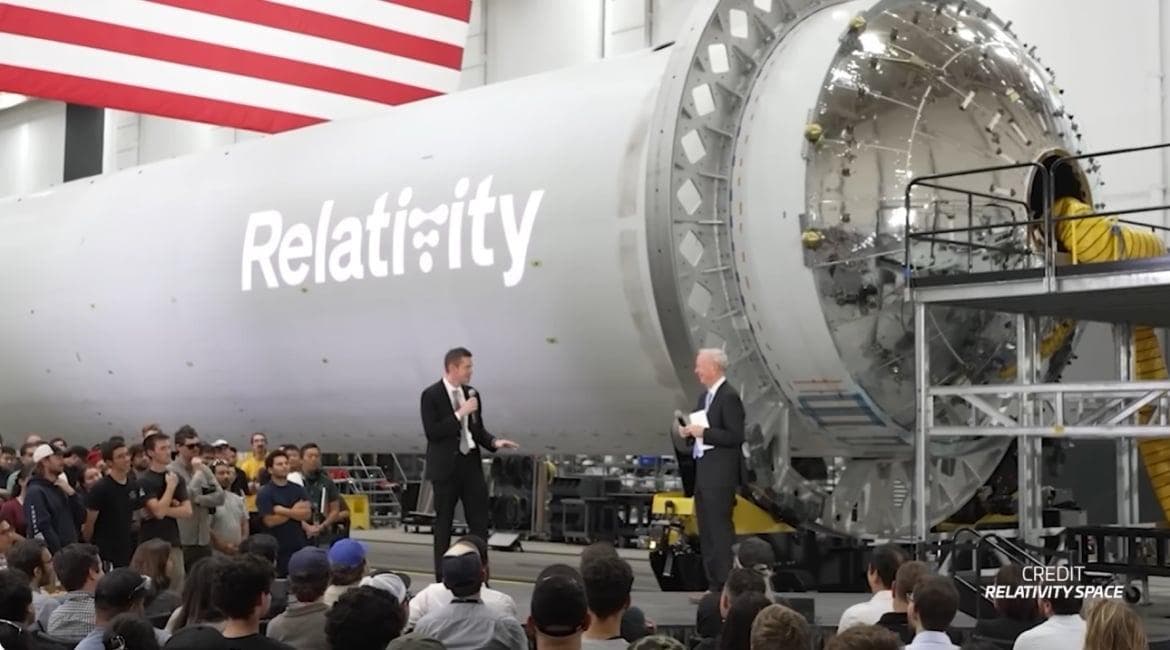
Image: iXBT
Three companies aiming for first orbital launches in 2026 have reached important test milestones as attention across the space industry remains fixed on Starship. Relativity Space, Rocket Lab, and PLD Space are each validating engines, propellant tanks, and ground systems ahead of full integration and launch attempts.
Relativity Space is continuing work on Terran R, a medium- to heavy-lift rocket with a reusable first stage. The vehicle will use 13 Aeon R engines on the first stage and one Aeon V vacuum engine on the second stage. Both run on liquid methane and liquid oxygen using a gas-generator cycle.
The company has finished building a qualification first-stage article and has begun testing it on a dedicated stand near its production complex. Engineers are running tank tests at operating pressure while applying mechanical loads meant to simulate flight conditions. Those cycles are intended to verify that the structure can handle repeated reuse.
The Terran R second stage has also arrived at NASA’s Stennis Space Center in Mississippi for engine hot-fire preparations. Relativity is installing exhaust protection systems, including a large flame deflector, along with personnel access equipment. All 13 Aeon R engines for the first flight’s first stage have already completed acceptance testing, and testing has started on the first flight Aeon V engine. Construction of launch pad LC-16 at Cape Canaveral is continuing in parallel.
Recommended reading
Too Much Power Could Make Electricity Prices Go Negative
Rocket Lab is preparing Neutron, a medium-lift rocket with a partially reusable architecture, for its first launch. One of the design’s defining features is a fairing integrated into the returning first stage, remaining part of the system through ascent and landing. Neutron will use the new methane-oxygen Archimedes engines.
The company has successfully completed a full-scale hot-fire test of the vacuum version of the Archimedes second-stage engine. According to the source, this version produces about 1.2 times more thrust than the first-stage version and uses a nozzle extended by about 2.5 m for vacuum operation. For the ground test, Rocket Lab used a shortened nozzle configuration to avoid the risk of exhaust flow instability in Earth’s atmosphere. Neutron’s first launch is now scheduled for Q4 2026.
Spain’s PLD Space has completed propellant tank testing for both stages of Miura 5, the company’s first orbital launcher. The rocket is designed for small satellite missions and uses RP-1 kerosene and liquid oxygen. The tests validated pressurization system stability, avionics and software operation, and the correct behavior of feed and pressure-release systems.
With those checks complete, PLD Space is moving on to tests of fully assembled stages. Production of the first flight rocket has already begun. The company plans reusable first-stage variants later, but its initial Miura 5 missions are intended to build operational experience first.

Frontier Editor
Dan is our resident futurist, covering electric mobility, space exploration, and the smart home. He's interested in atoms just as much as bits. Whether it's a new battery chemistry, a reusable rocket, or a protocol that finally makes IoT devices talk to each other, Dan breaks down the engineering that pushes humanity forward.
via iXBT