• 2 min read
AI Law Tracker maps US, EU and global rules via one API
AI Law Tracker offers a free JSON API and live registry for AI laws across US states, Congress, the EU, and other jurisdictions.
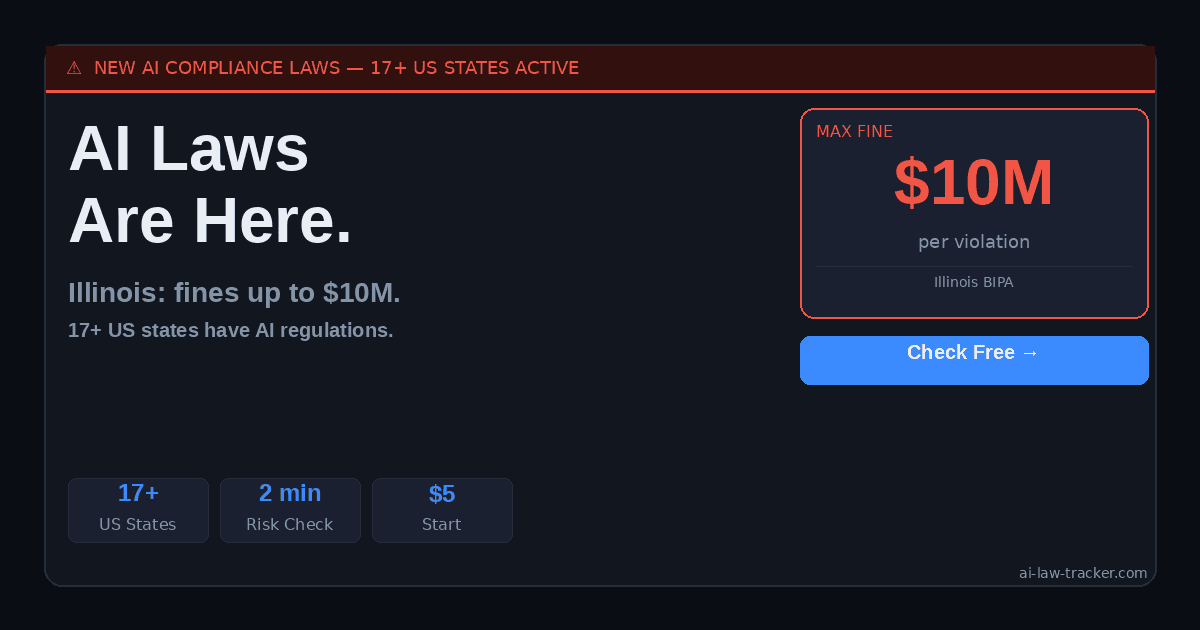
Image: Hacker News
AI Law Tracker is pitching a simple idea to developers and compliance teams: one audited source for AI laws, bills, deadlines, and status changes across the US, EU, and global jurisdictions.
The site says its data comes from an audited bill registry, with every listed status and date linked back to the primary government source. It also offers a free, self-serve JSON API with a changelog and webhooks, covering US state and federal law, EU rules, and global AI legislation. There is no card required for an API key, according to the site.
A separate Free AI Risk Snapshot asks users four questions and returns which AI laws may apply to their business, a risk level, and suggested first actions. The site says no email is required.

Recommended reading
FBI eyes Nvidia and Google TPU AI systems
As of July 17, 2026, the tracker also highlights live policy and legislative updates from across the US. On the federal side, it lists recent AI-related bills in the 119th Congress, including:
- HR 9715, on allowing the use of AI in arbitration, referred to the House Committee on the Judiciary on July 15, 2026
- HR 9706, requiring wagering or prediction market platforms to use facial recognition technology for age verification, referred to the Committee on Agriculture and the Committee on Energy and Commerce on July 15, 2026
- HR 2152, the AI PLAN Act, placed on the Union Calendar, Calendar No. 615 on June 24, 2026
- HR 9686, aimed at increasing access to AI through Department of Agriculture programs, referred to the House Committee on Agriculture on July 14, 2026
The state map shows 8 states with AI-law obligations in effect, 4 with enacted laws not yet in force, 10 with proposals in legislatures, and 20 with no state AI law listed beyond federal requirements.
Among the dates surfaced by the tracker: California on August 2, 2026, Illinois on January 1, 2026, Colorado on January 1, 2027, Texas on January 1, 2026, Louisiana on August 1, 2026, and Montana on October 1, 2024. It also notes New York as already in effect under LL144, with the RAISE Act taking effect on January 1, 2027, and Utah as in effect since May 1, 2024, with 2025 amendments effective May 7, 2025 and a sunset in July 2027.
For anyone building compliance tooling, the pitch is straightforward: instead of scraping dozens of government sites, use a single API that tracks the dates when AI rules actually start to matter.

Enterprise Editor
Marcus follows the money. He covers enterprise software, cloud architecture, and the tectonic shifts in Big Tech strategy. He translates dense earnings calls and complex M&A activity into actionable insights about where the industry is actually heading. If a tech giant makes a silent pivot, Marcus is usually the first to notice.
via Hacker News