• 2 min read
China Launches AI-Equipped Hyperspectral Satellite
China has launched Xiguang-2 01, a hyperspectral satellite with onboard AI that can collect up to 1 million km² of Earth surface data per day.

Image: iXBT
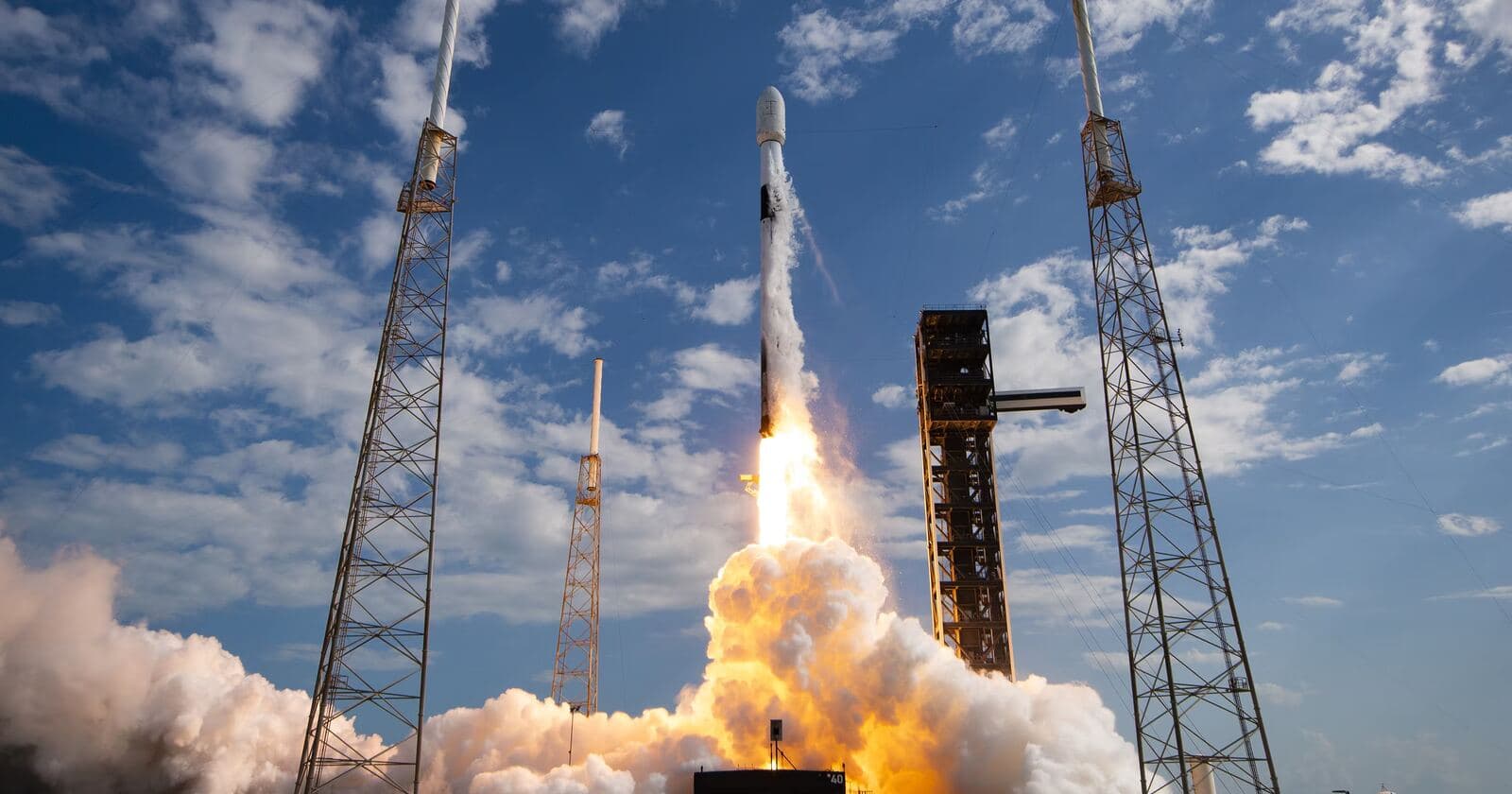
China has launched Xiguang-2 01 (Caiyun Hyperspectral 01), the country’s first fully domestically developed satellite for quantitative hyperspectral imaging with an intelligent onboard data-processing system. The satellite lifted off on July 22 at 10:54 a.m. Beijing time aboard the Gravity-1 Y4 rocket.
According to the developers, the spacecraft reached its planned orbit successfully and all systems are operating normally.
The satellite was built by Xi’an Zhongke Xiguang Aerospace Technology Group for the Geological Exploration Bureau of Yunnan Province. It is the first spacecraft in the Caiyun series and, according to the company, the first Chinese satellite to combine quantitative hyperspectral imaging with AI-based data processing directly in orbit.

Recommended reading
JWST spots the same unknown organic on Pluto and Titan
The company says Xiguang-2 01 ranks among the best-performing commercial hyperspectral satellites in China. Its published specs include:
- 10-meter spatial resolution
- 7-nanometer spectral resolution in the visible and near-infrared bands
- Up to 14 km maximum swath width
- Up to 1 million km² of hyperspectral Earth-surface data collected per day through continuous scanning
A key feature is its new interference-based hyperspectral imaging system, which allows operators to flexibly choose the central wavelength for different remote-sensing tasks. The developers say that should improve accuracy in geological exploration, natural resource monitoring, agriculture, and environmental research.
The onboard AI system is also central to the design. By processing part of the data on the satellite itself, the system can identify the most valuable information more quickly and reduce the volume of data that needs to be sent back to Earth.
With the launch of Xiguang-2 01, the Zhongke Xiguang Aerospace orbital constellation has grown to more than 12 satellites.

Frontier Editor
Dan is our resident futurist, covering electric mobility, space exploration, and the smart home. He's interested in atoms just as much as bits. Whether it's a new battery chemistry, a reusable rocket, or a protocol that finally makes IoT devices talk to each other, Dan breaks down the engineering that pushes humanity forward.
via iXBT