• 2 min read
China’s AI labs press the US with two huge open models
Moonshot and Alibaba say their new open models can rival top US systems at far lower cost, tightening the AI race with Silicon Valley.
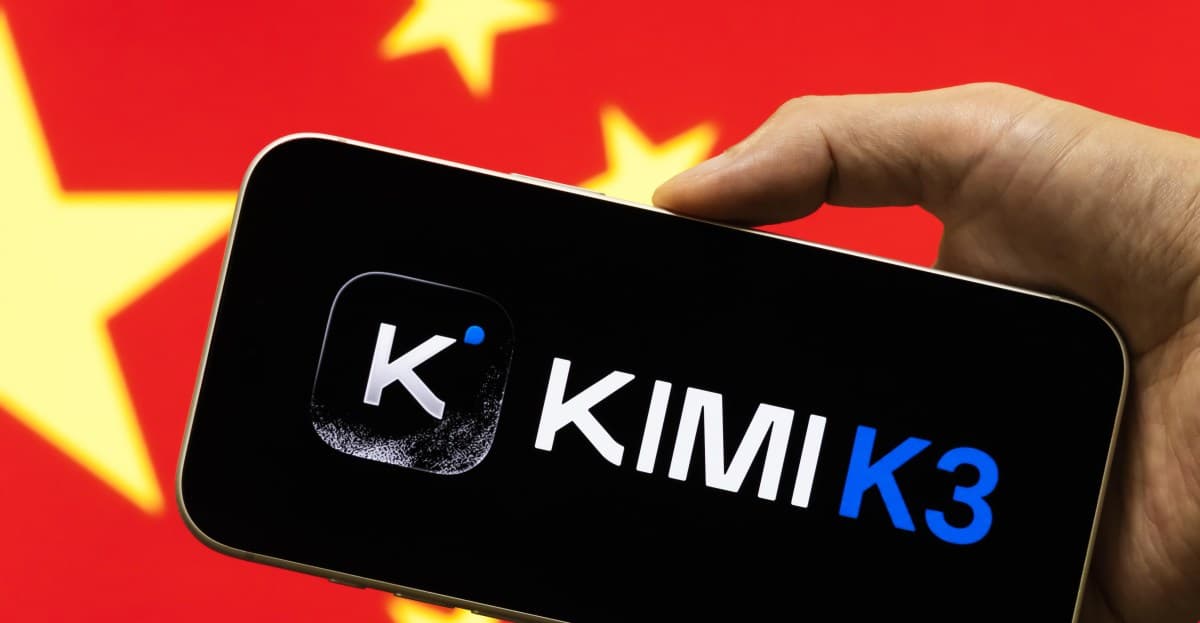
Image: The Verge
Chinese AI companies Moonshot and Alibaba have launched a fresh challenge to Silicon Valley, unveiling models they say can compete with the best systems from OpenAI and Anthropic at a much lower cost. The back-to-back releases add pressure at a moment when advanced AI is increasingly tied to national security, economic power, and geopolitical influence.
Moonshot AI, based in Beijing, introduced Kimi K3 on Friday. The company says its internal tests place the model ahead of nearly every US rival, trailing only OpenAI’s GPT-5.6 Sol and Anthropic’s Claude Fable 5, while beating them on some benchmarks.
Over the weekend, Alibaba followed with a preview of Qwen3.8, which it described as “one of the most powerful model[s] available today” and “second only to Fable 5.”

Recommended reading
New agent swarm hit 100% on SQLite tests cheaper
A major difference is how the two companies plan to distribute these systems. Rather than keeping their top models closed, both are making them publicly available. That open approach has become a notable point of contrast for China’s AI industry, even though some US firms, including Meta, also release models developers can download, modify, and build on.
Moonshot says Kimi K3 is the world’s largest open-source AI model, with 2.8 trillion parameters. Alibaba says Qwen3.8 has 2.4 trillion parameters and is “continuously evolving.” Parameter counts offer a rough measure of a model’s scale and training complexity, though bigger models do not always perform better. OpenAI and Anthropic do not publish parameter counts for their leading systems.
Release timing and verification
Independent verification is still pending. Moonshot says it will release the full model weights on July 27th, while Alibaba says Qwen3.8 is “going open-weight soon.” Until then, outside researchers cannot fully assess how capable either system is.
Even so, the launches have already intensified the US-China AI contest. The moment echoes the disruption caused by DeepSeek last year, when it released a low-cost model that rivaled leading US systems. It also raises a harder question for American labs: whether massive spending on chips, data centers, and training can deliver a lasting edge if Chinese rivals can match or exceed frontier performance with fewer resources.
The contrast is especially sharp as Washington expands restrictions on access to advanced AI technology. The US government has used export controls to limit China’s access to the most advanced chips, and it also forced Anthropic to pull its most capable system from the market over concerns that it could help foreign competitors catch up.
Whether Kimi K3 and Qwen3.8 live up to their creators' claims remains unclear. But if they do, they will further narrow what once looked like a commanding American lead.

AI Editor
Ava covers the rapidly evolving world of artificial intelligence, from foundational models and research labs to the real-world economics of intelligence. With a background in computational linguistics, she cuts through the hype to find out what actually works. She firmly believes that benchmarks are just marketing until reproduced in the wild.
via The Verge