• 2 min read
How Cortical Labs runs biological computers fueled by brain-like fluid
In a Melbourne datacenter, Cortical Labs technicians start each day by replenishing their biological computers with a special fluid mimicking human cerebrospinal fluid. These machines, powered by living neurons rather th
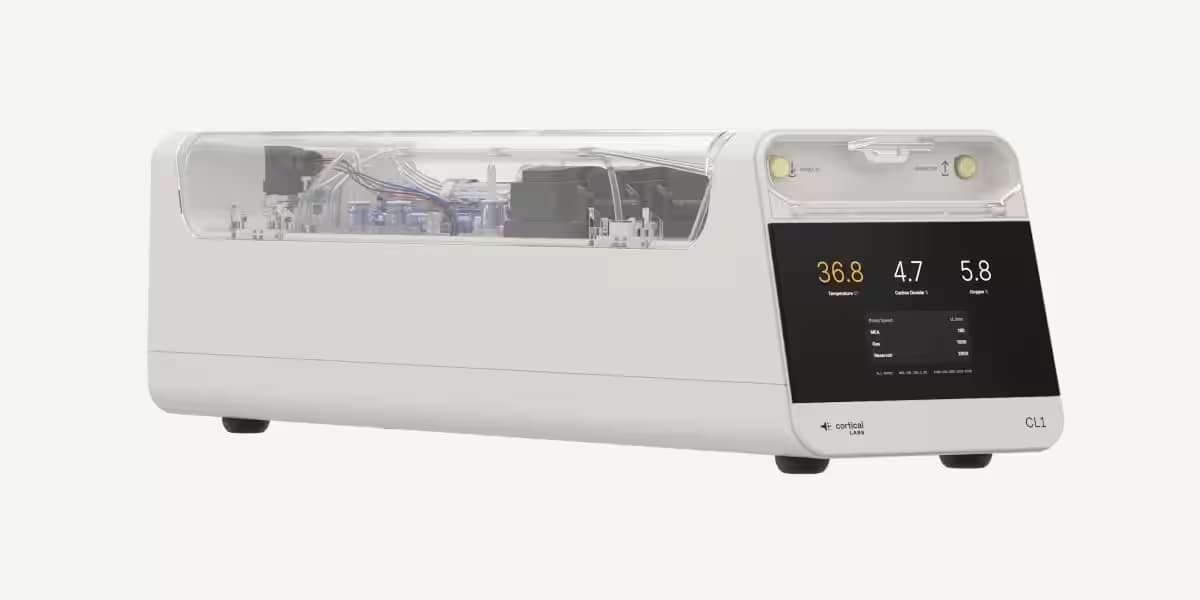
Image: The Register
In a Melbourne datacenter, Cortical Labs technicians start each day by replenishing their biological computers with a special fluid mimicking human cerebrospinal fluid. These machines, powered by living neurons rather than silicon chips, rely on this nutrient-rich liquid because the neurons consume oxygen and glucose, requiring daily replacements to keep them functional. The company also adjusts the gas mix around the cells to about 5% oxygen, optimizing conditions for this unconventional form of computing.
Biological computing remains experimental, but Cortical Labs' CEO, Hon Weng Chong, argues their neuron-based systems learn and innovate within simulated environments more efficiently and originally than classical computers or large language models, all while consuming less energy. Yet, scaling this technology is challenging when few suppliers handle living cells, and the industry lacks specialized foundries akin to TSMC’s role in silicon chip production.
How Cortical Labs' biological computers operate with living neurons
Cortical Labs offers its biological computers through the cloud, hosting 120 CL1 units accessible via an API where users run Python or Jupyter Notebook code on living neural networks. Preparing these machines is not instant; it often takes about a week to set up suitable cells and create the proper environment. Most researchers rent multiple units for testing and validation, reflecting the technology’s current experimental stage. Early customers include scientific labs and innovators exploring next-generation computing, similar to early adopters of quantum technology.

Recommended reading
Sam Altman ridicules Anthropic ad as backlash grows
The evolution from research studies to commercial biological computing
The company’s groundwork traces back to a 2022 study where networks of human and rodent neurons learned to play Pong in vitro. Cortical Labs adapted this research into the CL1, a commercial device that leverages the electrical communication typical of neurons, bridging biological and silicon computing systems. Despite the complexity, Chong envisions future automation to reduce manual fluid topping and atmospheric adjustments, which could make biological computers more user-friendly.
Challenges and opportunities in scaling biological computing technology
Though some skeptics view biological computing as impractical, it offers a novel approach to AI: not just mimicking data patterns, but fostering genuine neural creativity and adaptation. Still, daily maintenance is necessary, and the idea of living machines “choosing their own destiny” is met with cautious humor from its creators. As cortical neural technology advances, it may unlock new levels of energy-efficient, emergent intelligence beyond the capabilities of today’s silicon chips.

AI Editor
Ava covers the rapidly evolving world of artificial intelligence, from foundational models and research labs to the real-world economics of intelligence. With a background in computational linguistics, she cuts through the hype to find out what actually works. She firmly believes that benchmarks are just marketing until reproduced in the wild.
via The Register