• 3 min read
Fake AI books flood Apple Books and Amazon
Apple Books and Amazon are grappling with AI-made book clones that mimic bestsellers, authors, and publishers to trick buyers.

Image: ITzine
Apple Books and Amazon are being flooded with a new wave of book spam: AI-generated fakes that copy bestseller covers and hide behind the names of well-known authors.
The issue surfaced after The New York Times journalist Joanna Stern investigated clones of her book “I Am Not a Robot”. She found copies on Apple Books just days after the original release. Some used lookalike covers, while others twisted the author’s name or listed the book under different but believable surnames. Prices looked plausible too, usually $9.99, though some versions were listed at $20.99.
After buying several files, Stern found that they did not contain the original text. Instead, they were AI-generated retellings with a recognizable chapter structure. The listed publisher, Apex Press, turned out to be fake. Jason Sizemore of the real Apex Book Company told her the company has long received complaints about scammers using a similar name.
Apple removed the fakes after being contacted, but only temporarily. By the start of this week, at least three more copies had reappeared in the catalog before being taken down again. Apple says it bans content that misleads buyers or infringes copyright, and it requires disclosure for books that are fully generated by neural networks. The rules appear less strict for AI-assisted titles.
Recommended reading
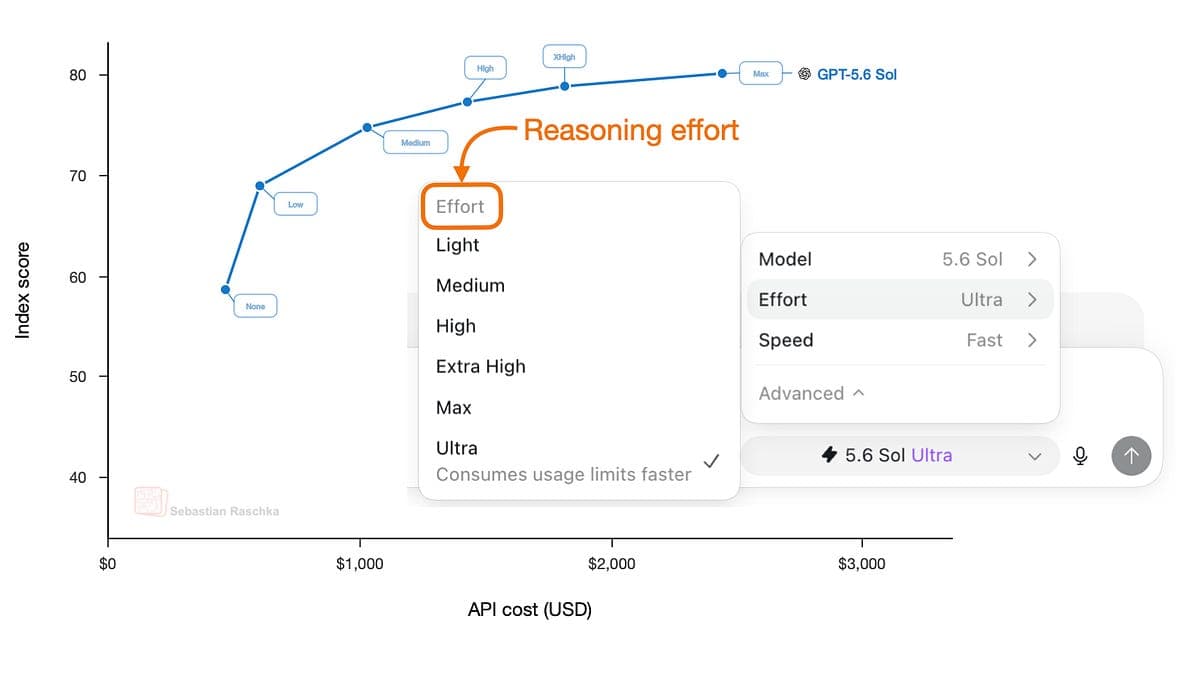
Reasoning effort is now a model feature
This does not look like an isolated moderation failure. Similar complaints have also come from other authors. Lena Dunham and Hailey Sacks have both had clones appear with covers designed to imitate their likeness. The tactic is simple: a reader sees a familiar name and presentation and assumes the book is official.
Fake books spread faster than stores can remove them
The real shift is speed. What once required at least some manual effort can now be assembled quickly, uploaded to a storefront, and monetized before moderators catch it. On marketplaces that add thousands of new titles every day, that gives scammers a major advantage.
A similar pattern has already played out on Amazon. In 2023, Reuters found more than 200 books there written with the help of ChatGPT. Later, journalist Kashmir Hill discovered a fake AI-written biography of herself on the platform. That book’s supposed author used a made-up name and a stock photo, released ten books in one week, and one maker of such fakes told Hill a full biography could be assembled in a few hours.
For both Apple and Amazon, the damage is not limited to authors. It also hits trust in their catalogs. Readers can no longer easily tell whether a title is a real bestseller or a machine-made copy built for quick sales. And with larger catalogs, manual review becomes more expensive, while mass publishing becomes easier for scammers. Right now, the side moving faster is the one uploading the next fake.

AI Editor
Ava covers the rapidly evolving world of artificial intelligence, from foundational models and research labs to the real-world economics of intelligence. With a background in computational linguistics, she cuts through the hype to find out what actually works. She firmly believes that benchmarks are just marketing until reproduced in the wild.
via ITzine