• 2 min read
Kimi K3 beats Claude on frontend coding
Moonshot AI’s open-weight Kimi K3 topped Arena.AI’s frontend coding benchmark, beating Claude Fable 5 in five of six categories.
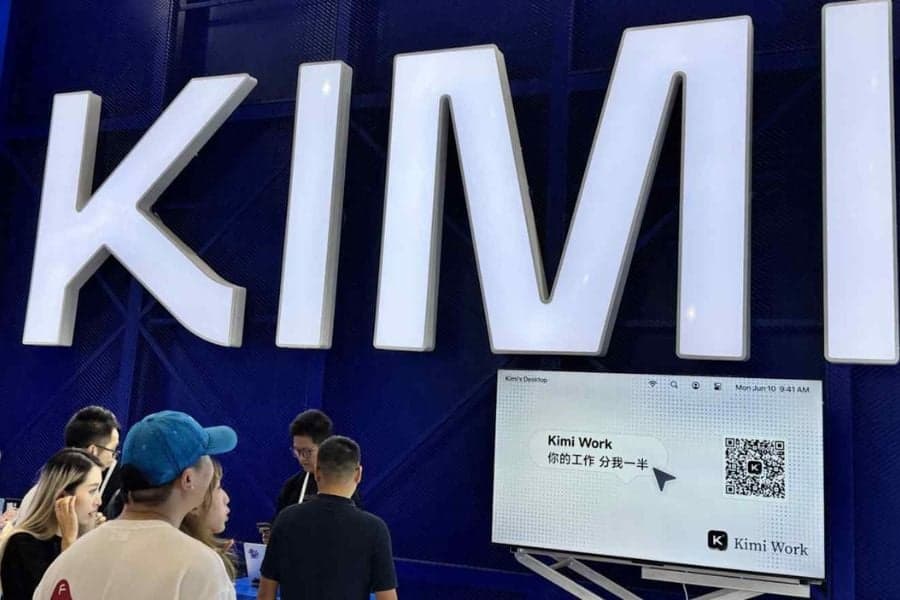
Image: TechRepublic
Moonshot AI has launched Kimi K3, a 2.8 trillion-parameter open-weight model aimed at coding, reasoning, and knowledge work — and its headline result is a win over Anthropic’s Claude Fable 5 on a frontend coding benchmark.
The Chinese startup says Kimi K3 has a 1 million-token context window and native vision support. Moonshot called it the “world’s first open 3T-class model” built for long-running tasks such as software development, research, and complex problem-solving. The company also acknowledged that Kimi K3 still trails the strongest proprietary systems overall, even as it posted what it described as frontier-level results across its evaluations.
Kimi K3 is already available through Kimi’s chatbot, desktop app, coding assistant, and API services. Moonshot plans to release the full model weights on July 27.
Arena.AI frontend benchmark results
Moonshot’s biggest claim centers on Arena.AI’s Frontend Code Arena, a benchmark for building real-world user interfaces across product design, data visualization, and creative applications.

Recommended reading
AI Won’t Replace Coders, but It Will Reshape the Job
According to the company, Kimi K3 ranked first and beat Claude Fable 5 in five categories:
- Brand and Marketing
- Reference-based Design
- Data and Analytics
- Consumer Product
- Simulations and Content Creation Tools
It trailed Claude only in Gaming.
That matters because frontend coding tests more than code generation. Models also need to handle layout, visual design, UX decisions, and functional requirements.
Pricing, availability, and the open-weight pitch
Moonshot said Kimi K3 performed competitively with Fable 5 and substantially outperformed several other models, including GPT 5.6 Sol, GPT 5.5, and Claude Opus 4.8, in specific evaluations. Artificial Analysis also ranked Kimi K3 near top-tier systems on its Intelligence Index, though still behind Fable 5 and GPT-5.6 Sol overall.
Its pricing is set at $3 per million input tokens and $15 per million output tokens through the API. TechRepublic notes that while this is higher than some Chinese rivals, the model’s performance could still make it a credible alternative to pricier US systems.
The broader significance is the open-weight release. Unlike closed models, Kimi K3's approach gives developers and enterprises the option to customize and deploy the model themselves rather than rely entirely on hosted APIs. For teams evaluating AI for commercial software work, especially interface generation, that may be as important as the benchmark win itself.

AI Editor
Ava covers the rapidly evolving world of artificial intelligence, from foundational models and research labs to the real-world economics of intelligence. With a background in computational linguistics, she cuts through the hype to find out what actually works. She firmly believes that benchmarks are just marketing until reproduced in the wild.
via TechRepublic