• 2 min read
Falcon 9 booster ends its run after 32 flights
A Falcon 9 first stage flew for the 32nd and final time, sending Northrop Grumman’s MRV-MEP servicing mission to geotransfer orbit.
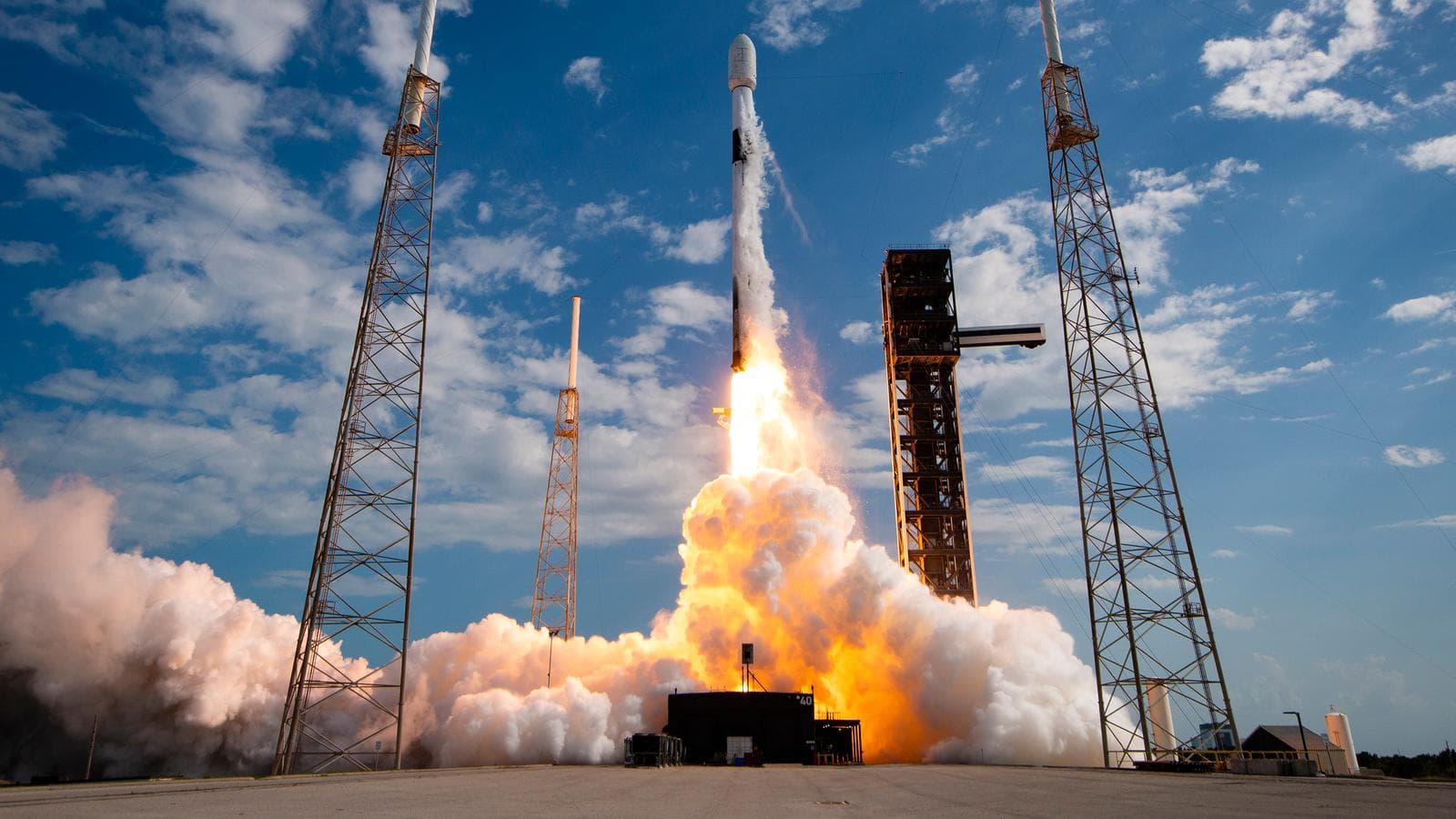
Image: iXBT
A SpaceX Falcon 9 first stage has completed its 32nd and final flight, capping one of the most heavily reused booster careers yet. The rocket launched on July 21 from SLC-40 at Cape Canaveral, Florida, and successfully placed Northrop Grumman’s MRV-MEP mission into geotransfer orbit.
The payload includes the Mission Robotic Vehicle (MRV), equipped with robotic arms, along with three Mission Extension Pod (MEP) modules. Those pods are designed to dock with operating satellites and provide additional propulsion, extending their service life by about six years. According to the source, satellite communications operators including Intelsat and Optus are expected to use the technology.
The retiring Falcon 9 booster drew particular attention. Over its service life, it launched 27 Starlink missions, cargo spacecraft to the International Space Station, and other commercial and government payloads.

Recommended reading
Apollo 11 Code Lives On in a Public GitHub Archive
Earlier, SpaceX vice president of launch Kiko Donchev recounted the story of one of the company’s most unusual Falcon 9 boosters, Booster 1069, calling it the “OG tippy rocket.” After its first flight, the booster was nearly lost, later underwent a full engine replacement, and then went on to complete 31 more flights.

Frontier Editor
Dan is our resident futurist, covering electric mobility, space exploration, and the smart home. He's interested in atoms just as much as bits. Whether it's a new battery chemistry, a reusable rocket, or a protocol that finally makes IoT devices talk to each other, Dan breaks down the engineering that pushes humanity forward.
via iXBT