• 3 min read
Japan lines up 27,500 Rubin GPUs for robot AI push
A SoftBank-backed consortium will build a 140MW Nvidia-based AI factory for Japan’s FRONTia robotics project, backed by up to ¥1trn through 2030.
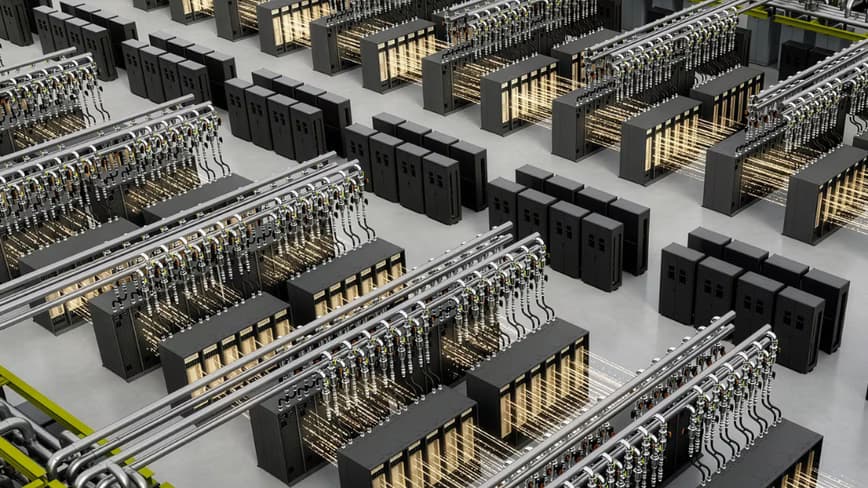
Image: TNW
Japan is putting unusually concrete numbers behind its robotics ambitions: a 140MW AI factory with 13,750 Nvidia Vera CPUs and 27,500 Rubin GPUs to train multimodal foundation models for AI agents, digital twins, and robots.
Nvidia says the facility will be the world’s first national AI infrastructure for physical AI, though that claim is Nvidia’s own and has not been independently verified. The system will be built by Noetra Corp on Nvidia’s DSX platform, using Vera Rubin NVL72 racks, Spectrum-X Ethernet, and BlueField DPUs.
Noetra is central to the plan. It is not a government agency, but a private consortium majority-owned by SoftBank, NEC, Sony Group, and Honda. That makes it the vehicle through which Japan is channeling its physical AI strategy.
This is Nvidia’s second Tokyo announcement in a week. The earlier one tied much of Japan’s robotics sector to Nvidia’s open world models; this one provides the compute needed to train them.
The government’s role sits further upstream. METI and NEDO have commissioned Noetra and AIST to deliver the FRONTia Project, formally titled Development of Multimodal Foundation Models with a View to AI Robotics and Physical AI.
Recommended reading
CATL to deploy 5GWh sodium-ion storage across Europe
Funding is substantial, but not fully guaranteed. METI has committed up to ¥1trn, or roughly $6bn, across fiscal 2026 to 2030. The first tranche is ¥387.3bn, funded through Japan’s GX Economy Transition Bonds. Only the first two years are locked in; the rest depends on annual stage-gate reviews, making ¥1trn a ceiling rather than a firm promise.
“Japan has launched the FRONTia Project, which will serve as the core of the country’s physical AI ecosystem.”
Akazawa said the plan combines foreign technology with Japan’s “onsite expertise and manufacturing technology infrastructure.” Nvidia CEO Jensen Huang struck a similar note.
“Japan invented modern manufacturing. Now, it is building the AI factories that will power the next industrial revolution.”
What remains undisclosed is the price of the Nvidia hardware. Nvidia did not provide a purchase price, deal value, or dollar figure for the chips. That matters because Nvidia describes itself as working with Noetra on a facility Noetra is establishing, rather than a direct government hardware purchase.
Noetra CEO Hironobu Tamba argued the scale demands a shared effort.
“Bringing physical AI into the real world requires enormous computing, data and foundational technologies, challenges no single company can solve alone.”
The strategic backdrop is Japan’s AI Robotics Strategy, published in March, which targets more than 30% of the global AI robotics market by 2040 — an opportunity it estimates at $133bn. Separately, METI has a goal of 10 million AI-equipped robots across 18 sectors by the same year.
The two targets come from different documents, but point to the same policy direction: Japan is not trying to build a broad frontier lab. It is trying to add intelligence to machines it already knows how to manufacture — while leaving the silicon stack to a single US supplier.

Enterprise Editor
Marcus follows the money. He covers enterprise software, cloud architecture, and the tectonic shifts in Big Tech strategy. He translates dense earnings calls and complex M&A activity into actionable insights about where the industry is actually heading. If a tech giant makes a silent pivot, Marcus is usually the first to notice.
via TNW