• 2 min read
Los Alamos starts Nvidia Vera tests for 2027 supercomputers
Los Alamos has received its first Nvidia Vera server to prepare Mission and Vision, two HPE-built systems due in 2027–2028.
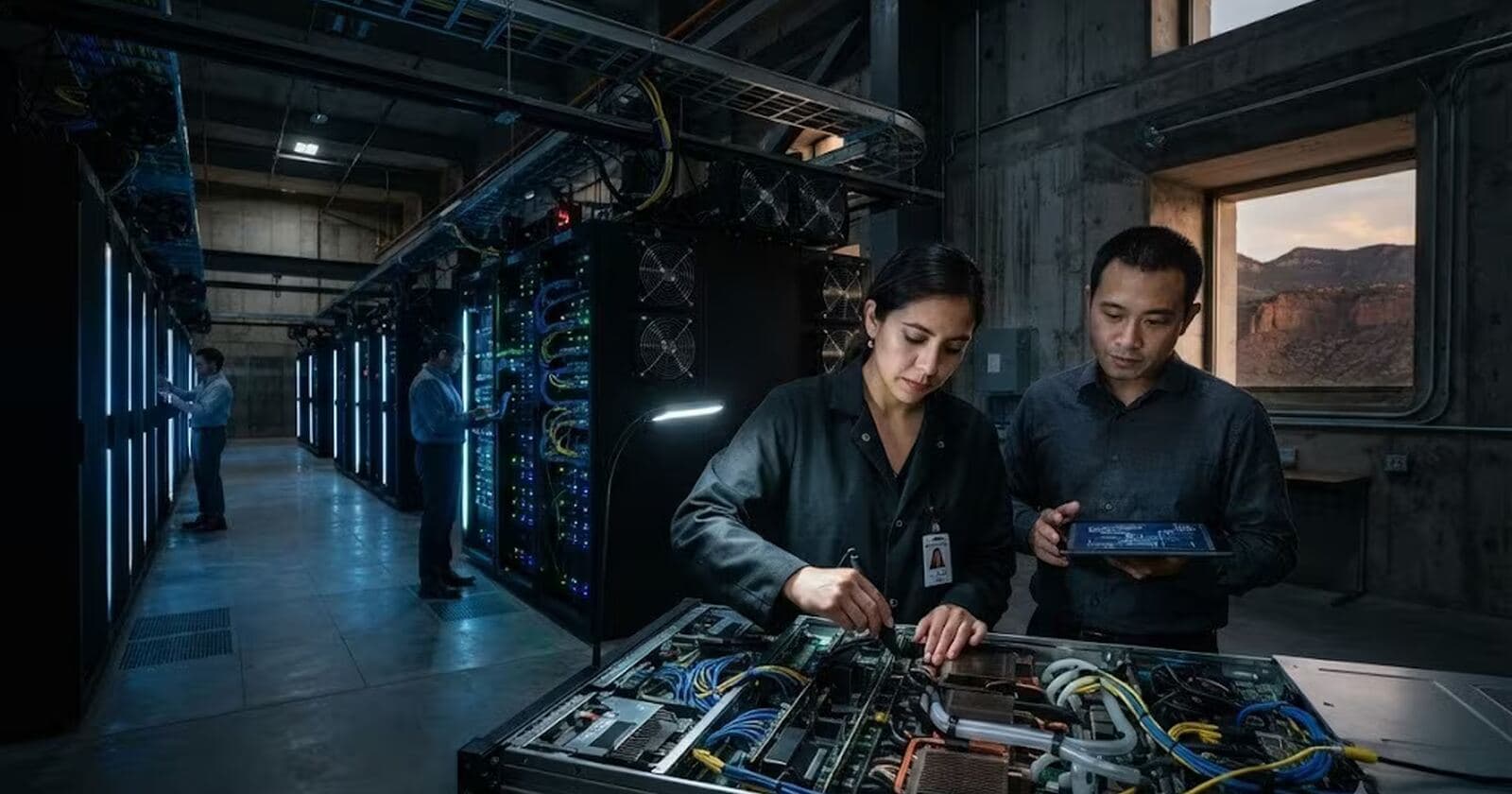
Image: ITzine
Los Alamos National Laboratory has received its first server built around the Nvidia Vera processor and is already using it to test software for its future Mission and Vision supercomputers. The move goes beyond early access to a new chip: the lab is validating the full stack ahead of system launches planned for 2027–2028.
Mission and Vision are being built by HPE on the Nvidia Vera Rubin platform. Los Alamos wants to adapt its software early for an architecture aimed at both traditional simulation workloads and AI tasks, reflecting a broader shift in major US computing centers from pure HPC toward hybrid clusters that run AI and simulations on the same infrastructure.
Ben Santos, director of the HPC Platforms program, said Mission and Vision should deliver more than three times the CPU performance of Crossroads. He also said each processor will have more than four times as much memory per core, while power consumption is expected to fall. The lab is also counting on a major jump from Rubin GPUs, which are said to provide more than 12 times the AI performance of the Hopper accelerators used in Venado.
Key details named by the lab include:

Recommended reading
Honor’s $30 5G hotspot targets cheap mobile access
- Platform: Nvidia Vera Rubin
- System supplier: HPE
- First test server: Nvidia Vera processor
- Mission and Vision launch: 2027–2028
- Network: Nvidia Quantum-X800 InfiniBand
Mission and Vision system plans
This is not Los Alamos' first move onto a new Nvidia architecture. In 2025, the lab was among the first to deploy Venado, a supercomputer based on Nvidia Grace Hopper, and the current test phase is a direct continuation of that work.
That rollout model is common across US national labs: get early hardware access, tune scientific software, then move into production use. For Los Alamos, Mission and Vision have both practical and strategic roles. They are intended not only for physics and materials modeling, but also for workflows where AI helps analyze experimental results faster and launch new simulation runs.
The lab is not relying on an off-the-shelf commercial system. Instead, it is working jointly with Nvidia and HPE, with laboratory engineers involved in hardware design decisions from the development stage.
A related project, Starlight, is a specialized version of Mission scheduled for 2026 and based on Nvidia Vera Rubin NVL72. Los Alamos will also receive a system called Veritas for internal research work. If the first-server testing goes smoothly, Los Alamos could become one of the first centers where the shift to Vera Rubin happens not as a showcase, but as a routine generational upgrade.

Computing Editor
Tomas lives in the terminal. He covers chips, laptops, and operating systems with a focus on performance and efficiency. He reads kernel changelogs the way other people read fiction, and he's always on the hunt for the perfect mechanical keyboard switch. If it processes data, Tomas has an opinion on it.
via ITzine