• 2 min read
Microsoft’s $950 Surface proves 8GB isn’t enough
The 13-inch Surface Laptop still has strong hardware and battery life, but 8GB of RAM makes Windows 11 stumble at $949.99.
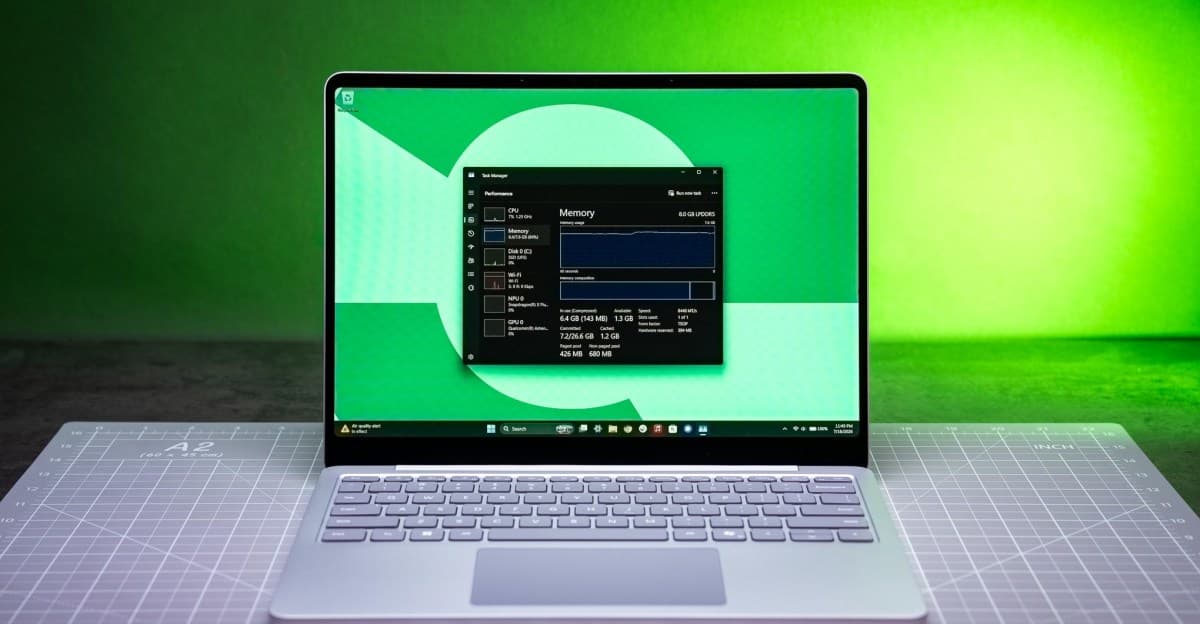
Image: The Verge
Microsoft’s new 13-inch Surface Laptop makes a blunt point: 8GB of RAM is not enough for Windows 11 in 2026. The machine still has the same appealing thin-and-light design, strong battery life, and solid keyboard and trackpad that helped last year’s model stand out. But this year, the base configuration costs $950 and cuts memory from 16GB to 8GB.


The Verge gave the laptop a 6/10 score. Its verdict was simple: the hardware remains good, but the memory and storage compromises are hard to ignore at this price.
According to the review, the laptop was usually fine for basic browsing and video streaming, but it regularly hit short freezes during ordinary multitasking. In one example, it stalled for several seconds during a Microsoft Teams call while the host played a video, with around 10 Chrome tabs open across two desktops alongside Slack and Signal. The reviewer said those hangs happened a few times a day, sometimes even while working in Google Docs.

Recommended reading
Rust remake revives Linux 0.11 after Torvalds' fork jab
Task Manager showed just how tight things are. The system was using around 6.7GB of its 7.6GB available memory most of the time, and after a fresh reboot with minimal startup apps, Windows 11 was already consuming 4.2GB. Even cutting back to about six Chrome tabs, closing Signal, and avoiding virtual desktops only reduced usage to roughly 5.5GB.
Surface Laptop 13-inch specs and tradeoffs
As reviewed, the laptop includes:
- 13-inch 1920 x 1280 60Hz touchscreen
- Qualcomm Snapdragon X Plus X1P-46-100
- 8GB LPDDR5X RAM
- 256GB UFS storage
- 1080p webcam
- Wi-Fi 7 and Bluetooth 5.4
- 1x USB-A 3.1, 2x USB-C 3.2, 3.5mm audio jack
- 50Wh battery
- Weight: 2.7 pounds
- Price: $949.99
The review says battery life still easily reaches 10 hours, and the keyboard, webcam, and overall build remain strong. But the lower-spec base model now offers less value than before: last year’s version started at $900 with 16GB of RAM.


The Verge notes it has not reviewed a Windows laptop with 8GB of RAM in more than three years, but expects many more to arrive after Computex, with Dell, Acer, and Asus also announcing similar configurations. Microsoft has said it is focused on improving Windows 11 performance and reliability on lower-cost hardware, partly to compete with the MacBook Neo, which also ships with 8GB of RAM but costs $250 less.
For buyers, the publication’s recommendation is straightforward: spend more for 16GB if possible, whether that means the $1,150 Surface Laptop, another discounted Windows machine, or a refurb. If even Microsoft’s own flagship laptop struggles at 8GB, that does not leave much room for optimism about cheaper PCs.

Computing Editor
Tomas lives in the terminal. He covers chips, laptops, and operating systems with a focus on performance and efficiency. He reads kernel changelogs the way other people read fiction, and he's always on the hunt for the perfect mechanical keyboard switch. If it processes data, Tomas has an opinion on it.
via The Verge