• 2 min read
OpenAI’s Codex Micro is a $230 coding macropad
OpenAI has launched its first hardware device: a tiny $230 macropad built for Codex users, and early reaction from programmers looks skeptical.
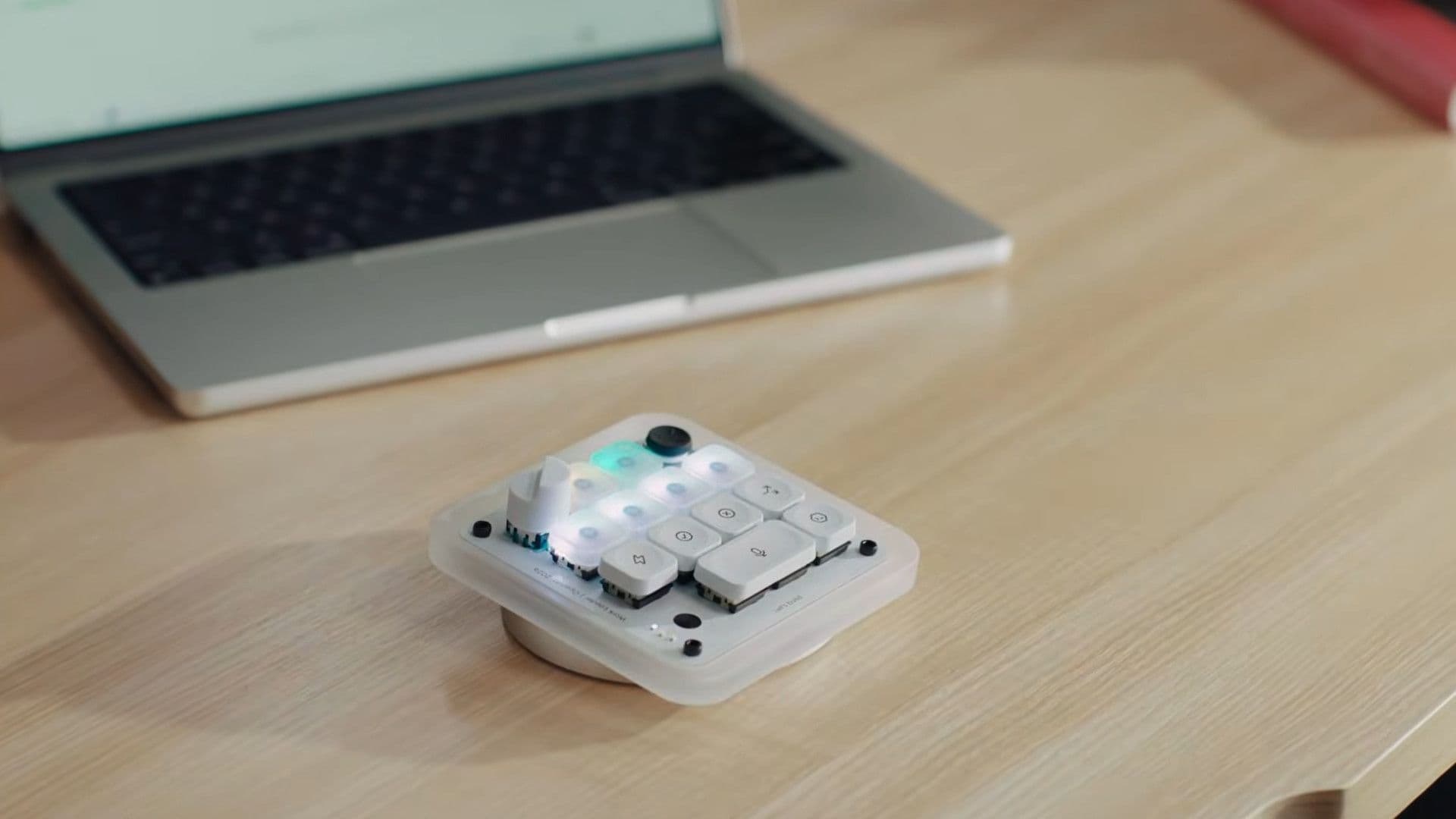
Image: TechRadar
OpenAI has launched its first hardware product, the Codex Micro — a compact keypad built for programmers using the company’s Codex coding agent.
Developed with Work Louder, the device is closer to a macropad than a full keyboard. It is designed to help coders manage Codex tasks, switch between agents, and issue commands more quickly while writing or debugging software.
What the Codex Micro does
Codex itself is OpenAI’s coding agent, meant to assist with writing programs, debugging, and generating code from natural-language prompts. The Codex Micro acts as a dedicated control surface for that workflow.
The keypad includes dedicated RGB-lit keys that show agent status at a glance, such as a green light for an unread chat or orange when user approval is needed. There is also a key for voice dictation that uses a laptop’s microphone rather than a built-in mic, a dial for adjusting reasoning level or other settings, and a joystick that can be remapped. OpenAI says the device is fully customizable.
The pitch is straightforward: if Codex speeds up coding, the company wants the Codex Micro to serve as a hardware shortcut for the same process.
Recommended reading
Medion Signium 27 S1 gets the basics right
Price and programmer reaction
The Codex Micro costs $230 in the US — about £170 or AU$330 — though it is not yet in stock. It is clearly aimed at Codex users rather than mainstream buyers.
TechRadar notes that OpenAI is also rumored to be working on future consumer hardware, possibly a wearable or a smart speaker. Citing Bloomberg’s Mark Gurman, the report says the speaker could use mechanical elements to create a “sense that it is alive” and use emails and other personal data to better “understand” users. That remains unconfirmed.
Early reaction from programmers appears mostly negative. According to TechRadar, Reddit commenters have questioned whether the product is a joke, argued that a cheap DIY macropad could do something similar for far less, and suggested the concept could have been turned into a phone app instead.
“Yeah it’s like every big tech product now. Instead of a full keyboard, it’s just 12 keys, and it’s $230. It honestly feels like a prank and not a real product.”
TechRadar says it found little sign of strong demand from the target audience, with criticism centering on the price and the sense that most serious coders would rather build or buy a simpler alternative.

Computing Editor
Tomas lives in the terminal. He covers chips, laptops, and operating systems with a focus on performance and efficiency. He reads kernel changelogs the way other people read fiction, and he's always on the hunt for the perfect mechanical keyboard switch. If it processes data, Tomas has an opinion on it.
via TechRadar