• 3 min read
OpenAI readies screen-free home speaker with Jony Ive
Bloomberg reports OpenAI is building a mobile, screen-free home device with Jony Ive, aiming for a 2027 release amid an Apple lawsuit.

Image: TNW
OpenAI’s next hardware move may look less like a gadget and more like a companion. According to Bloomberg, the company’s first consumer device developed with Jony Ive is a mobile, screen-free smart speaker designed for the home — and built to feel more alive than inert.
The report surfaced a day before OpenAI’s first shipping hardware reached customers: Codex Micro, a macro pad for coders made with Work Louder. But Bloomberg says the new speaker is the first true consumer product from io, the startup OpenAI bought from Ive for $6.5bn last year.
Internally, OpenAI reportedly does not frame it as a speaker at all. The company sees it as a new kind of AI computer for busy people, able to control smart-home devices, play media, answer questions, respond to messages, and tap into ChatGPT more broadly.
Its core pitch is personality and proactivity. The device is said to include mechanical elements that move on their own to create a sense that it is alive, along with a camera, other sensors, and a rechargeable battery so it can move from room to room. Bloomberg also reports that it will use personal information such as emails to build a picture of its owner and anticipate needs rather than wait for commands.
Voice is central to the product. The speaker is expected to run a more advanced version of GPT-Live, OpenAI’s voice mode introduced this month, which can listen and talk simultaneously and adjust during a conversation.
Recommended reading
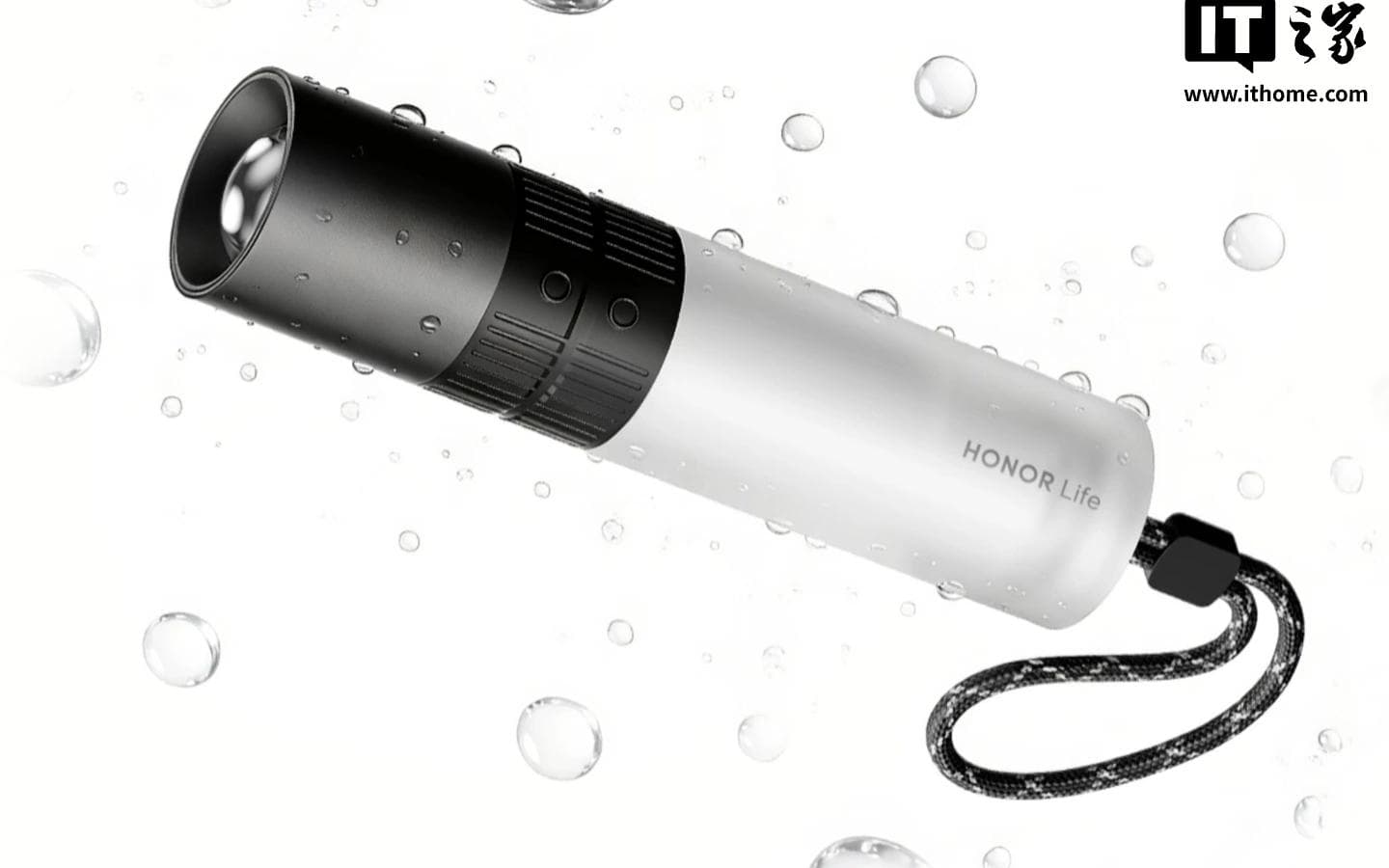
Honor Life flashlight hits 200 meters for $11
The market treated the report as a potential competitive threat. Sonos fell more than 10% in late trading before recovering some ground, while Apple slipped less than 1% to a low of $313.52.
Apple lawsuit could disrupt OpenAI’s hardware plans
The project also lands in the middle of a legal fight. On 10 July, Apple sued OpenAI for trade-secret theft, alleging that chief hardware officer Tang Tan — formerly Apple’s head of iPhone product design and an io co-founder — led efforts to obtain confidential information about Apple’s future products. The complaint says more than 400 Apple staff have since moved to OpenAI.
OpenAI’s position, according to the report, is that the speaker differs enough from anything Apple currently sells that infringement is unlikely, and that it is not aware of evidence supporting Apple’s claims. Apple acknowledged in its filing that discovery would be needed to determine whether its technology is actually being used.
That matters because Apple is seeking an injunction on OpenAI’s hardware, a move that could block the company from selling products at all. Bloomberg says roughly five products are in development, with the speaker first. OpenAI is targeting an unveiling this year and a release in 2027.
The team behind it is stacked with Apple design veterans. LoveFrom is helping shape the lineup, former Apple industrial design chief Evans Hankey is leading speaker development, and OpenAI hired Paul Meade, who led work on Vision Pro, from Apple last month.
Further out, OpenAI reportedly wants a mobile device that could replace the smartphone. It has also explored wearables such as a pendant and shown interest in home robotics. Apple is chasing similar territory with its own delayed AI home device, code-named J490, featuring a square seven-inch display, videoconferencing, facial recognition, and a rebuilt Siri in iOS 27 — plus a version on a robotic arm that can reposition itself while you speak. An OpenAI spokesperson declined to comment.

Frontier Editor
Dan is our resident futurist, covering electric mobility, space exploration, and the smart home. He's interested in atoms just as much as bits. Whether it's a new battery chemistry, a reusable rocket, or a protocol that finally makes IoT devices talk to each other, Dan breaks down the engineering that pushes humanity forward.
via TNW