• 3 min read
Plastic waste may yield cleaner hydrogen fuel
A new study describes a lower-temperature process that turns mixed plastic waste into high-purity hydrogen with negligible direct CO2 emissions.
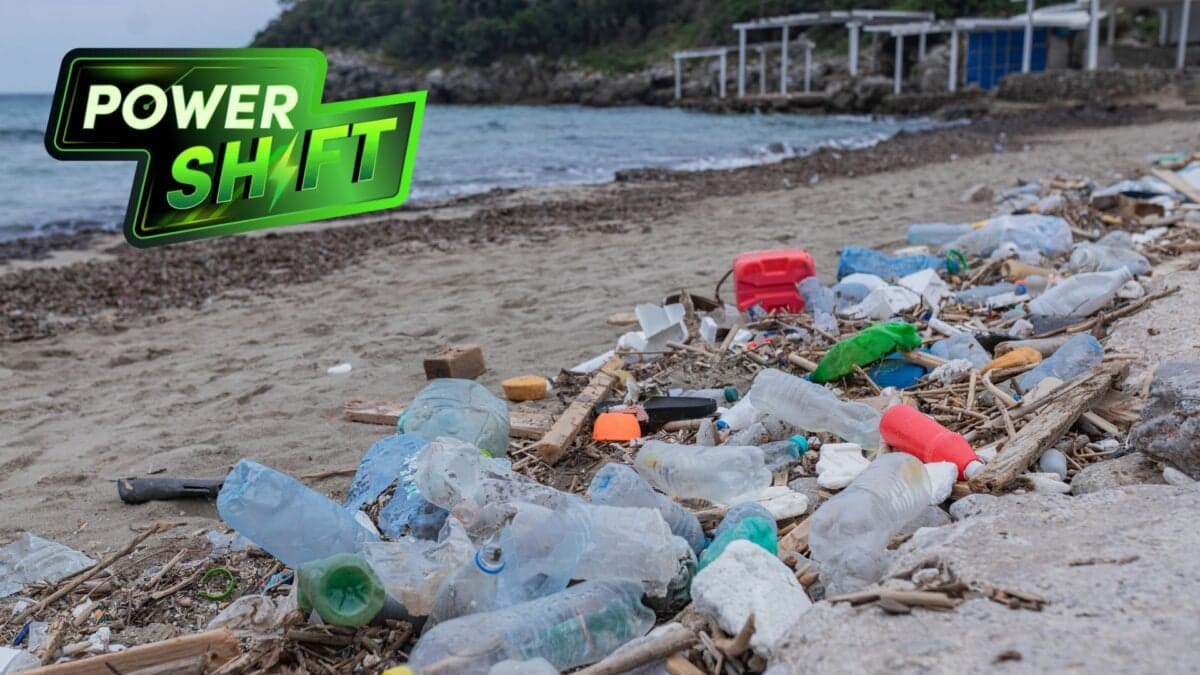
Image: Gizmodo
A new study suggests mixed plastic waste could be turned into high-purity hydrogen without the heavy sorting, extreme temperatures, or direct greenhouse gas emissions associated with existing methods.
Published earlier this month in Proceedings of the National Academy of Sciences, the paper describes alkaline thermal treatment, or ATT, a process that tackles two stubborn problems at once: low global plastic recycling rates and the need for cleaner energy sources. According to the study, ATT can process plastics at much lower temperatures than gasification and does not require the extensive sorting usually needed for pyrolysis.
Plastic recycling remains limited partly because waste is often mixed and contaminated. As Woo Jae Kim, a professor of chemical engineering and materials science at Ewha Womans University in South Korea, told Gizmodo, discarded plastics are frequently mixed with food, adhesives, labels, dyes, additives, or multilayer packaging, making sorting and cleaning technically difficult and often more expensive than producing new plastic from fossil resources.
Previous research found that in 2022, the global recycling rate for plastic was stuck at just 9%, while 40% went to landfills and 34% was incinerated. Meanwhile, plastic use is projected to rise from 464 megatons in 2020 to 884 megatons by 2050.
How alkaline thermal treatment works
The researchers adapted ATT from an earlier method Kim developed with Ah-Hyung “Alissa” Park, a chemical and biomolecular engineering professor at the University of California, Los Angeles, to convert biomass such as seaweed into hydrogen in a carbon-neutral way.

Recommended reading
NASA Scraps $73M Moon Mission After Years of Delays
In the new work, the team tested the three most common plastics: polyethylene terephthalate (PET), polyethylene (PE), and polypropylene (PP). The process mixes plastic with sodium hydroxide (NaOH) and heats it. Because the alkaline conditions make the reaction more favorable, ATT needs far less heat than gasification.
At first, PET produced much more hydrogen than PE or PP. To improve performance, the researchers briefly exposed PE and PP to mild heat and oxygen before the main reaction. That pre-treatment helped all three plastics break down efficiently.
The reported hydrogen yields were:
- 43.7 millimoles per gram for PET
- 51.9 millimoles per gram for PE
- 30.2 millimoles per gram for PP
The authors said those yields are comparable to pyrolysis and gasification, while post-reaction analysis showed negligible carbon emissions.
Scalability questions remain
Outside experts said the chemistry looks promising, but practical deployment is still far from proven.
“The authors demonstrate a credible chemical pathway for producing high-purity hydrogen from PET and pre-oxidized PE and PP, including a controlled mixture of the three plastics. However, the milligram-scale experiments, lengthy oxidation pretreatment, substantial alkali use, and high final temperatures establish chemical feasibility rather than technical or economic viability.”
Kim and his colleagues told Gizmodo that more work is needed to optimize the process, assess its economics, recycle the sodium hydroxide reagent, and test whether ATT can handle dirtier real-world waste streams containing food residue, moisture, and additives. Kim also said a full life-cycle analysis will be needed to measure the process’s total carbon footprint.

Frontier Editor
Dan is our resident futurist, covering electric mobility, space exploration, and the smart home. He's interested in atoms just as much as bits. Whether it's a new battery chemistry, a reusable rocket, or a protocol that finally makes IoT devices talk to each other, Dan breaks down the engineering that pushes humanity forward.
via Gizmodo