• 3 min read
Singapore’s AI glasses boom hits privacy limits
Meta’s smart glasses are already on sale in Singapore as New York moves to ban them from courts, exposing gaps in privacy rules.
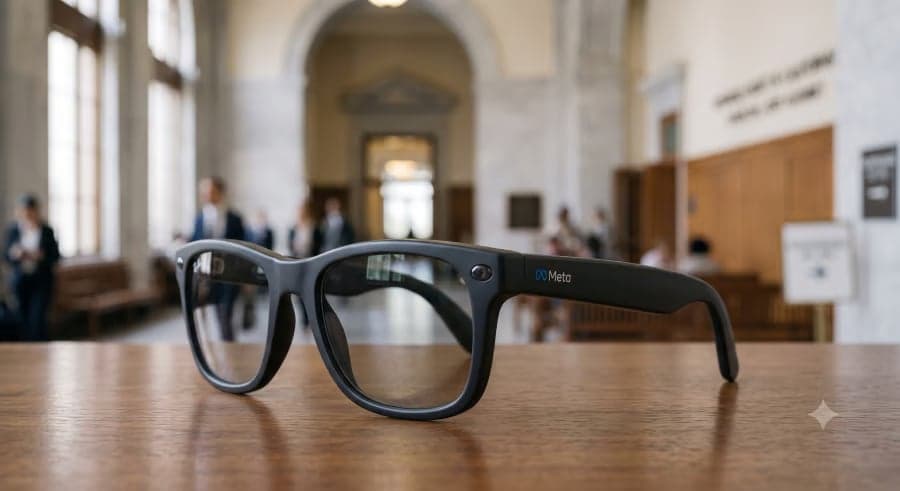
Image: TechRepublic
Meta’s AI-powered smart glasses have been on sale in Singapore since April, but regulators are still catching up. A new rule in New York shows how quickly the privacy debate is escalating: starting July 20, visitors to every state court there will have to surrender camera-equipped smart glasses before entering.
That contrast matters for Singapore. Local law already bans unauthorized recording in courtrooms, but those rules were written before AI-enabled eyewear made it hard to tell whether someone is simply wearing glasses or actively recording audio and video.
How New York’s court ban compares with Singapore law
According to a July 1 memo reported by Bloomberg Law, New York’s rule applies to state, county, city, town, and village courts. It specifically targets Meta’s Ray-Ban and Oakley smart glasses, partly because the recording indicator light can be easy to miss and court staff have no reliable way to know whether a device is filming, streaming, or idle.

Recommended reading
Data brokers can still profile you offline
Singapore has not issued a glasses-specific court rule. Instead, the Administration of Justice (Protection) Act 2016 already treats unauthorized audio or video recording of court proceedings as contempt of court, punishable by a fine or imprisonment. The State Courts also ask visitors not to activate camera functions on any device inside the building.
The unresolved issue is the hardware itself: glasses designed to look inactive even when they may be recording. New York responded by banning the devices outright rather than trying to police behavior after the fact.
Smart glasses arrived before the rules did
Singapore became the first market in Southeast Asia to officially launch the Ray-Ban Meta and Oakley Meta glasses on April 20. Prescription-friendly Gen 2 models followed in May.
That early launch fits Singapore’s broader adoption pattern. Microsoft’s AI Diffusion Report ranks the country second globally, behind only the UAE, in the share of its working-age population using generative AI tools day to day.
At the enterprise level, adoption is also rising. At ATxEnterprise 2026, Senior Minister of State Tan Kiat How said firm-level AI adoption reached 23.5% in 2025, up from 4.3% in 2023.
Singapore’s governance model is often presented as a balance between innovation and oversight, built around the voluntary Model AI Governance Framework, the Personal Data Protection Act (PDPA), and sector-specific rules. But those systems were largely designed for AI operating in defined settings, not for wearable devices that can collect data continuously in public or semi-private spaces.
Denise Wong, who became the Personal Data Protection Commission’s fifth commissioner in April, told The Straits Times that Singapore’s data protection framework needs to adapt to AI-enabled devices that collect biometric data, often without nearby people realizing it.
The concern is not theoretical. In May, two people in South Korea were caught using AI smart glasses to cheat on an English proficiency exam, leading to a ban on the devices in test venues there.
For Singaporean businesses, the immediate issue may be internal policy rather than legislation. Companies with bring-your-own-device cultures, client meeting rooms, or open-plan offices may already have employees wearing these products. That raises a practical question now, not later: whether employers should treat smart glasses like any other unauthorized recording device before an incident forces the issue.

Security Editor
Sophia unpacks the invisible wars happening on our networks. Covering cybersecurity, privacy legislation, and cryptography, she exposes how our data is weaponized and defended. Before joining for(geeks), she spent years as a penetration tester. She's the reason the rest of the team uses physical security keys.
via TechRepublic