• 3 min read
Spotify adds chatbot that searches your listening history
Spotify’s new beta chatbot lets Premium users change music by voice or text and ask about their listening history inside the app.
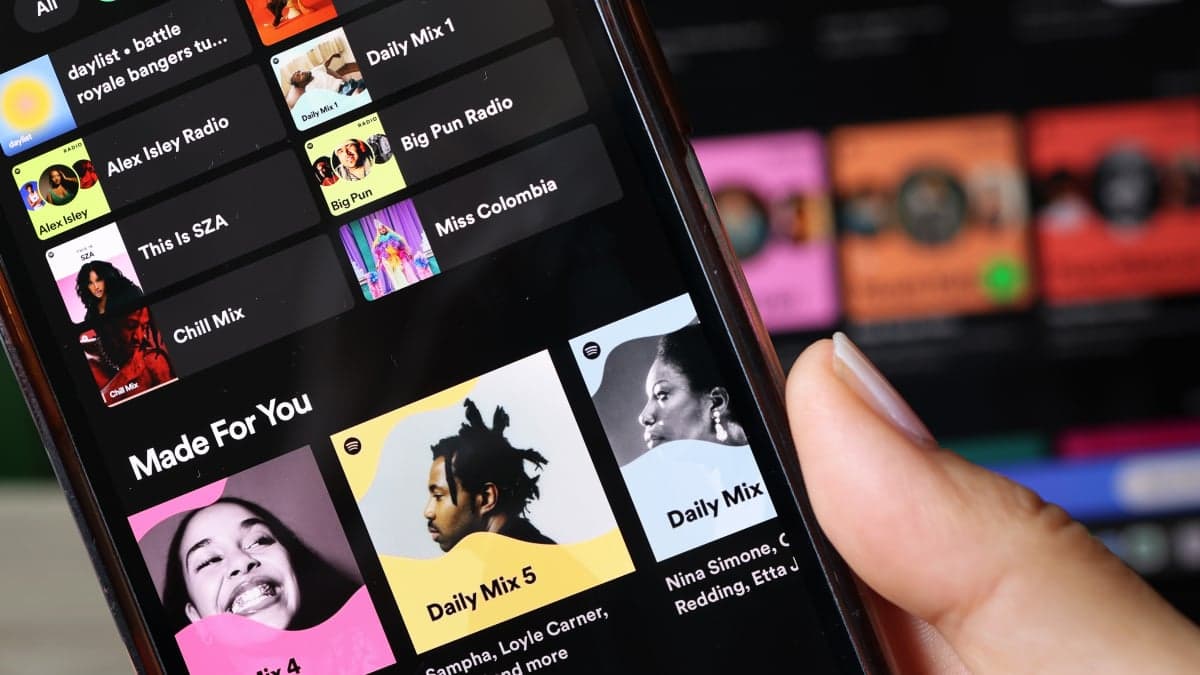
Image: Mashable
Spotify is rolling out a conversational chatbot inside its mobile app, giving eligible Premium subscribers a new way to control playback, discover music, and query their own listening history without leaving Spotify.
Announced on July 14, 2026, the feature lets users type or speak requests in Spotify’s iOS and Android apps. Instead of restarting a search each time, listeners can refine results through follow-up prompts. Spotify says users can ask for unfamiliar artists, then narrow the results further — for example by adding Taylor Swift, switching to her newer songs, or asking for a more upbeat mood.
The assistant can also handle routine app actions such as:
- saving songs
- adding tracks to the queue
- following artists
Spotify says the beta is rolling out in English to Premium users ages 18 and older in the United States, Ireland, and Sweden. It will appear on the Home and Now Playing screens, where users can tap the microphone or type requests.
What Spotify’s chatbot can answer
Beyond playback, the chatbot can answer questions about what is currently playing, including when an album was released, what genre a song belongs to, or what inspired a project. Spotify says the same system works with podcasts and audiobooks, so users can ask about an author’s other books or where else a podcast guest has appeared.
Recommended reading
Kodak’s $100 cameras keep outselling Sony and Canon
The more unusual feature is access to a user’s own Spotify history. Because Spotify already tracks playlists, favorite artists, repeat listens, and streaming history, the assistant can answer questions about how someone’s taste has changed over time, including when they first played a song, which genres they prefer, or how often they have streamed a given artist.
Spotify has warned that the tool is still a beta and that responses will not always be correct. The company says the assistant uses a mix of Spotify’s own systems and models from several providers, depending on the request.
Spotify’s broader AI push
The chatbot fits into a wider strategy Spotify outlined at its investor event on May 26, when executives described what they called the “era of Generation.” Co-CEO Gustav Söderström said Spotify wants listening to be shaped in real time around each user’s taste, context, and intentions.
That push includes AI DJ, Spotify’s prompt-based playlist tool, and integrations that let users connect Spotify to ChatGPT for personalized recommendations. Spotify also announced Personal Podcasts, which will generate private audio programs from user prompts, and Studio by Spotify Labs, a desktop app that can generate personalized audio using Spotify activity and, with permission, data from a user’s calendar, inbox, notes, and other documents.
The company is also moving into generative music tools. In May, Spotify and Universal Music Group announced licensing agreements for a tool that will let fans make covers and remixes using songs from participating artists and songwriters. Participating creators will receive a share of the revenue, with co-CEO Alex Norström describing the approach as built on “consent, credit, and compensation.”
That comes as legal fights over music training data continue. In June 2024, Sony Music Entertainment, Universal Music Group, and Warner Records sued the companies behind Suno and Udio. Later, Universal settled with Udio in October 2025, and Warner settled with Suno the following month. In May 2026, Universal and Sony asked to add over 61,000 recordings to their ongoing case against Suno, saying discovery showed that millions of their copyrighted tracks had been used in its training data.

Computing Editor
Tomas lives in the terminal. He covers chips, laptops, and operating systems with a focus on performance and efficiency. He reads kernel changelogs the way other people read fiction, and he's always on the hunt for the perfect mechanical keyboard switch. If it processes data, Tomas has an opinion on it.
via Mashable