• 2 min read
Why one founder stopped calling it 'content'
A solo business owner argues that terms like 'content,' 'traffic,' and 'lifetime value' flatten creative work and the people who consume it.
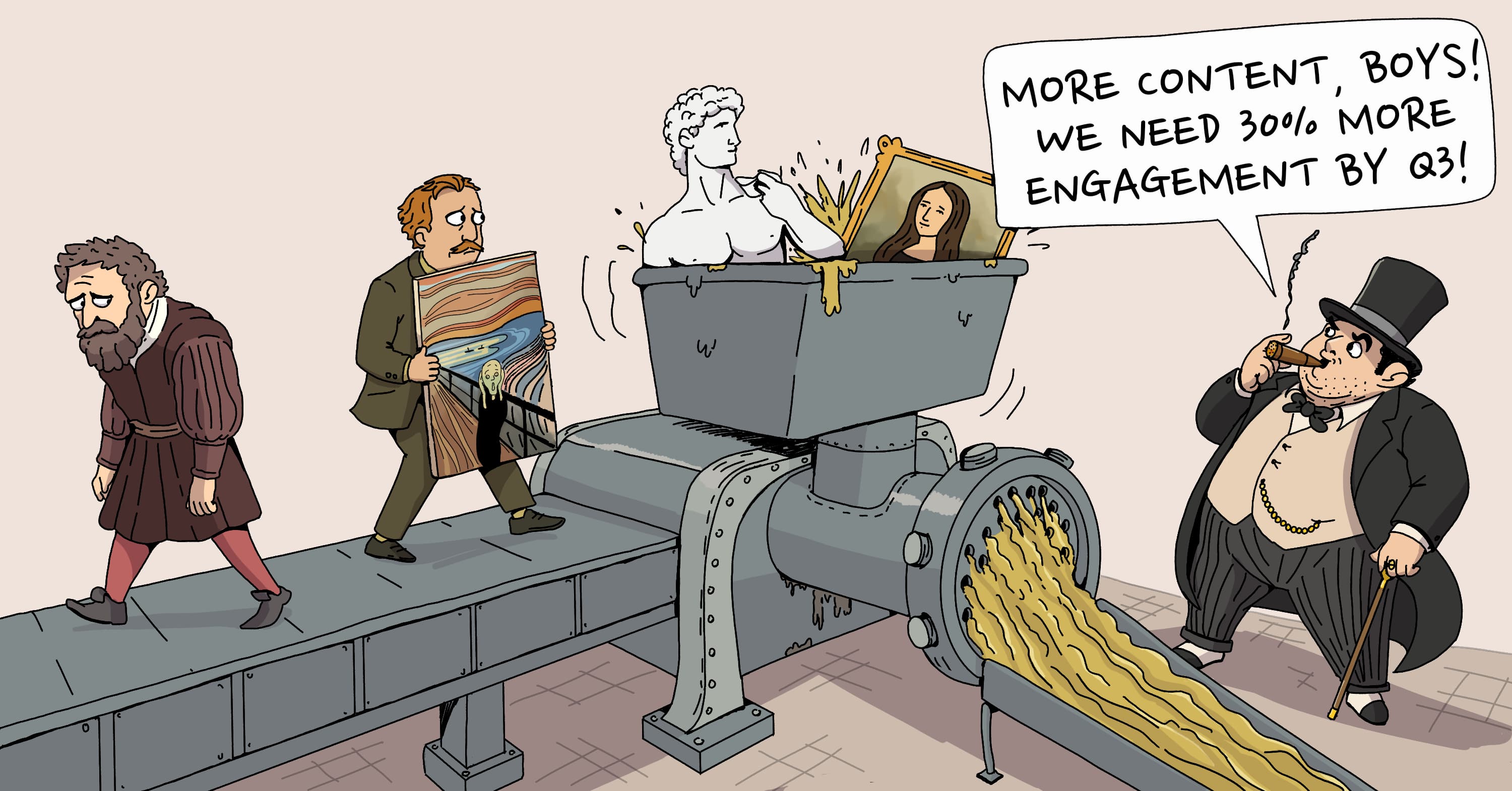
Image: Hacker News
The easiest way to make the point is with Michelangelo’s David. In the original essay, the author jokes that the sculpture is a wildly successful piece of “legacy content” with better engagement than TikTok and Instagram, and a museum gift shop converting 60% of its traffic. The joke is the point: calling art “content” sounds ridiculous, yet that language has become normal across the internet.
The author says the term took hold as businesses looked for a catchall label for creative work they could commercialize. They point to Bill Gates' 1996 essay “Content is King”, which argued that the internet would turn a wide range of creative output into a commodity.
“Content is where I expect much of the real money will be made on the Internet, just as it was in broadcasting.[…]When it comes to an interactive network such as the Internet, the definition of 'content' becomes very wide.”
Over time, the author argues, that vocabulary spread far beyond media executives and into how writers, filmmakers, and comedians describe themselves.
After quitting a job in 2018 to start a company, the writer says they adopted the same language, describing their ideas as “content businesses.” What changed was an indie business conference where even mostly one-person companies spoke in management jargon: “capturing value,” “distribution,” and “lifetime value.” That experience pushed the author to rethink their own terms.
Why the language changed
They no longer call their site’s audience “traffic” or their writing an “info product.” A blog is a blog. Visitors are readers. A book is a book, and the person writing it is an author.

Recommended reading
Google AI Overviews pulled Facebook 19.5M times
The shift matters, they argue, because language changes how work feels. “Traffic” suggests faceless numbers; “readers” suggests people choosing to spend some of their limited time with you. The same goes for sales language: the author recalls a vendor describing a mutual contact as someone who sends “great leads,” a phrase that landed as dehumanizing rather than flattering.
The essay doesn’t tell others what terms to use. Its narrower point is that many creators may be using business-school language by default, not by choice. If that vocabulary no longer fits, the author’s suggestion is simple: pick words that describe the work more honestly — blogger, comedian, artist — and reserve “content” for the people who actually want it.

Culture Editor
Maya explores gaming, streaming, and the internet as a place where people actually live. From deep-dives into creator economies to the anthropology of digital communities, she tracks platform drama and cultural shifts so you don't have to. She believes the best tech stories are fundamentally about human behavior.
via Hacker News