• 2 min read
Tu-214 wing redesign seen as too costly to pursue
Aviation experts say a composite wing for the Tu-214 would be too expensive and complex, even with budget support, as Russia pushes to ramp production.
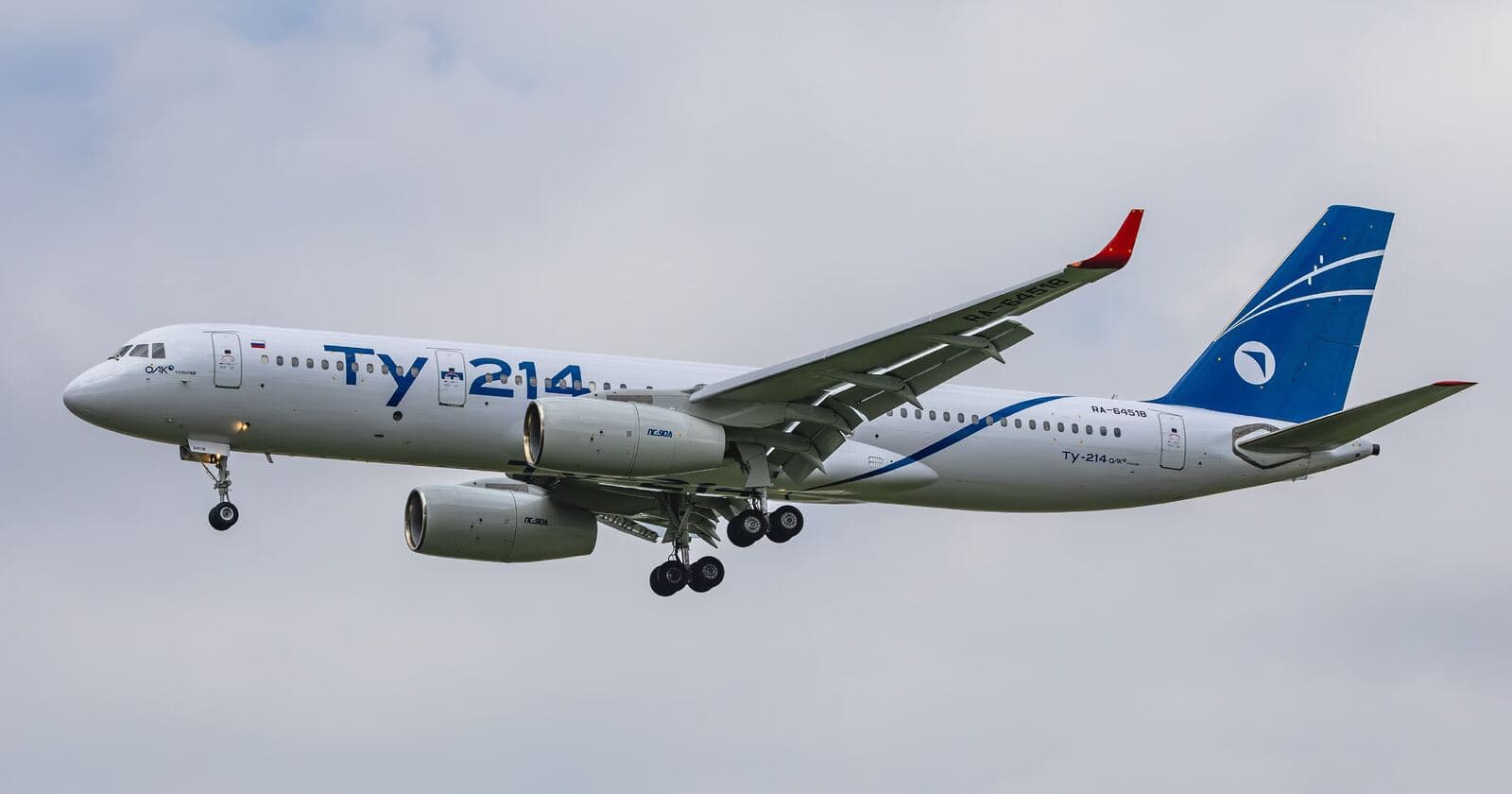
Image: ITzine
For Russia’s Tu-214, trimming weight inside the cabin looks far more realistic than fitting an all-new composite wing. That is how an aviation expert from SkyExpert framed recent talk of a deep modernization program: technically possible, perhaps, but hard to justify once cost, complexity, testing, certification, and production changes are counted.
The clearest room for savings is in the aircraft interior. Seats, galleys, lavatories, overhead bins, carpets, and other cabin components add up quickly, especially on a jet configured for 210–220 seats. Shaving even a few kilograms from each element could make a meaningful difference.
Beyond that, the fast options largely run out. According to the expert, an enlarged composite wing for the Tu-214 would likely demand so much redesign work that it starts to look less like an upgrade and more like a separate aircraft program. The same skepticism applies to discussion of a Tu-214M version with the PD-14M engine: the expert said there is no direct confirmation of such plans, so for now it looks more like a possible future concept than a settled program.
Tu-214 production plans in Kazan
The debate matters because the Tu-214 has become a fallback option for Russia’s civil aviation sector after Western manufacturers exited the market. The Kazan Aviation Plant has received new production contracts, and United Aircraft Corporation head Vadim Badekha said the plant should build four aircraft in 2026, eight in 2027, and then reach up to 20 aircraft per year.

Recommended reading
Judge Pauses Paramount’s $111B WBD Deal
But the aircraft remains heavy and expensive to produce. That is not a new problem: the Tu-214 is itself a major modernization of the Soviet-era Tu-204, and efforts to improve its performance run into the limits of the underlying design.
How the MC-21 changes the equation
That makes the composite-wing idea even harder to defend next to other programs. In the same market segment, the main rival is the MC-21 with the PD-14 engine, a newer platform designed from the outset to be more modern. If the MC-21 reaches serial deliveries at the promised scale, the case for a deeply reworked Tu-214 gets weaker on both technology and aircraft availability.
Timing is central here. The closer factories get to real serial output, the more expensive any extra redesign becomes for an aircraft already in production. If the priority stays on getting Tu-214s out quickly without a deep overhaul, the new-wing debate may remain an expert discussion rather than part of the manufacturing plan.

Enterprise Editor
Marcus follows the money. He covers enterprise software, cloud architecture, and the tectonic shifts in Big Tech strategy. He translates dense earnings calls and complex M&A activity into actionable insights about where the industry is actually heading. If a tech giant makes a silent pivot, Marcus is usually the first to notice.
via ITzine