• 3 min read
Weather sabotage is now a real forecasting risk
A manipulated airport weather station exposed a growing threat: tampered observations could distort AI-driven forecasts, energy markets, and alerts.
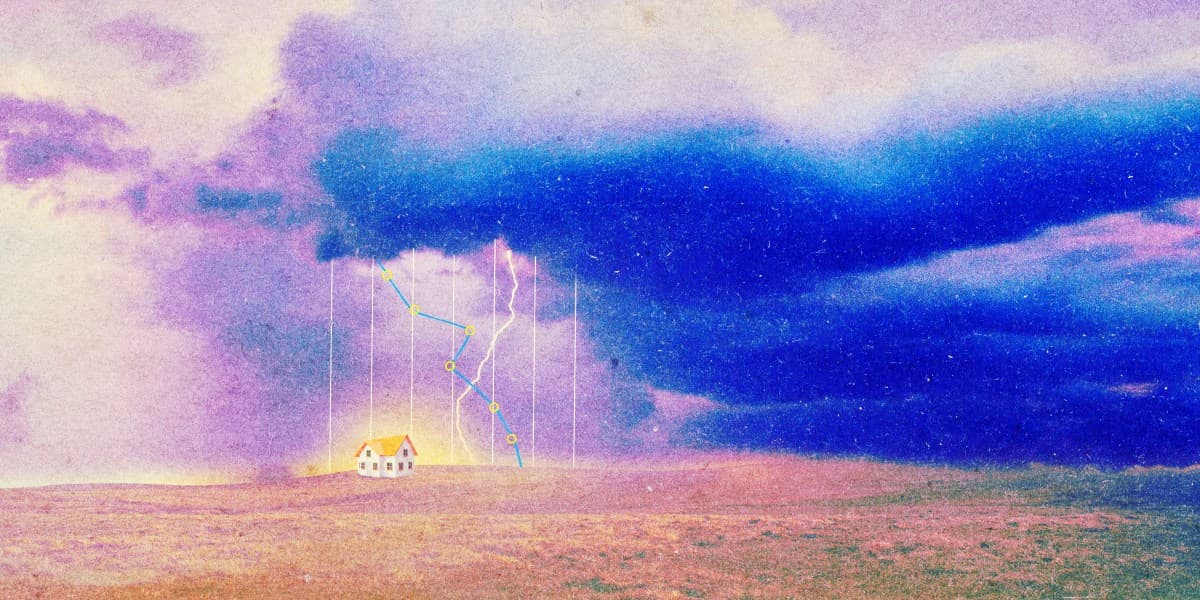
Image: MIT Technology Review
A weather forecast is easy to treat as background information. For airline dispatchers, grid operators, farmers, emergency planners, and prediction-market traders, it is operational infrastructure.
In an op-ed for MIT Technology Review, four researchers warn that weather data sabotage is becoming a serious risk as forecasting systems rely more heavily on observational data and newer data-driven AI models. Accurate forecasts depend on current measurements from sources such as weather stations at airports, utilities, and transport services. Traditional systems like Weather Research and Forecasting and the European Centre for Medium-Range Weather Forecast (ECMWF) Integrated Forecasting System cross-check those observations through data assimilation, comparing incoming readings with physical models and nearby stations.
That safety net can help catch routine problems such as instrument failures or equipment upgrades. But the authors point to a more deliberate threat. News outlets reported earlier this year that the weather station at Paris Charles de Gaulle Airport (CDG) was manipulated to record suspicious temperature spikes on April 6 and April 15, 2026. Authorities speculated that a hand-held hairdryer or lighter may have been used. The apparent goal was to trigger payouts in online prediction markets tied to whether temperatures would reach 22 °C (71.6 °F), even though the actual average was around 18°C (64.4°F). One individual won $20,000.
The anomaly was spotted by members of a French climate nonprofit association, not by an automated safeguard. According to the authors, that case was manageable because it involved a single station. The bigger concern is coordinated interference across many stations, with changes small enough to look plausible individually but large enough, together, to skew forecasts.
Recommended reading
These robot clothes crawl onto your body
How AI weather models raise the stakes
The risk grows as forecasting shifts toward AI-based systems that are even more dependent on clean observational data. The authors note that researchers at ECMWF are exploring whether high-quality forecasts can be generated directly from raw observations, bypassing the assimilation step that currently acts as a quality filter. Others are combining geospatial data, including weather station data, with large language models and agentic AI for real-time autonomous decisions during storms and other extreme events.
That could improve accuracy, efficiency, and speed. It could also expand the consequences of bad data—from a single gambler seeking profit to coordinated traders trying to influence renewable energy forecasts and wholesale electricity prices, or even a state actor attempting to trigger or suppress an early-warning system.
Three defenses the authors call for
The op-ed lays out three priorities:
- Watch the stations: strengthen station security, anomaly detection, correction, and human oversight; speed up data homogenization so problems can be caught in real time.
- Protect the data to safeguard the AI: add defenses across the AI pipeline, including explainability and adversarial robustness tools.
- Ensure continuous accountability along the chain: improve coordination among station operators, national weather services, forecasting centers, and the people acting on forecasts.
The authors are Monique Kuglitsch of the Fraunhofer Heinrich Hertz Institute and the UN Global Initiative on Resilience to Natural Hazards through AI Solutions; Jesper Dramsch of ECMWF; Franz G. Kuglitsch of the GFZ Helmholtz Centre for Geosciences and IUGG; and Andrea Toreti of the European Commission’s Joint Research Centre. Their warning is blunt: as more money and more critical decisions depend on weather data, tampering with the observations behind it becomes a much bigger target.

Frontier Editor
Dan is our resident futurist, covering electric mobility, space exploration, and the smart home. He's interested in atoms just as much as bits. Whether it's a new battery chemistry, a reusable rocket, or a protocol that finally makes IoT devices talk to each other, Dan breaks down the engineering that pushes humanity forward.