• 2 min read
1X shows Neo hands opening Funyuns and building Lego
1X’s Neo Beta robot hands use a tendon-driven design for humanlike dexterity, handling tasks from unzipping jackets to lifting a 20 lb. dumbbell.
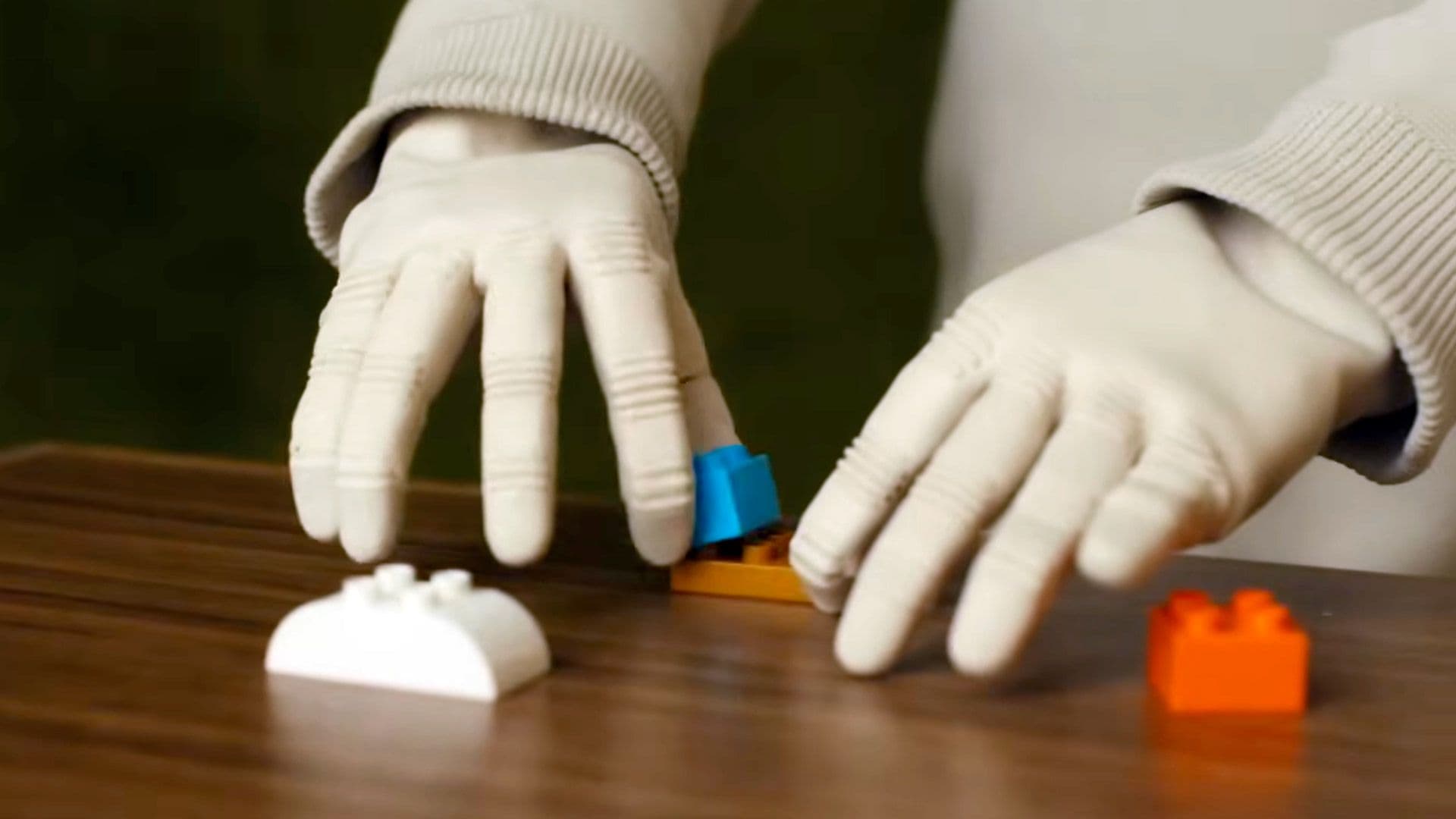
Image: TechRadar
1X has posted a new demo of its Neo Beta robot hands, showing off a level of dexterity that gets unusually close to human movement. In the video, the hands screw in a lightbulb, pull its chain switch, pluck grapes one by one, pick up a screw, unzip a jacket, open a small bag of Funyuns, and assemble a small stack of Duplo blocks.
The hands move slowly, but with enough control that they can look almost human at a glance. Their design is a big part of that. According to 1X, the waterproof, rubber-covered hands use a closed-loop tendon-driven system, with motors or servos moved out of the hand and back along the arm. That keeps the hand smaller and more flexible, while tendon-like connectors handle finger movement in a way that more closely mirrors human anatomy.
1X says the fingers, palm, and thumb have 25 degrees of freedom. The demo also shows the fingers bending backward farther than a human hand normally would. On the strength side, the hands lift a 20 lb. dumbbell and use a single finger to curl a smaller pulley weight.
Sensors in the fingers help the robot detect grip and adjust force, which is how the hand manages delicate tasks without crushing objects. TechRadar notes that this is a different kind of finesse than the robotic gall-bladder surgery demo shown last week, where the robots manipulated laparoscopic controls rather than directly handling surgical tools.
The hands are also shown helping the robot manage itself: a Neo Beta unit picks up its MagSafe-style charging puck and attaches it to its hip. According to 1X, the new hands will generate more real-world training data for its robotics work as the $20,000 Neo moves toward consumer homes, with early adopters possibly receiving units now.
Recommended reading
Hassabis says STEM makes you 10x better at AI

AI Editor
Ava covers the rapidly evolving world of artificial intelligence, from foundational models and research labs to the real-world economics of intelligence. With a background in computational linguistics, she cuts through the hype to find out what actually works. She firmly believes that benchmarks are just marketing until reproduced in the wild.
via TechRadar