• 3 min read
6G signal breakthrough filters interference at the source
University of Glasgow researchers say they can help future 6G networks dodge interference using intelligent surfaces that boost trusted users only.
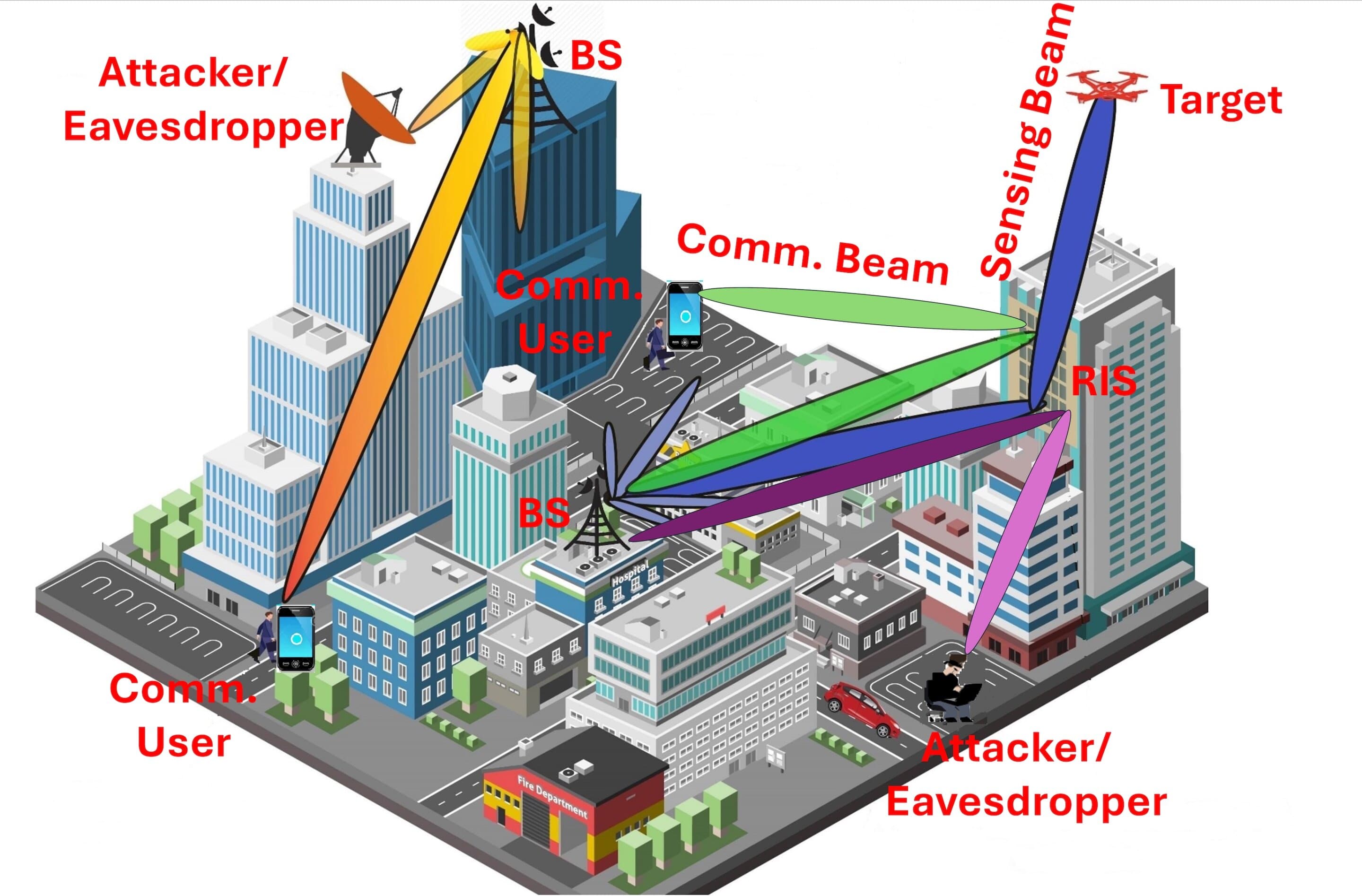
Image: TechXplore
A University of Glasgow-led team says it has addressed a persistent problem in one of the core technologies proposed for future 6G networks: how to use reconfigurable intelligent surfaces, or RIS, without also amplifying background interference.
The work targets electromagnetic interference (EMI), which grows as more devices communicate over Wi-Fi, Bluetooth, and mobile networks. With the number of connected devices now estimated at more than double Earth’s human population of 8 billion, that noise is becoming a bigger obstacle to clear wireless links.
RIS are programmable “smart surfaces” that can reflect and redirect electromagnetic waves. Saber Hassouna, a research associate at the University of Glasgow’s James Watt School of Engineering and first author of the paper, compared them to a mirror that can be tilted to direct sunlight exactly where it is needed. In wireless networks, that means concentrating signal energy on intended receivers instead of scattering it broadly.
The catch is that RIS typically reflect all incoming signals, including interference. According to the researchers, earlier attempts to cancel that interference often weakened the desired signal too. Their answer is an EMI-aware framework that instead filters interference by identifying its statistical “fingerprint” and scanning beam directions to find the strongest useful signal before adjusting the surface.

Recommended reading
Samsung uses AI to write chip-check scripts
Jalil Kazim, a co-author, said that approach could also reduce the heavy digital signal processing normally pushed onto a base station, cutting computational load and energy use.
In a lab test reported in the IEEE Journal of Selected Topics in Electromagnetics, Antennas and Propagation, the team used a RIS with more than 4,000 elements in a 64-by-64 grid. Signals came from software-defined radios operating at 3.5 GHz, the band currently used by 5G networks. The setup included five users: three legitimate users inside the room and two in an outside corridor representing potential eavesdroppers.
Guided by the algorithm, the surface focused energy on the three intended users while leaving the corridor users without a usable signal. The researchers said the results matched their simulations and showed improved data rates along with accurate user location data, including for the two people outside the lab.
Professor Muhammad Ali Imran, head of the James Watt School of Engineering and a co-author, said security, privacy, and resilience are now essential requirements for these networks. Professor Qammer Abbasi, corresponding author and director of the Centre for Integrated Sensing, Communication and Computing for Cognitive Cities (ISAC³), said the work is part of broader efforts launched in February 2026 to build integrated sensing and communications systems for future urban infrastructure.
Researchers from King Fahd University and the University of Leicester also co-authored the study. The paper is titled “Integrated EMI-Aware RIS Framework for Robust Communication and Localization: Simulation and Experimental Evaluation” with DOI 10.1109/jsteap.2026.3708807.

Enterprise Editor
Marcus follows the money. He covers enterprise software, cloud architecture, and the tectonic shifts in Big Tech strategy. He translates dense earnings calls and complex M&A activity into actionable insights about where the industry is actually heading. If a tech giant makes a silent pivot, Marcus is usually the first to notice.
via TechXplore