• 2 min read
AMD debuts Helios AI superserver for Microsoft and OpenAI
AMD has unveiled its first full-rack AI system, Helios, with Microsoft, Meta, OpenAI, and Oracle set to receive shipments later in 2026.
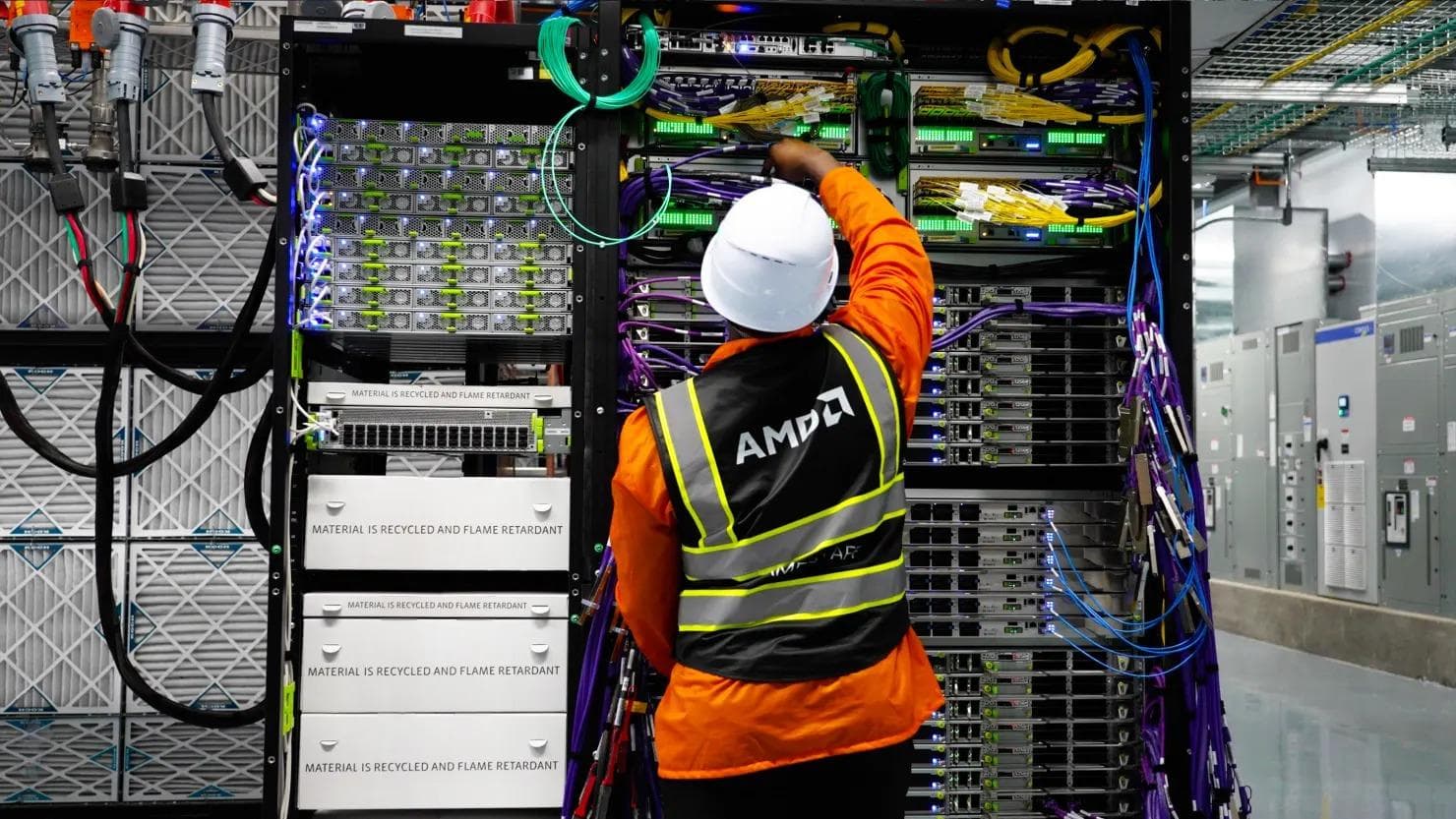
Image: iXBT
AMD has introduced Helios, its first full-rack AI superserver, positioning it as a direct rival to Nvidia Grace Blackwell and Vera Rubin systems. The first major customer is Microsoft, which said it will deploy Helios in Azure data centers. Shipments to customers including Microsoft, Meta, OpenAI, and Oracle are scheduled to begin later in 2026.
Helios brings together four core AMD areas: GPUs, CPUs, networking, and software. Each of its 18 compute racks contains 4 Instinct GPUs paired with 1 EPYC server processor. AMD says the system is built for both training and running high-performance models, including inference workloads.
Microsoft plans to use Helios for its own Azure AI services and for customer infrastructure. The company also said it will add two new compute instance types based on AMD Venice processors: one aimed at agentic AI and data processing, and another for semiconductor design. Microsoft was also previously the first major customer for AMD MI300X accelerators, which compete with Nvidia products.
The launch comes as demand for AI compute keeps rising. Meta has previously said it plans to use up to 6 GW of AMD accelerators, starting with 1 GW of Helios-based systems, while OpenAI and Oracle have also announced plans to deploy the platform. Even so, Nvidia still controls more than 95% of the server GPU market, while AMD is estimated to hold about 4.5%.
According to Futurum Group, a technology market research firm, one Helios system could cost $5 million to $5.5 million. AMD expects AI data centers to generate tens of billions of dollars in revenue starting in 2027. The bigger test may be less about hardware performance than whether AMD can chip away at Nvidia’s long-standing software advantage with CUDA.

Recommended reading
OVH mass-rebooted hosts to patch Januscape bug

Enterprise Editor
Marcus follows the money. He covers enterprise software, cloud architecture, and the tectonic shifts in Big Tech strategy. He translates dense earnings calls and complex M&A activity into actionable insights about where the industry is actually heading. If a tech giant makes a silent pivot, Marcus is usually the first to notice.
via iXBT