• 3 min read
Apple eyes PrismML to squeeze 27B AI onto iPhones
Apple is in early talks with PrismML, whose compressed 27B model can run in an iPhone-sized memory budget with tradeoffs in accuracy.
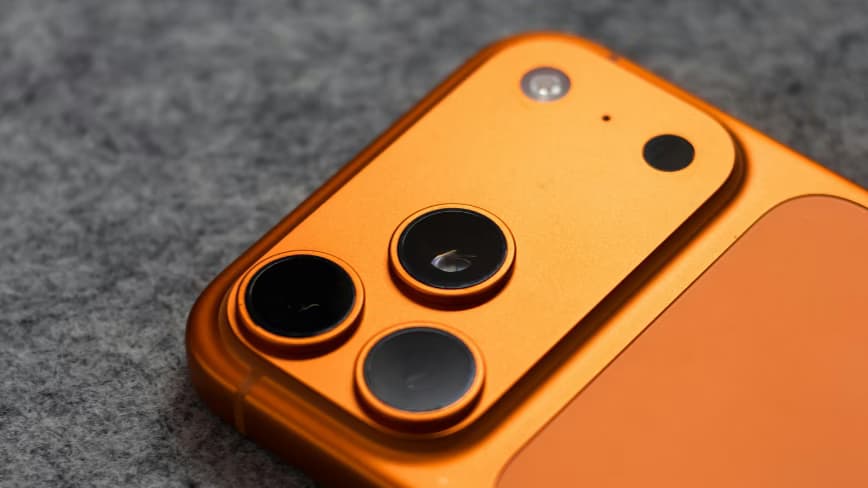
Image: TNW
Apple is in early talks with PrismML, a startup trying to cram large AI models onto phones instead of sending requests to the cloud. PrismML CEO Babak Hassibi told CNBC that Apple and other companies are evaluating its technology, though he said the discussions are still very early and it is unclear where they will lead. Apple declined to comment. The Information first reported Apple’s interest last week.
PrismML is a Khosla Ventures-backed spinout from the California Institute of Technology. Caltech owns the underlying patents and licenses them exclusively to PrismML. The company raised a $16.25 million seed round in March.
On Tuesday, PrismML released Bonsai 27B, a compressed version of Alibaba’s open-source Qwen model, rather than a newly trained model. The company says it shrank the model from roughly 54GB to as little as 3.9GB.
PrismML offers two free-licensed versions:
Recommended reading
Hassabis says STEM makes you 10x better at AI
- A ternary build designed to run on a laptop
- A 1-bit build, about 3.9GB, meant to fit within the memory budget of an iPhone 17 Pro
The startup says this is the first model of that size to run on a phone. Its approach reduces internal values from 16 bits to just one or three possible values, which PrismML says cuts memory use by 10 to 15 times, speeds responses by six to eight times, and lowers energy use by three to six times.
Why Apple is interested in on-device AI
The appeal for Apple is straightforward. Running more AI locally could reduce latency, lower cloud costs, strengthen Apple’s privacy pitch, and let some features work offline. Apple already routes more complex requests to cloud models, and it is trying to make Siri more competitive with assistants from OpenAI and Anthropic.
The timing also stands out. PrismML released Bonsai 27B a day after Apple opened the public beta of iOS 27, which includes its long-delayed Siri overhaul.
There are tradeoffs. Hassibi said compressed models lose a few percentage points of performance, with factual recall weakening before reasoning, maths, and coding. PrismML says its ternary version retains about 95% of full performance, while the 1-bit build keeps about 90%.
Memory costs and the battery question
Cost may matter as much as capability. Morgan Stanley estimates Apple’s memory costs could rise sharply in its 2027 financial year, and expects the company to raise iPhone prices to protect margins. Smaller models could help Apple add more capable AI features without paying for more memory.
Analysts remain cautious. Tarun Pathak of Counterpoint Research said the real test is how the system handles millions of queries across thousands of devices. Phil Solis of IDC said power consumption is still the biggest open question, because a model that runs frequently could still drain battery life.
The release also adds to the debate over whether more efficient models will reduce demand for memory and data-center chips. Gil Luria of D.A. Davidson said model compression will not remove the need for processors, but shift some of that demand from data centers to phones as edge AI grows.
“It’s very important that the intelligence be local and that it can run fast.”
Hassibi said Google’s open-source Gemma model is next in PrismML’s pipeline, followed by larger frontier models.

AI Editor
Ava covers the rapidly evolving world of artificial intelligence, from foundational models and research labs to the real-world economics of intelligence. With a background in computational linguistics, she cuts through the hype to find out what actually works. She firmly believes that benchmarks are just marketing until reproduced in the wild.
via TNW