• 4 min read
AT&T and Ericsson use 5G to track rogue drones
A Texas demo showed standard 5G hardware identifying and tracking drones in real time, years before 6G sensing standards are expected.
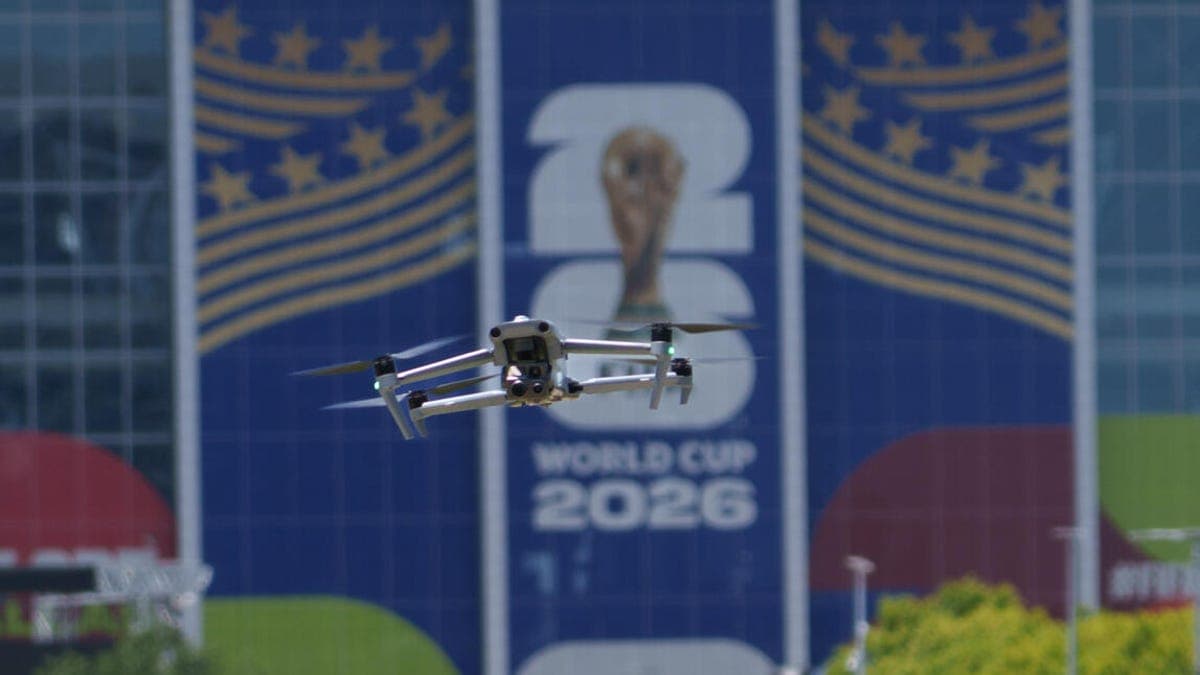
Image: CNET
A 5G network built for phones was used to identify and track a rogue drone near AT&T Stadium in Arlington, Texas, in a proof-of-concept demo from AT&T and Ericsson timed around the World Cup.
From a balcony near the venue, a dot appeared on a screen as an unwanted drone moved toward a rectangular no-fly zone. Seconds later, a “friendly” drone flew in to intercept it. The key difference from conventional airspace monitoring: the aircraft was not detected by radar, but by 5G cellular radios like those already mounted on towers and buildings.
The companies call the system Integrated Sensing and Communication, or ISAC. While the demo focused on drones, the same approach could also be used to track vehicles or people within range of the network.
That matters as drone incidents climb. Reuters reported that the FBI said more than 700 drones were confiscated by US agencies during the World Cup, including some flown by people who did not realize the no-fly zones had been expanded for matches. The broader concern is that small drones can be hard to spot and potentially destructive, a problem for events such as the 2028 Olympics in Los Angeles and even smaller public gatherings.

Recommended reading
iPhone 18 Pro may jump to $1,299 this fall
How the 5G drone-tracking demo worked
For the test, AT&T and Ericsson set up a multistatic sensing configuration using three cell towers. Each tower used standard Ericsson Massive MIMO radios with sensing enabled, positioned about 1.6 miles from the demo area.
Once the object was picked up outside the restricted area, the software classified it using signal processing and AI algorithms as a drone flying about 11 mph. If it had been a real threat, the same live data could have been shared with law enforcement and the Department of Homeland Security, the companies said.
Only two drones were tracked during the demonstration, but AT&T says the system can track swarms.
The companies argue that using cellular infrastructure has a clear advantage over radar. Radar already scans the skies, but it typically focuses on higher altitudes and requires dedicated hardware. A cellular network, by contrast, already has a broad physical footprint. In the demo, drones were flying at around 300 to 400 feet, and the companies said detection range can reach up to 6 kilometers.
Robert Soni, vice president of Radio Access Network technology at AT&T, pointed to the carrier’s 75,000 sites across North America.
“This is a significant number that is difficult to replicate by building a purposeful radar. We’re also closer to the ground, and because of our angle of elevation, we can go down to a lower altitude than you could with traditional airborne-based radar. We’re able to see more of the nation.”
Akhil Gokul, vice president and head of technology for the Americas at Ericsson, said denser sensing coverage improves accuracy because multiple towers capture reflections of radio waves, creating richer data for the models. The setup is also more resilient, the companies said, because cellular networks are already designed to compensate when a site goes offline.
A 6G feature being tested early
AT&T and Ericsson said the sensing capabilities shown in Texas are expected to become part of future 6G standards, but they are pushing ahead now rather than waiting for the standards process to finish.
“From a technology point of view, this was viewed as a 6G capability, and this is something that’s actually being developed in the standards. What we’re doing in collaboration with AT&T is accelerating that much earlier.”
Yigal Elbaz, senior vice president and network chief technology officer at AT&T, framed the effort as a way to get more out of existing infrastructure instead of adding expensive new hardware to towers.
The Texas test was small—just two drones outside an empty stadium—but it demonstrated real-time tracking and identification using existing 5G hardware, years before 6G is likely to arrive around 2030.

Gadgets Editor
Eli is obsessed with the tangible future. He reviews phones, wearables, and everything with a battery. Known for his rigorous testing protocols and unabashed teardowns, Eli has broken more review units than he cares to admit, all in the name of discovering the truth about durability and repairability.
via CNET