• 2 min read
China brings 1GW AI data center online without Nvidia
Z.AI has partially launched a 1GW data center for training GLM models using Chinese accelerators, Bloomberg reports, with no Nvidia chips involved.
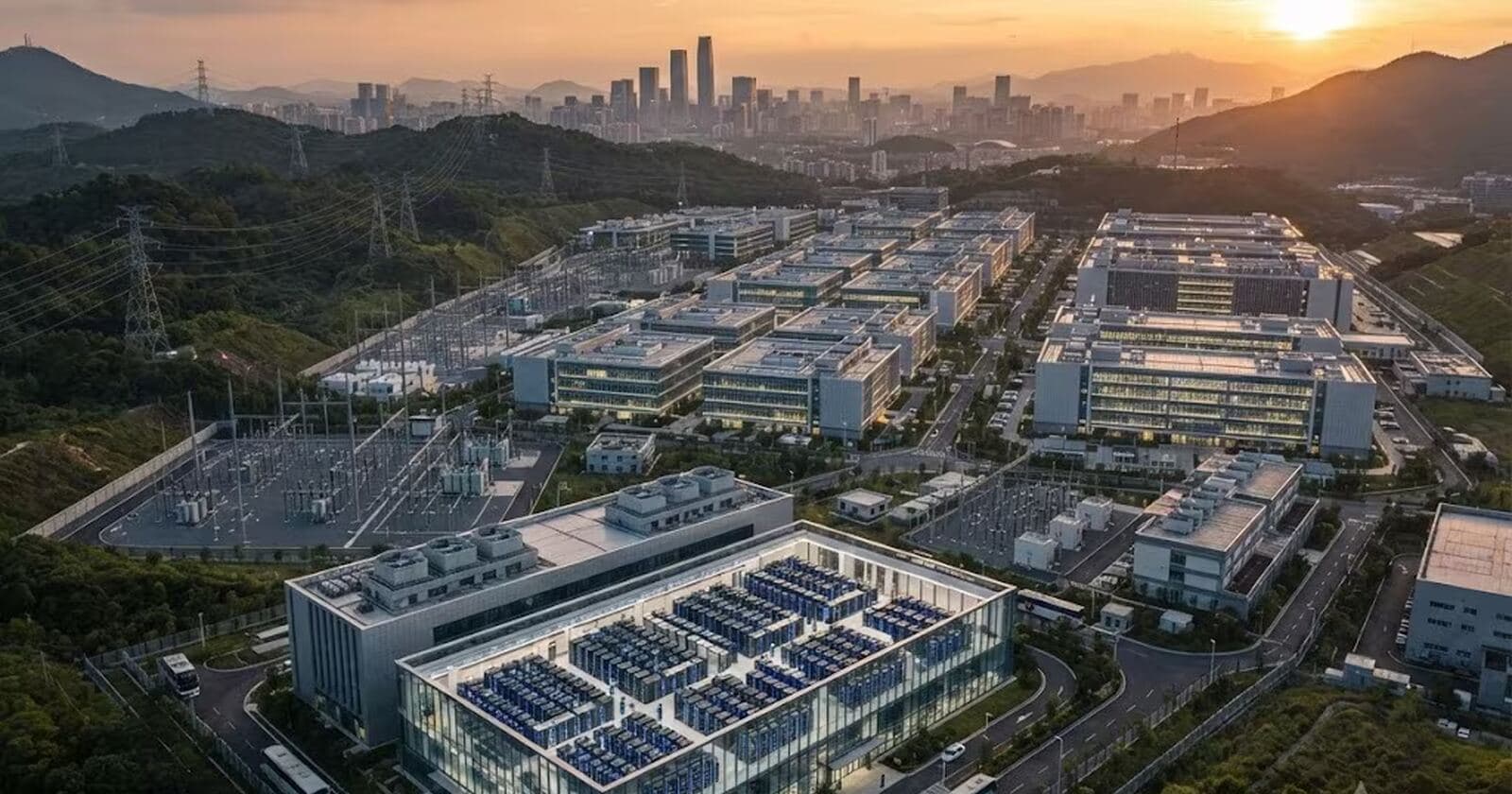
Image: ITzine
China’s Z.AI, formerly known as Zhipu, has begun partially launching a new data center to train its GLM models. According to Bloomberg, the facility is built on Chinese accelerators, not Nvidia chips, and has a reported capacity of 1GW.
If confirmed, that would make it one of the clearest examples yet of a Chinese AI company building large-model training infrastructure around US export restrictions. Access to accelerators had long been the main bottleneck; now the fight is shifting to the infrastructure itself.
The scale is as striking as the hardware choice. 1GW is roughly equivalent to the power consumption of 750,000 homes. For the AI sector, that puts the project well beyond a typical large data center and closer to a dedicated computing city.
Bloomberg says Z.AI is already using several clusters, each with more than 10,000 chips. None of them are made by Nvidia. The company has not disclosed which accelerators it is using, which is hardly unusual in China’s still-maturing AI chip market, especially when the systems are meant for training major models rather than public demos.
The project matters beyond a single site. In recent years, the US has steadily tightened limits on shipments of advanced accelerators to China, with Nvidia becoming the clearest symbol of that policy. For Chinese developers, that has created two challenges at once: replacing imported chips and proving that domestic hardware can do more than run finished systems — it can also train heavy models.
Recommended reading
Nvidia’s deepfake detector scans video in 22 ms
That question is still unresolved. Chinese accelerator makers, especially Huawei, Cambricon, and Alibaba, are gaining ground, but the gap with Nvidia in both performance and software ecosystem remains significant. That makes the Z.AI facility a test of the full stack: chips, servers, cooling, power, and software.
There are already signs that Chinese companies are moving faster toward self-built infrastructure. Just days ago, Beijing-based Moonshot unveiled Kimi K3, a model compared with leading US rivals on capability, but the company then hit a compute shortage and temporarily paused new user registrations. Against that backdrop, Z.AI’s push for a large in-house data center looks like an attempt to remove the bottleneck before growth runs into capacity limits.
The Chinese government is also planning at scale. Bloomberg estimates that over the next five years, the country could direct about 2 trillion yuan, or roughly $295 billion, toward data center construction. The competition is no longer just about building a better model, but about securing the infrastructure required to train one at all.
For Nvidia and other Western suppliers, that is an uncomfortable but predictable shift: the more China builds its own chips, servers, and training sites, the less dependent it becomes on imported accelerators.

AI Editor
Ava covers the rapidly evolving world of artificial intelligence, from foundational models and research labs to the real-world economics of intelligence. With a background in computational linguistics, she cuts through the hype to find out what actually works. She firmly believes that benchmarks are just marketing until reproduced in the wild.
via ITzine