• 2 min read
China Plans Mach 26 Asteroid Impact Test Before 2030
Chinese researchers want to hit asteroid 2015 XF261 at more than 9 kilometers per second, using a two-spacecraft mission aimed for 2029 or 2030.
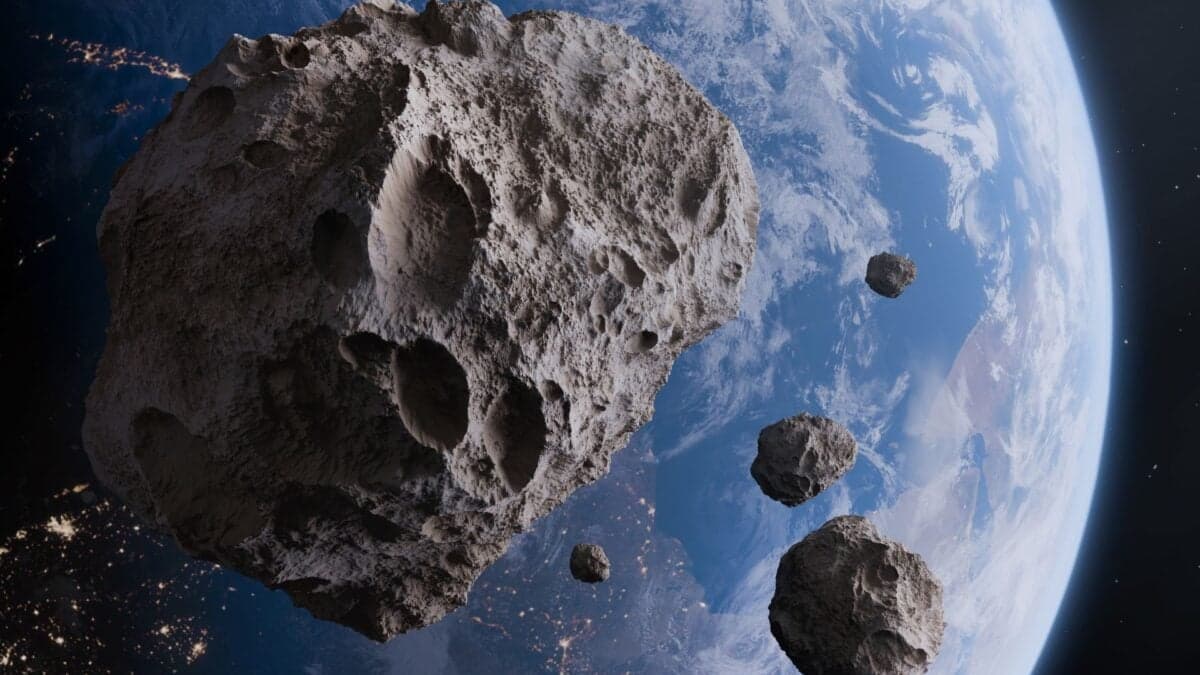
Image: Gizmodo
After NASA’s DART proved an asteroid could be nudged off course, Chinese researchers are planning a faster, harder hit. According to the South China Morning Post, the proposed planetary defense mission would send two spacecraft to near-Earth asteroid 2015 XF261 before 2030: one to smash into it, and another to watch what happens.
The target would be intercepted during a close approach to Earth in 2029 or 2030, when it is expected to be about 4.3 million miles (7 million kilometers) away. The impactor would strike at more than 5.6 miles per second (9 kilometers per second)—well above DART’s 3.8 miles per second (6.1 kilometers per second). That translates to more than Mach 26 at sea level, versus Mach 19 for DART, giving the Chinese mission significantly more kinetic energy.
NASA’s DART mission hit the asteroid moonlet Dimorphos in September 2022 at nearly 15,000 miles per hour (24,000 kilometers per hour), becoming the first planetary defense test and shifting Dimorphos’s orbit by 33 minutes. DART also changed the system’s path around the Sun. China’s team argues its concept is closer to a real-world defense case because it aims to alter an asteroid’s trajectory relative to Earth.

Recommended reading
Green hydrogen could clean up aviation—but airports lag
“Dart was the first to demonstrate asteroid deflection by kinetic impact in space, but it did not directly change an asteroid’s orbit around the sun relative to Earth, making it different from a real planetary-defence scenario.”
The mission would also differ in how it observes the collision. DART deployed Italy’s LICIACube to capture the impact, while the European Space Agency’s Hera, launched in October 2024, is still en route for follow-up observations later this year. China instead plans to launch both spacecraft together.
The target asteroid is small—about 98 feet (30 meters) wide—and still poorly understood. 2015 XF261 completes one orbit around the Sun every 359.7 days and has been observed only 74 times since its discovery, leaving researchers with limited data on its composition and rotation.

Frontier Editor
Dan is our resident futurist, covering electric mobility, space exploration, and the smart home. He's interested in atoms just as much as bits. Whether it's a new battery chemistry, a reusable rocket, or a protocol that finally makes IoT devices talk to each other, Dan breaks down the engineering that pushes humanity forward.
via Gizmodo