• 2 min read
Chinese zinc battery runs for 5,128 hours
Researchers at Fudan University and the Chinese Academy of Sciences built a flow zinc battery that ran 5,128 hours in lab tests.
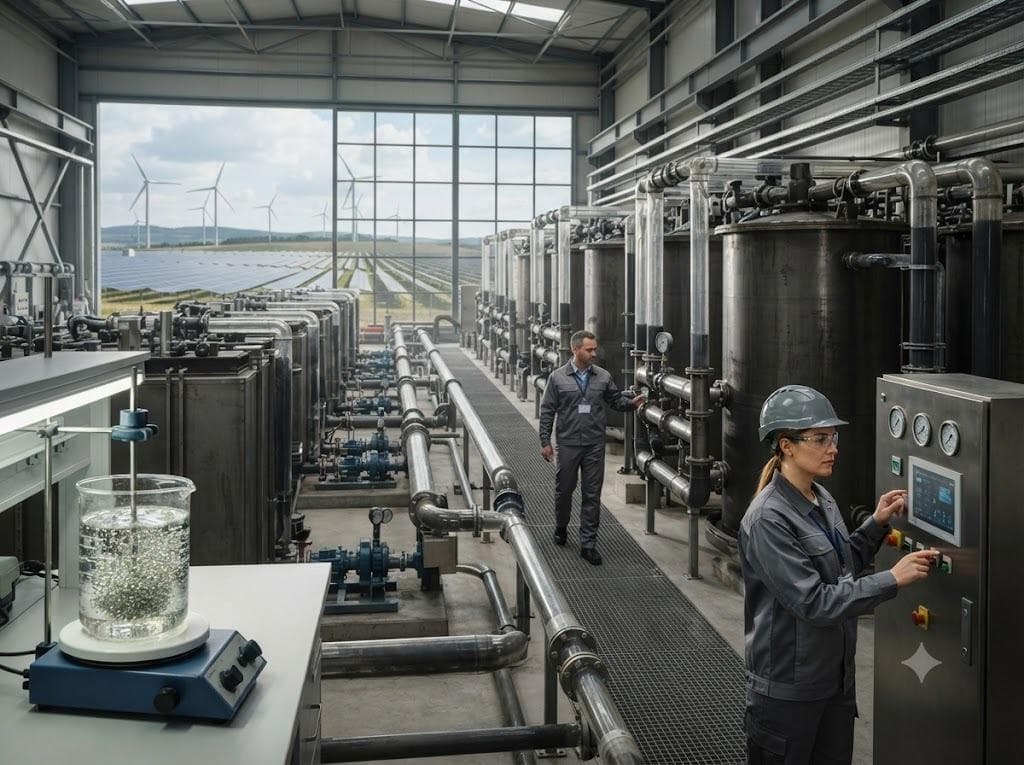
Image: iXBT
A flow zinc battery developed by researchers at Fudan University and the Chinese Academy of Sciences ran continuously for 5,128 hours in laboratory testing, according to a study published in Nature Energy. The team says the system is aimed at long-duration energy storage for use alongside solar and wind power plants, storing excess generation for later use.
Instead of a conventional solid zinc electrode, the researchers used a suspension of zinc nanoparticles in a conductive liquid. That material circulates continuously between an external tank and an electrochemical cell, while the zinc reversibly switches between metallic and ionic forms during charging and discharging.
A long-standing problem for zinc batteries of this kind has been instability: zinc particles can clump together, and the electrode surface can gradually degrade. The new design combines zinc nanoparticles with a hollow carbon framework and a special electrolyte intended to keep reactions stable over repeated cycles.
In testing, the battery reached a coulombic efficiency of 99.94%, measuring how much charge is recovered relative to what was used during charging. A second battery variant based on the same architecture — zinc–manganese dioxide — retained 81.1% of its initial capacity after 5,500 charge-discharge cycles.
The researchers say the flow design separates power from stored energy volume. In practice, that means energy capacity can be increased by expanding the amount of stored suspension in the tanks, without major redesign of the electrochemical system itself. That could make the approach suitable for large-scale energy storage.

Recommended reading
Falcon 9 launch aborted after engines ignited
The team’s next step is to move the technology from a lab prototype toward practical long-duration storage systems by improving the suspension composition and equipment integration.

Frontier Editor
Dan is our resident futurist, covering electric mobility, space exploration, and the smart home. He's interested in atoms just as much as bits. Whether it's a new battery chemistry, a reusable rocket, or a protocol that finally makes IoT devices talk to each other, Dan breaks down the engineering that pushes humanity forward.
via iXBT