• 3 min read
Chinese startup raises $29.5M for AI rocket engines
Six-month-old LegendSpace says its Prime platform can cut liquid rocket engine development from years to about two weeks.
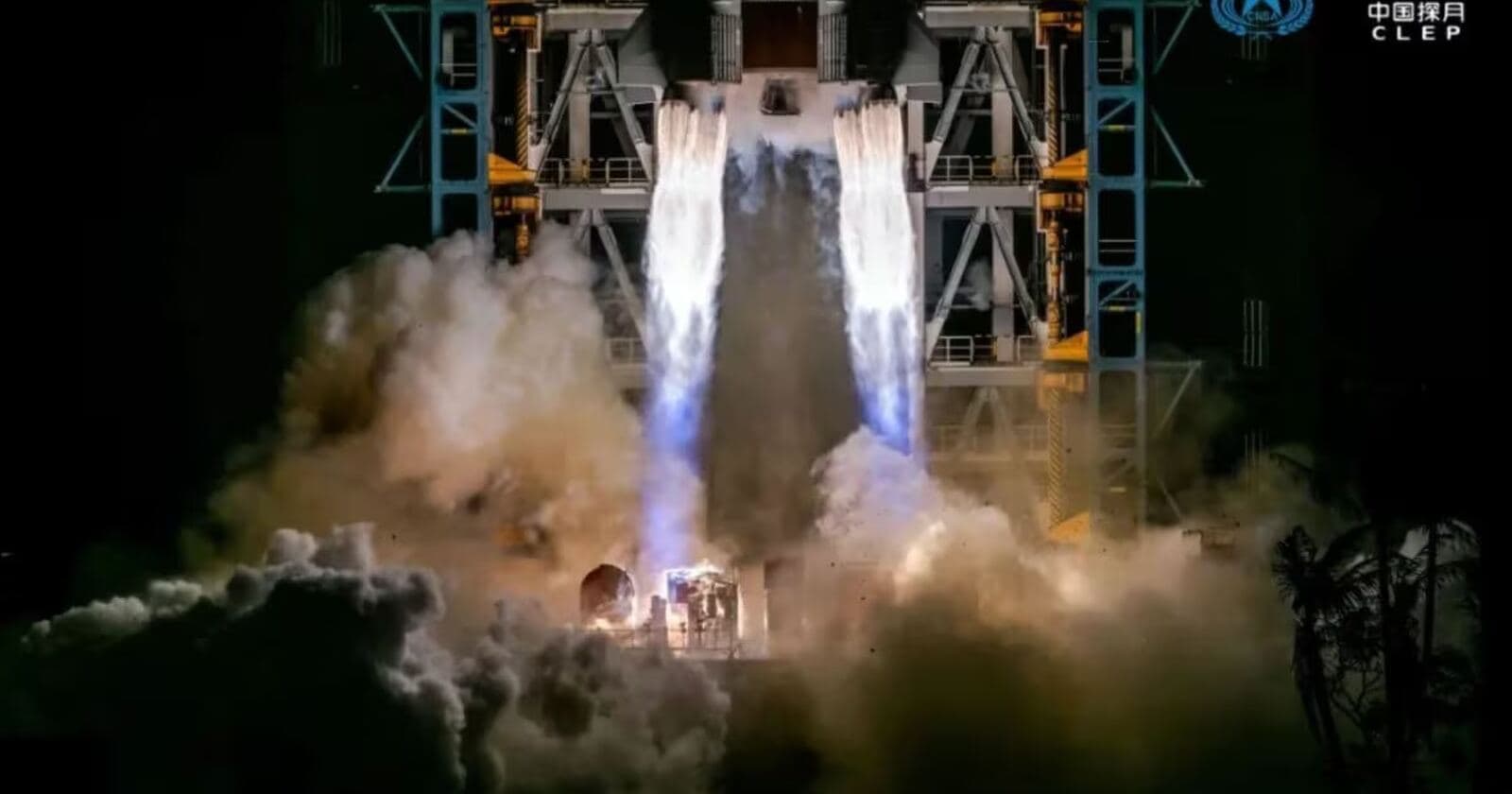
Image: ITzine
Just six months after launch, Chinese startup LegendSpace has raised 200 million yuan, or $29.5 million, to develop liquid rocket engines with AI-driven tools.
The company says its Prime platform could shrink the engine development cycle from several years to roughly two weeks. According to LegendSpace, Prime combines design generation, physical simulation, metal 3D printing, and bench testing into a single loop. The startup also claims it has already completed a full development cycle, including cold-flow and hot-fire tests.
At the core of the platform is DeepFlame, an open combustion-process simulation system created by researchers at Peking University. LegendSpace presented the project in March at the Zhongguancun forum alongside the Institute for Artificial Intelligence for Science, and is now moving into pilot production of an engine with 2.5 tons of thrust while building its own test facility.
The company has not disclosed several key details, including the fuel type, engine architecture, customers, or the equipment used for its first full-cycle verification.
LegendSpace’s pitch is straightforward: in rocket propulsion, speed to the test stand matters almost as much as performance. Traditional liquid-engine development can take years because design, simulation, manufacturing, and testing are often broken up by manual handoffs and long delays. LegendSpace is trying to remove some of that friction by automating the full process.
Recommended reading
This drone spins itself nearly out of sight
That makes it a broader bet than the usual optimization software. Here, AI is meant to do more than tune parameters: it is also supposed to help design the engine, model fuel behavior, and prepare parts for 3D printing. If that works, engineers could evaluate dozens of variants faster and discard weak designs before expensive physical tests.
Founder Chen Zhi, who started LegendSpace in January, also works at Peking University and serves as deputy head of AISI. That helps explain why the startup is focused less on a single showcase engine and more on building infrastructure for repeatable, serial development.
LegendSpace is entering a Chinese space market that is no longer dominated solely by the state. Private companies in the country are already building reusable rockets, developing their own engines, and pushing toward serial production for commercial launches. Chinese media have drawn comparisons with SpaceX, whose development process under Elon Musk relies heavily on digital design, simulation, and rapid iteration, with Raptor often cited as a leading example.
But the gap between that comparison and a working business remains large. LegendSpace is still building its test base and has yet to show a product lineup or name customers that would demonstrate demand. Its funding is notable for China, but still sits within the broader momentum of the country’s commercial space sector. The next proof point is whether Prime can actually compress timelines, rather than simply adding another software layer on top of conventional engineering.

Frontier Editor
Dan is our resident futurist, covering electric mobility, space exploration, and the smart home. He's interested in atoms just as much as bits. Whether it's a new battery chemistry, a reusable rocket, or a protocol that finally makes IoT devices talk to each other, Dan breaks down the engineering that pushes humanity forward.
via ITzine