• 3 min read
Chip Motors bets on a tiny EV that can park itself
Miami startup Chip Motors unveiled a low-speed EV with up to 100 miles of estimated range, remote parking, and prices starting at $15,000.
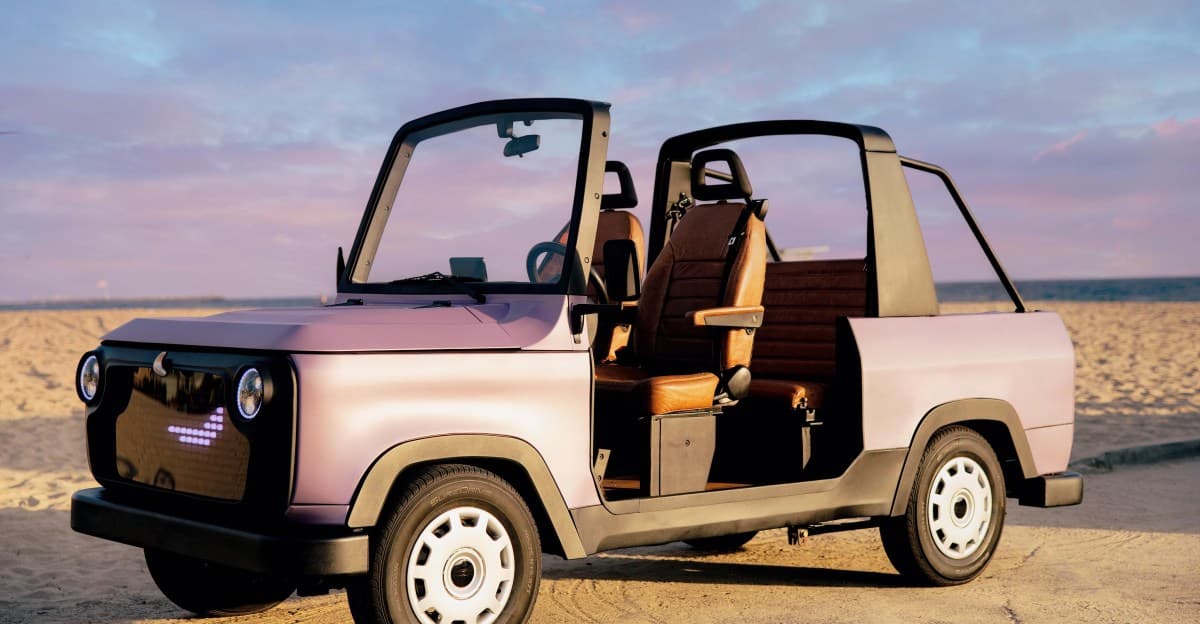
Image: The Verge
A Miami-based startup is making the case for a very small electric vehicle in a very large-car market. Chip Motors has launched Chip, an open-air, boxy EV that looks somewhere between a golf cart and a shrunken Jeep, with a top speed of 25 mph and plans for remote-operated self-parking.
Chip calls it a “life utility vehicle”, but it fits more neatly into the low-speed vehicle (LSV) category. That means it can legally drive only on roads with speed limits of 35 mph or below. The company is pitching it as a second vehicle for short local trips such as grocery runs or school pickups.
The hardware is modest but practical: in-wheel motors, a 15 kWh lithium iron phosphate battery, and a NACS charge port. Chip says the battery can recharge overnight from a 110-volt household outlet or in 4 hours on a Level 2/240-volt charger, though it notes those figures are still illustrative pending final specs. Estimated range is 100 miles.
Pricing starts at $15,000 for the four-seat model and $18,000 for the six-seat version. Reservations are open now for $250, with deliveries slated to begin in 2027.

Recommended reading
Apple Wallet car keys may reach GWM Tank vehicles
Detweiler argues Chip is not just an upgraded golf cart, even if it benefits from the same post-pandemic shift that helped golf carts spread beyond gated communities. He told The Verge that young families in warm-weather markets have increasingly adopted those vehicles for short trips, and said Chip is designed to capture the freedom of scooters and bikes without the burden of a full-size car.
“It’s not small, —it’s light. And it’s designed to be, like, hyper functional. And then also, like, it’s cool!”
Remote parking and autonomy plans
Chip also wants software to be part of the appeal. The vehicle has a front LED display that acts as a digital face, responding to verbal commands, and the company says owners will eventually be able to summon it with an app or voice request.
The first step is “Chip Go!”, a remote-driving feature that would let the EV park itself or come pick up its owner, powered initially by teleoperation rather than full autonomy. Detweiler said low-speed neighborhood driving makes that task easier than highway operation, and said Chip Motors will take legal responsibility when its vehicles are being remotely operated.
He would not share technical specifics about the teleoperation system, saying the company is still developing it. But his ambition is larger than a niche neighborhood EV.
“I believe that we are going to be the first mass market American robot.”
Detweiler said he has been working on the idea for nearly 15 years, after conversations in a San Francisco hacker house about how cities and transportation were changing. He argues that using large, heavy, expensive vehicles for short trips is fundamentally inefficient, and says the microcar segment has grown roughly 50 percent annually since 2021, based on Chip’s own research into imports and sales.
For now, Chip looks aimed squarely at the second-car crowd. But the company is already considering more weatherproof versions for colder climates, as well as more highway-capable models.

Frontier Editor
Dan is our resident futurist, covering electric mobility, space exploration, and the smart home. He's interested in atoms just as much as bits. Whether it's a new battery chemistry, a reusable rocket, or a protocol that finally makes IoT devices talk to each other, Dan breaks down the engineering that pushes humanity forward.
via The Verge