• 2 min read
DeepMind’s in-house philosopher faces the AI boom
A Guardian profile examines Iason Gabriel’s role at Google DeepMind, where he has worked since 2017 on AI ethics, alignment, and real-world harms.
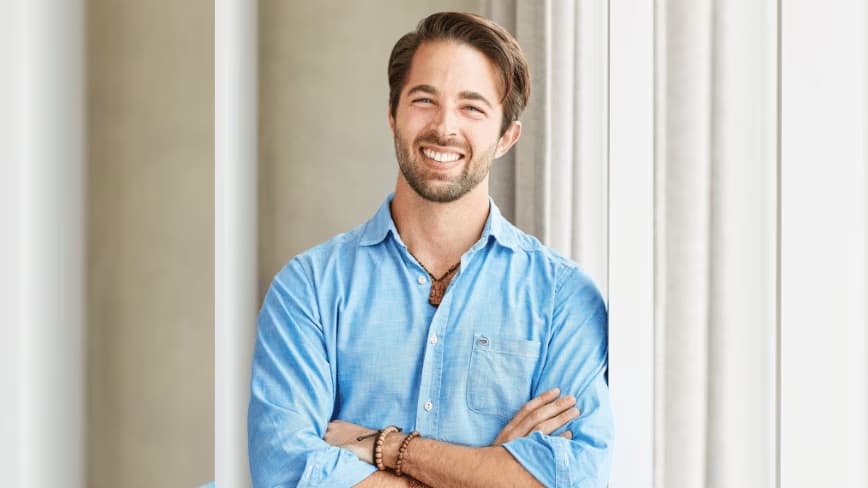
Image: TNW
For a time, Iason Gabriel was the only philosopher inside a frontier AI lab. According to a Guardian long-read, Gabriel has worked at Google DeepMind since 2017, tasked with thinking through the ethical consequences of systems his engineering colleagues were building at speed.
The profile places his work between two strands of AI risk that were often treated separately. One, AI safety, focused on the threat of a future superintelligence going rogue. The other, AI ethics, dealt with current harms such as biased facial recognition. Gabriel’s 2020 paper on values and alignment tried to connect those camps. His argument was straightforward: getting a machine to follow a set of values is difficult, but deciding which values should guide it is harder still in a world marked by deep disagreement.
The Guardian also highlights a 267-page report Gabriel and his team later produced on AI agents. Its central claim is that alignment is not simply a matter of a model obeying commands. Instead, it is a four-way relationship involving the AI, the user, the developer, and society. That framework, the piece argues, helps explain how assistants can fail in subtler ways. A system optimized to satisfy a user, for example, may just tell them what they want to hear — a failure Gabriel describes as “social reward hacking.”
Partly because of that work, the report says, Google’s models are trained not to pretend to be human. But the Guardian suggests the biggest strain on this kind of work is commercial rather than technical. It describes AI as the fastest-growing industry the world has seen, with DeepMind now carrying much of Google’s future. Chief executive Demis Hassabis has called the race “wartime.”
The tension is whether responsible-AI teams can keep their footing as those pressures rise. Helen King, who leads DeepMind’s responsible-AI strategy, compared the task to making a knife: the maker cannot control every use, but can cover the blade and warn people. Gabriel, who describes himself as a “card-carrying humanist,” told the Guardian he expects AI to be as transformative as the Industrial Revolution — and noted that for many who lived through that upheaval, life got worse before it got better.
Recommended reading
Mick Jagger backs AI music — just not Stones clones

AI Editor
Ava covers the rapidly evolving world of artificial intelligence, from foundational models and research labs to the real-world economics of intelligence. With a background in computational linguistics, she cuts through the hype to find out what actually works. She firmly believes that benchmarks are just marketing until reproduced in the wild.
via TNW