• 3 min read
Facial-recognition smart locks are better than expected
The Verge tested four facial-recognition smart locks and found the tech works—though UWB still offers the smoother hands-free experience.
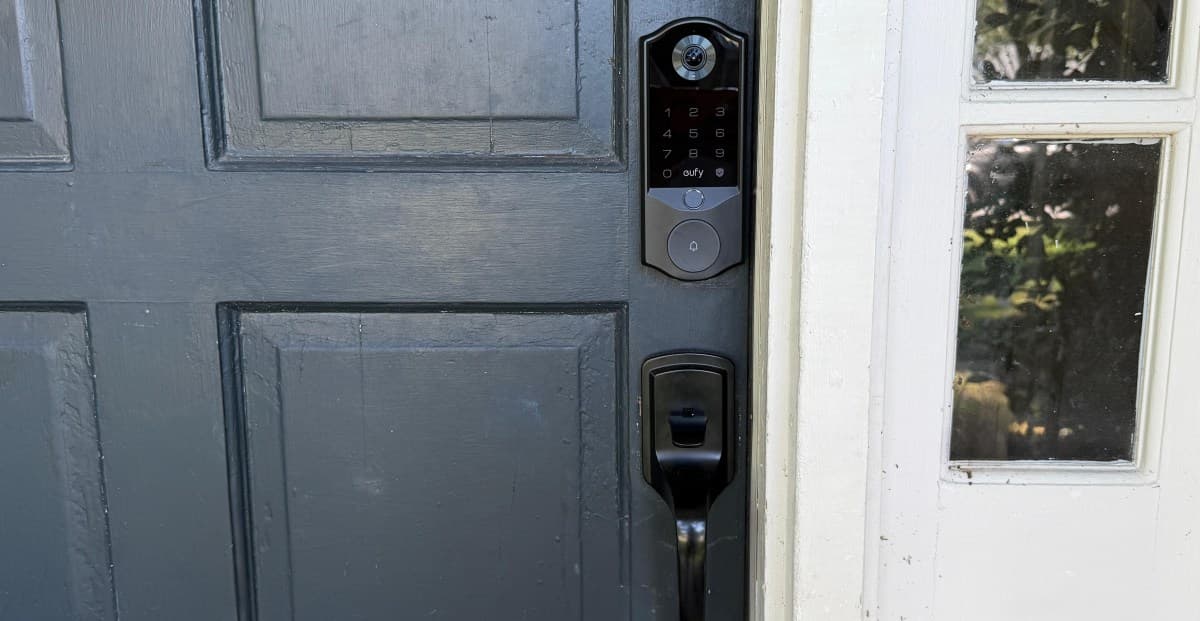
Image: The Verge
Hands-free unlocking is where smart locks are headed, and facial recognition is finally proving useful in a category that often overcomplicates simple tasks. In testing four currently available face-unlock smart locks, The Verge found the feature works well enough to be a credible alternative for people who want automatic entry without relying on a phone.
That matters because today’s common hands-free method, geofencing, can be slow and unreliable, while UWB unlocking is faster but still rare and expensive. Facial recognition sits in the middle: more seamless than keypads or fingerprint readers, but not yet as smooth as the best UWB setups.
These locks use infrared sensors to build a 3D map of your face, with different vendors relying on techniques such as structured light, stereo infrared cameras, or time-of-flight sensing. The depth data is what helps prevent simple photo spoofing.
Recommended reading
Xiaomi unveils bathroom heater with radar and 3000W heat
Best facial-recognition smart lock right now
The top pick was the $300 Eufy FamiLock E40 from Anker. According to The Verge, it was the fastest lock tested, unlocking in under a second, and it was also the only one that worked consistently with sunglasses.
The lock also includes:
- Fingerprint reader
- Keypad
- Physical key
- A built-in 2K video doorbell
- Matter-over-Wi-Fi support
- A backup battery that keeps the keypad working if the main battery dies
Its weaknesses are just as clear: the E40 is big, expensive, and its lithium-ion battery takes nine hours to fully charge. The Verge said the main battery dropped 40 percent in a week of testing.
The other standout was the $350 Lockly Visage Zeno, notable for combining facial recognition with Apple Home Key. It took about 2 seconds to unlock, making it slower than the Eufy, and it also struggled with sunglasses.
The Lockly launched in 2024, works with the major platforms, and offers around nine months of battery life. It is also the only model in the group to include a spare battery. But it does not support Matter, and its keypad design caused enough friction that The Verge specifically called it out as frustrating to use.
Cheaper options still need work
The lower-cost models were less convincing. The Lockin Veno Solar Face costs $199 and uses a built-in solar panel to stretch battery life, but The Verge said face unlocking was slower and failed with sunglasses.
The SwitchBot Lock Vision Pro, listed in the review at $230 and shown with a Verge Score of 10 and $160, was the weakest performer. The Verge said it was extremely slow, struggled badly with sunglasses, and sometimes issued phantom voice alerts.
The review’s bottom line is that UWB remains the best hands-free unlocking experience, because the door can already be unlocked as you approach. But until more UWB locks arrive and prices drop, facial recognition is a practical option now—especially for households where people may not always carry a phone or watch. The Verge also notes that all four tested locks claim to store and process facial data locally rather than in the cloud, a key privacy point for a technology many buyers will still find uncomfortable.

Frontier Editor
Dan is our resident futurist, covering electric mobility, space exploration, and the smart home. He's interested in atoms just as much as bits. Whether it's a new battery chemistry, a reusable rocket, or a protocol that finally makes IoT devices talk to each other, Dan breaks down the engineering that pushes humanity forward.
via The Verge