• 4 min read
90,000 Flock cameras are tracking US drivers
Flock’s network may include roughly 90,000 cameras in the US, logging vehicle details into a searchable cloud system with growing privacy concerns.
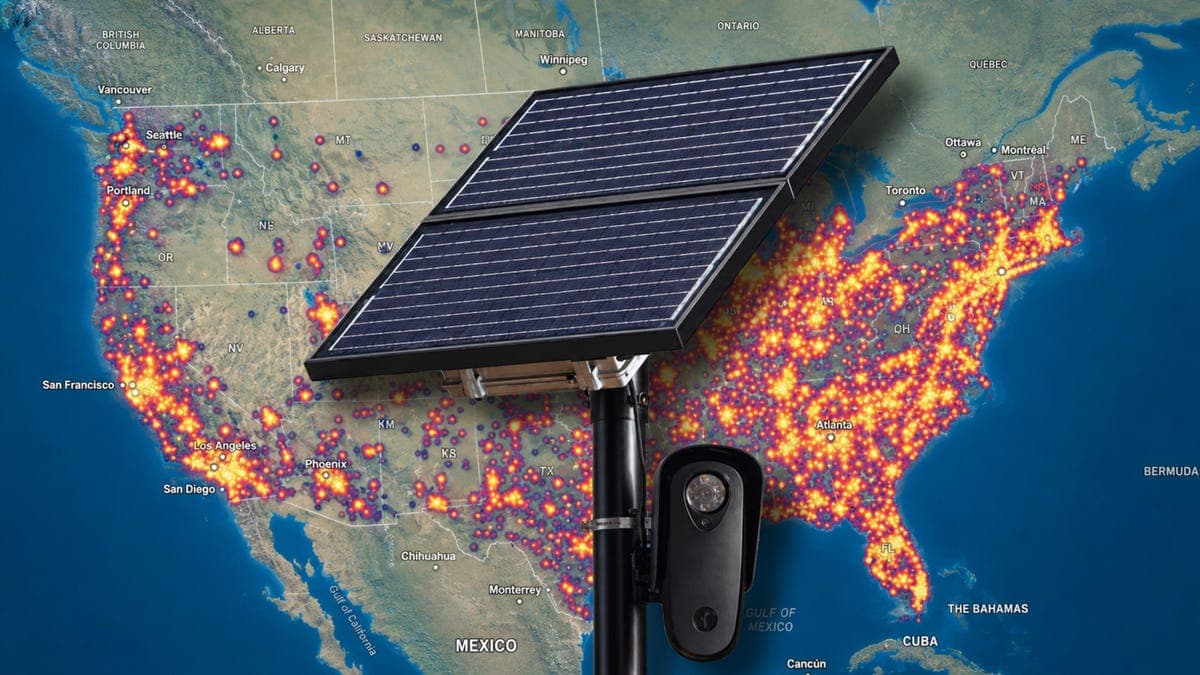
Image: ZDNET
Flock Safety’s vehicle-surveillance network has spread widely across the US, with public estimates suggesting roughly 90,000 Flock-branded cameras may now be in operation. According to ZDNET, many residents may not realize the systems are installed until they notice them on utility poles near roads and intersections.
The cameras, including Flock Falcon, do not measure speed. Instead, they capture roughly six to 12 still images each time a vehicle passes, then use automated license plate recognition and machine learning to extract details including:
- license plate
- make and model
- color
- body type
- direction of travel
- visible damage
- aftermarket wheels
- bumper stickers
Flock told ZDNET that more than 12,000 customers use its products. Those customers are not limited to police departments; businesses, schools, and homeowners associations can install them as well. The company’s software can also integrate with partner camera systems such as Motorola via CommandCentral Aware and shared APIs, allowing law enforcement to view records from both networks.
Trevor Horwitz, co-founder and chief information security officer at TrustNet, said the software makes vehicle characteristics searchable even without a full plate number.
“The software analyzes images of vehicles and extracts characteristics such as license plates . . . and other distinguishing features. Those become searchable, allowing investigators to look for a vehicle even if they don’t have a complete license plate number.”
What Flock stores and why privacy advocates worry
According to Flock’s website, images and vehicle data are sent over a cellular network to the company’s cloud system, where authorized users can search them through the Flock Safety dashboard. Police can also receive alerts when a plate matches records tied to a stolen vehicle, missing person, arrest warrant, or another database entry.

Recommended reading
Apple fixes Hide My Email leak after 13-month delay
Critics argue the concern is not any single camera, but the combined effect of a shared network spanning multiple towns and states. Catherine Crump, a clinical professor of technology law and director of the Samuelson Law, Technology, and Public Policy Clinic at UC Berkeley, told ZDNET that a broad camera network can become a detailed historical log of a person’s movements.
“A single plate hit reveals nothing more than what an ordinary person could see unaided, that a car is at a particular place at a particular time. A network is different, particularly when it involves lots of cameras, because over time it will become a comprehensive record of someone’s movements.”
ZDNET also notes that Flock Condor, a separate pan-tilt-zoom camera, can detect and follow humans through an object-detection feature called Guardian Mode. Flock says its cameras do not use facial recognition, but InvestigateTV previously shared video showing a Condor unit panning to keep a reporter in frame.
AI search, cloud access, and false alerts
ZDNET highlights three main risks: AI-assisted searches, centralized cloud storage, and data access that can extend beyond the agency that installed a camera. Flock says the data is hosted on Amazon Web Services, encrypted, and generally deleted after 30 days.
Horwitz said large stores of location data require tight controls over access, retention, monitoring, and protection. Noam Birnbaum, founder and CEO of Ignition, put the bigger risk more bluntly: insiders who already have access.
Crump warned that AI can lower the threshold for broad searches not tied to a known criminal act, raising risks of profiling and inaccurate conclusions.
False alerts are another problem. Joel Feder, director of content and product at The Drive, told ZDNET he and his wife were surrounded by police in a Minnesota parking lot after Flock cameras captured a partial reading of his Range Rover manufacturer plate and incorrectly linked it to a missing vehicle record in California.
“Initially the officers were prepared and had their hands on their holsters. My immediate thought, and I kid you not, was 'I wasn’t even speeding.'… We were both mostly just confused as to why we were surrounded by the police.”
Feder said systems should clearly signal when a match is not exact, and argued that regulation has not kept pace with the technology.
Former Rhode Island police officer Noel Pichardo has also drawn attention after saying his law enforcement career ended after he raised concerns about Flock cameras and testified before state lawmakers. The Rhode Island Police Chiefs' Association disputed that account, saying he was disciplined for insubordination and allegedly false statements, not for speaking out.
For residents trying to identify nearby cameras, ZDNET points to DeFlock.org, a volunteer-run map that lets users search by town or address, check reported camera locations, and estimate how many license plate readers may appear along a route. Because the map is community-maintained, some listings may be missing or outdated. ZDNET suggests residents ask local police departments, town or village offices, businesses, or homeowners associations who owns and operates a camera once they identify one nearby.

Security Editor
Sophia unpacks the invisible wars happening on our networks. Covering cybersecurity, privacy legislation, and cryptography, she exposes how our data is weaponized and defended. Before joining for(geeks), she spent years as a penetration tester. She's the reason the rest of the team uses physical security keys.
via ZDNET