• 2 min read
Goodram brings back 4 GB DDR4 sticks in Rival Radiant line
Goodram has launched Rival DDR4 Radiant, a new memory line that does something a lot of PC builders probably thought had been quietly buried: it brings back 4 GB RAM sticks. The series also comes in 8 GB, 16 GB, and 32 G
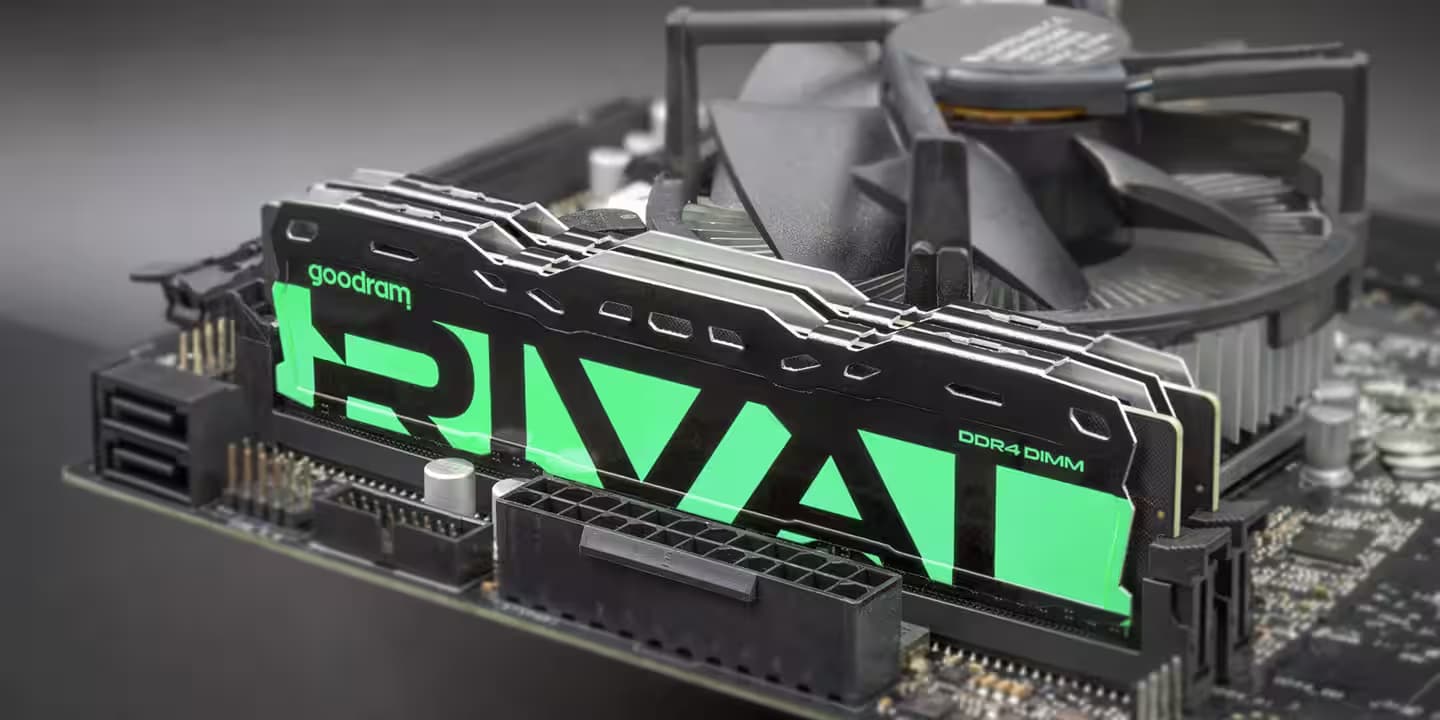
Image: ixbt.com
Goodram has launched Rival DDR4 Radiant, a new memory line that does something a lot of PC builders probably thought had been quietly buried: it brings back 4 GB RAM sticks. The series also comes in 8 GB, 16 GB, and 32 GB versions, all aimed at straightforward DDR4 systems rather than headline-grabbing speed runs.
Every module runs at 3200 MT/s, with CL16 or CL18 timings and either 1.2 V or 1.35 V depending on the version. That keeps it firmly in mainstream territory, but the return of 4 GB is the real signal here: as memory prices rise, the parts the industry once treated as leftovers are back in demand for budget PCs and OEM builds.
Goodram Rival DDR4 Radiant specifications
- Capacities: 4 GB, 8 GB, 16 GB, 32 GB
- Speed: 3200 MT/s
- Timings: CL16 or CL18
- Voltage: 1.2 V or 1.35 V
- PCB: black
Goodram says the modules use selected DRAM chips and come on a black PCB with decorative heat spreaders, offered in red and green. The styling leans hard into the “gaming” look, though the actual specs are more about keeping older or cheaper systems alive than flexing on benchmark charts.
Recommended reading
Linus Torvalds backs AI as Rust-based Linux 0.11 appears
Why 4 GB RAM is back
There is a certain irony here: just as many PCs have moved on to 16 GB and beyond, smaller capacities are becoming relevant again because price pressure changes what buyers will tolerate. Goodram is clearly betting that OEMs and cost-conscious builders would rather keep a machine affordable than pretend every desktop needs oversized memory kits.
The bigger trend is familiar. Whenever component costs climb, the market rediscovers “basic” parts that were recently unfashionable, and DDR4 remains cheap enough, compatible enough, and boring enough to be useful. The open question is how long that demand lasts before more of the volume shifts to newer memory platforms anyway.

Computing Editor
Tomas lives in the terminal. He covers chips, laptops, and operating systems with a focus on performance and efficiency. He reads kernel changelogs the way other people read fiction, and he's always on the hunt for the perfect mechanical keyboard switch. If it processes data, Tomas has an opinion on it.
via ixbt.com