• 2 min read
Linus Torvalds backs AI as Rust-based Linux 0.11 appears
Linus Torvalds said Linux will not become anti-AI and told critics to fork it or leave. Days later, a student published a Rust remake of Linux 0.11.
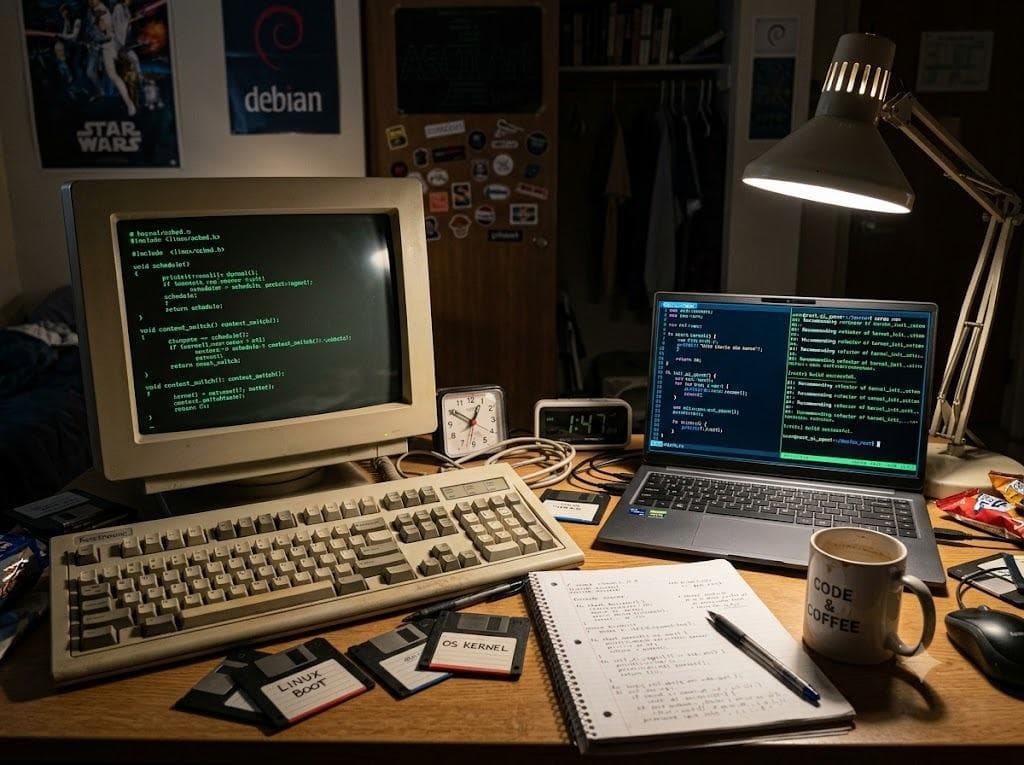
Image: iXBT
Linus Torvalds has bluntly defended the use of AI in Linux development, saying the project will not become “anti-AI” and that developers who disagree can either fork the kernel or leave. Within days, a symbolic response appeared online: a student from China published a fully rewritten Rust version of the historic Linux 0.11 kernel.
The dispute began on the official Linux developer mailing list. Responding to criticism of AI tools, Torvalds said that, as the project’s lead maintainer, he was ready to draw a firm line on the issue. Linux, he argued, is not a project opposed to artificial intelligence, and he plans to ignore attempts to ban other developers from using such tools.
Torvalds said he sees AI as just another development tool. A year ago, he suggested, its practical value was still debatable. Now he considers that value obvious, even if large language models remain far from perfect. They can create extra noise and make life harder for maintainers, he said, but they can also help find real bugs in code.
The goal, in his view, is not to reject the technology but to make it useful for developers.

Recommended reading
Claude Code’s 60-Second Auto-Continue Backfired
That marks a noticeable shift from 2024, when Torvalds described about 90% of the AI discussion as marketing noise and said he preferred to ignore it. Now he argues that refusing to use modern tools is just as misguided as trusting them blindly. Greg Kroah-Hartman, the lead maintainer of the stable Linux kernel branch, has also said that the quality of AI-assisted bug reports and code review submissions has improved significantly in recent months.
Almost immediately after Torvalds' remarks, Poseidon, a Peking University student, released linux-0.11-rs — a complete implementation of Linux 0.11 in Rust. It is not a fork of modern Linux, but a standalone recreation of the historical kernel released on December 8, 1991, just months after Linux 0.01.
The project goes beyond a straight port. According to its description, it rebuilds an early Linux system with more than 47,000 lines of code, including about 15,000 lines for the kernel itself, with the rest covering libraries, utilities, and user programs from that era. The description also says development used a guide to building an operating system in Rust, and users have already spotted signs that AI was used to write some of the code.
Community reaction has been mixed. Some called it a pointless waste of computing resources; others see it as a useful educational experiment. Fittingly, the original Linux 0.11 was created by a 22-year-old Linus Torvalds as a “Just for Fun” project.

Computing Editor
Tomas lives in the terminal. He covers chips, laptops, and operating systems with a focus on performance and efficiency. He reads kernel changelogs the way other people read fiction, and he's always on the hunt for the perfect mechanical keyboard switch. If it processes data, Tomas has an opinion on it.
via iXBT