• 2 min read
Hisense bets the living room on MiniLED and 144Hz gaming
Hisense pitches the 65-inch U6SF as a bright-room MiniLED TV with 160 local dimming zones, 600 nits, AI upscaling, and 144Hz game mode.

Image: PCWorld
Hisense is positioning its U6SF MiniLED TV as an all-rounder for bright rooms, movies, sports, and gaming, with a feature set aimed at people who want one screen to handle everything in the living room.
A big part of that pitch is usability in difficult lighting. According to the source, the Hisense U6SF includes anti-reflection and glare-free technology to reduce washout from windows and indoor lighting while preserving shadow detail and color accuracy.
Hisense also leans on its Hi-QLED MiniLED branding, including a PowerFocus lens system that uses single-refraction lenses to direct light more precisely. In the U6SF, that supports 160 local dimming zones, which the company says improves black levels, highlights, and edge definition. The set reaches 600 nits of peak brightness and supports major HDR formats including Dolby Vision IQ and HDR10+ Adaptive, alongside Filmmaker Mode.
The U6SF is built around a 65-inch panel in a slim unibody design that can sit close to a wall or be wall-mounted. Hisense says the built-in speaker system supports Dolby Vision and Atmos surround sound, removing the need for external speakers.
Recommended reading
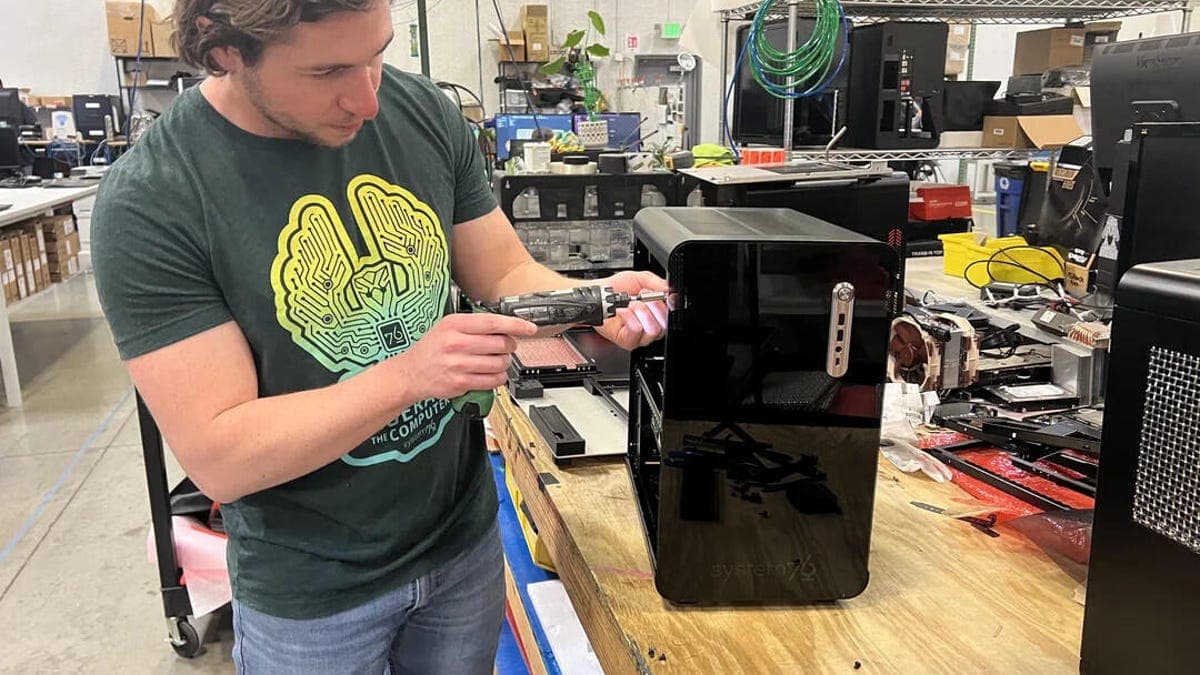
System76's Thelio Mira nails the Linux workstation brief
On the software side, the TV adds several image-processing features:
- AI Picture for automatic brightness, contrast, and saturation tuning
- AI light sensor to adapt output to room conditions
- AI 4K Upscaler to reconstruct detail in lower-resolution content
- AI Sports mode for sports-specific picture and audio adjustments
- AI Smooth Motion to reduce blur, judder, and stutter
For gaming, Hisense says the U6SF includes a dedicated HDR Game Mode with a 144Hz variable refresh rate and low-latency motion handling.
That combination makes the U6SF a straightforward pitch: one MiniLED set designed to work in bright spaces, clean up older content, and keep pace with modern consoles and PCs at 144Hz.

Computing Editor
Tomas lives in the terminal. He covers chips, laptops, and operating systems with a focus on performance and efficiency. He reads kernel changelogs the way other people read fiction, and he's always on the hunt for the perfect mechanical keyboard switch. If it processes data, Tomas has an opinion on it.
via PCWorld