• 3 min read
System76's Thelio Mira nails the Linux workstation brief
System76's 2026 Thelio Mira pairs AMD Ryzen 9000 chips with quiet liquid cooling, strong Linux support, and prices from $1,699.
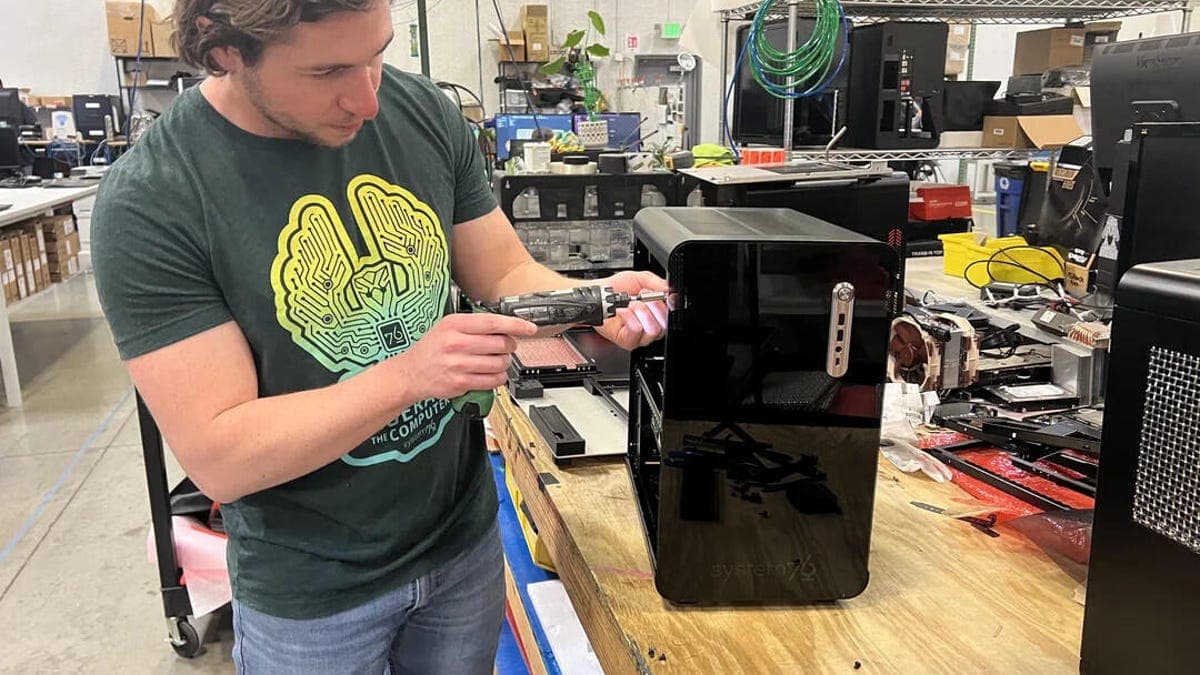
Image: ZDNET
System76's 2026 Thelio Mira Custom is aimed squarely at Linux users who want a high-end desktop without building one themselves. In ZDNET’s testing, the machine stood out for two things at once: serious performance and near-silent operation.
The refresh is built on AMD’s Ryzen 9000 “Granite Ridge” platform with an X870 motherboard, bringing PCIe 5.0 support for GPUs and SSDs. That means up to 32 gigatransfers per second per lane, or 64 GB/s and 128 GB/s of bidirectional throughput, alongside Gen5 NVMe storage speeds of up to 15 GB/s. CPU options range from a 6-core Ryzen 5 9600X to a 16-core Ryzen 9 9950X or 9950X3D, with boost clocks up to 5.7 GHz. ZDNET’s review unit used a Ryzen 9 9950X.
For graphics, the tested system included an Nvidia GeForce RTX 5070 with 12 GB of VRAM. ZDNET says that is enough for modern 1080p and 1440p gaming, though not ideal for top-tier 4K competitive play. On Pop!_OS, users can switch GPUs through a graphical interface and assign specific apps to the discrete GPU, letting the integrated Radeon graphics handle display duties while the Nvidia card is reserved for AI or compute workloads.
AI performance and cooling
ZDNET describes the RTX 5070 as a capable local inference option for 7B to 8B models such as Llama 3.x/3.1 8B, Qwen2.5-7B/8B, and Mistral Small 3 7B. It is usable, but tighter, for 12B to 16B models including Qwen3/Qwen2.5 14B, Llama 3.x/3.1 15B, and Gemma 3 around 12B to 14B.
The system’s liquid-cooled design is a major part of the pitch. System76 claims up to a 19% performance uplift and a 13-degree temperature drop over the previous air-cooled design. ZDNET says the result is a desktop that can sustain long workloads while staying impressively quiet. Pop!_OS also ships with Nvidia drivers ready to go, and the CUDA Toolkit can be installed with a single command.
Recommended reading
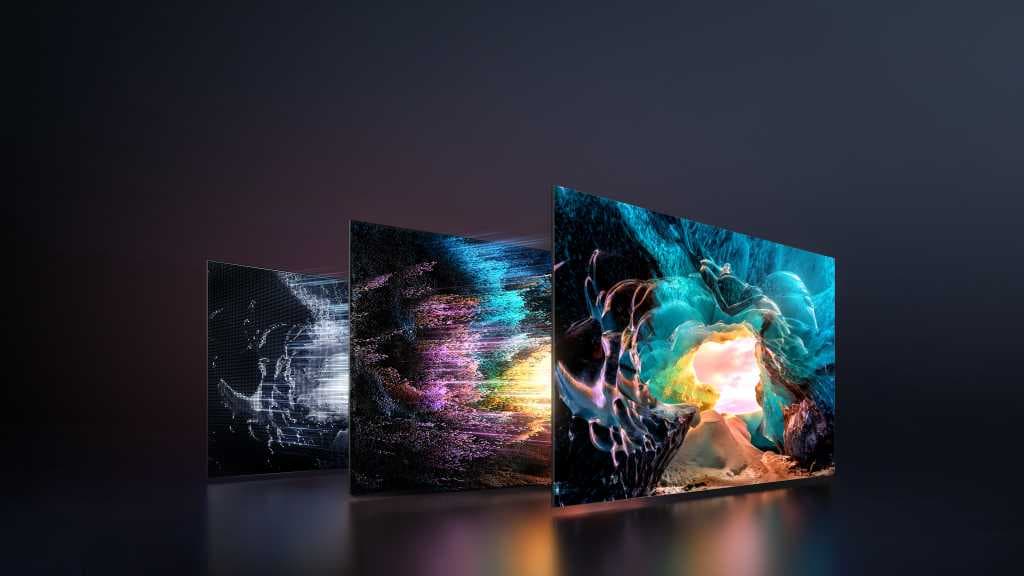
Hisense bets the living room on MiniLED and 144Hz gaming
Memory, ports, and pricing
System76 supports up to 192 GB of dual-channel DDR5 across four DIMM slots, while the underlying X870 board technically supports up to 256 GB. Storage is especially flexible, with three M.2 NVMe slots — PCIe Gen5, Gen4, and Gen3 — plus at least two 2.5-inch SATA bays. ZDNET’s unit came with 2 TB of SSD storage.
Connectivity includes 2.5 GbE, Wi‑Fi 7, and Bluetooth 5.2. The desktop offers 13 external USB ports in total, along with standard audio and networking connections. Video output depends on the GPU: the integrated graphics exposes 1 x HDMI 2.1 and 2 x USB4/DisplayPort-over-USB-C, while the Nvidia card adds 3 x DisplayPort and 1 x HDMI 2.1.
The chassis uses aluminum and steel, a tempered-glass side panel, and tool-less magnetic panels for easy access. System76 founder and CEO Carl Richell told ZDNET the Mira is the start of a broader desktop redesign, and the company says it tested the modular chassis by repeatedly removing panels thousands of times.
Pricing starts at $1,699 and goes beyond $7,000 depending on configuration. ZDNET’s review system came to about $6,500 — a premium over a DIY build, but one that buys Linux-first integration, thermals, and vendor support.

Computing Editor
Tomas lives in the terminal. He covers chips, laptops, and operating systems with a focus on performance and efficiency. He reads kernel changelogs the way other people read fiction, and he's always on the hunt for the perfect mechanical keyboard switch. If it processes data, Tomas has an opinion on it.
via ZDNET