• 2 min read
Hybrid-electric plane tops 30,000 feet in milestone test
GE Aerospace and NASA say their hybrid-electric Saab 340B flew above 30,000 feet and logged a flight of more than two hours.
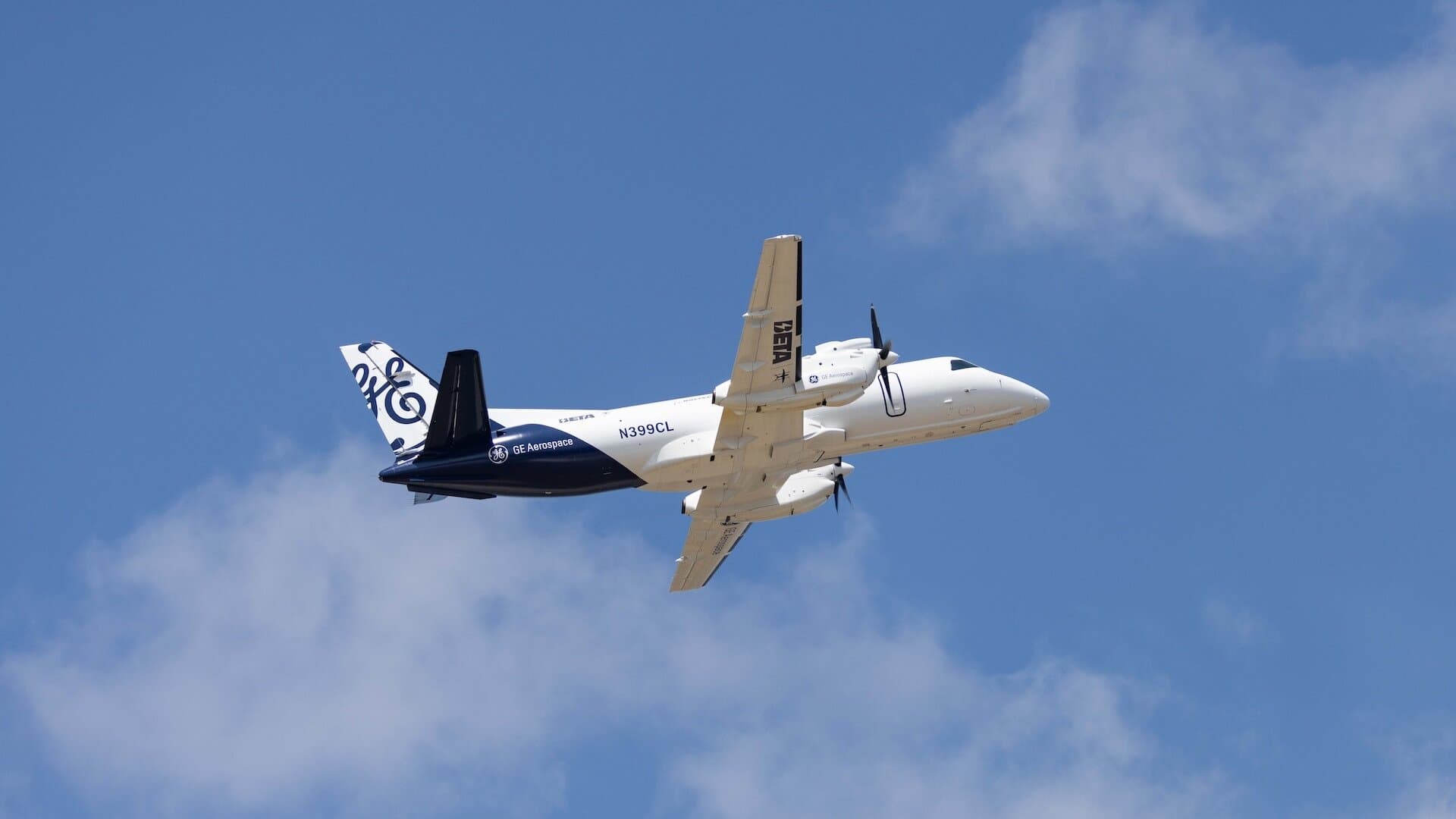
Image: TechXplore
A hybrid-electric aircraft built around a modified Saab 340B has crossed 30,000 feet for the first time, according to NASA and GE Aerospace, marking a new milestone for electric-assisted propulsion in larger aircraft.
The megawatt-class hybrid-electric engine, developed with NASA and built by GE Aerospace with BETA Technologies and Boeing, was shown publicly at the Farnborough International Air Show in the United Kingdom. The companies said the system had already completed historic test flights in recent months, including becoming the first hybrid electric-powered aircraft to fly above 30,000 feet and completing the longest hybrid-electric flight of more than two hours.
“This achievement reflects what NASA does best in aeronautics: we explore bold possibilities, validate them through rigorous research and testing, and work with industry to turn breakthrough ideas into technologies that bring real value for the American people.”
The propulsion system combines electric motors, a gas turbine, and energy storage. It was designed to show that hybrid-electric technology can power an aircraft roughly the size of a regional-class jet, with the goal of cutting fuel burn and costs without giving up performance. NASA said the technology and design work should help shape future hybrid systems that could reduce airline operating costs.

Recommended reading
Robot labs are training machines on internet video
How NASA and GE Aerospace got here
NASA said the flight builds on work from its former Electrified Powertrain Flight Demonstration project and its ongoing Subsonic Vehicle Technologies and Tools project. Agency researchers spent about seven years on early research with small businesses and other partners, tackling obstacles including power, thermal management, battery technology, and system integration.
In 2022, GE Aerospace tested an integrated propulsion system at NASA’s Electric Aircraft Testbed at the Neil A. Armstrong Test Facility in Sandusky, Ohio. Those tests simulated conditions up to 45,000 feet, within the operating range of commercial single-aisle aircraft.
“This is the culmination of more than 15 years of work, and we did that because it’s going to have an impact for aircraft that will help reduce energy use and help U.S. companies and the public.”
NASA said the final flight-test configuration added electric motors, power converters, propellers, and a GE Aerospace commercial engine before further ground and flight testing.
“I’ve got to say, I was pretty touched seeing it fly. It was just awesome. It’s just like a regular plane, which is probably the best thing of all.”

Frontier Editor
Dan is our resident futurist, covering electric mobility, space exploration, and the smart home. He's interested in atoms just as much as bits. Whether it's a new battery chemistry, a reusable rocket, or a protocol that finally makes IoT devices talk to each other, Dan breaks down the engineering that pushes humanity forward.
via TechXplore