• 2 min read
India debuts its first homebuilt hydrogen train
India has launched its first domestically built hydrogen-powered train in Haryana, part of a pilot to test cleaner rail technology.
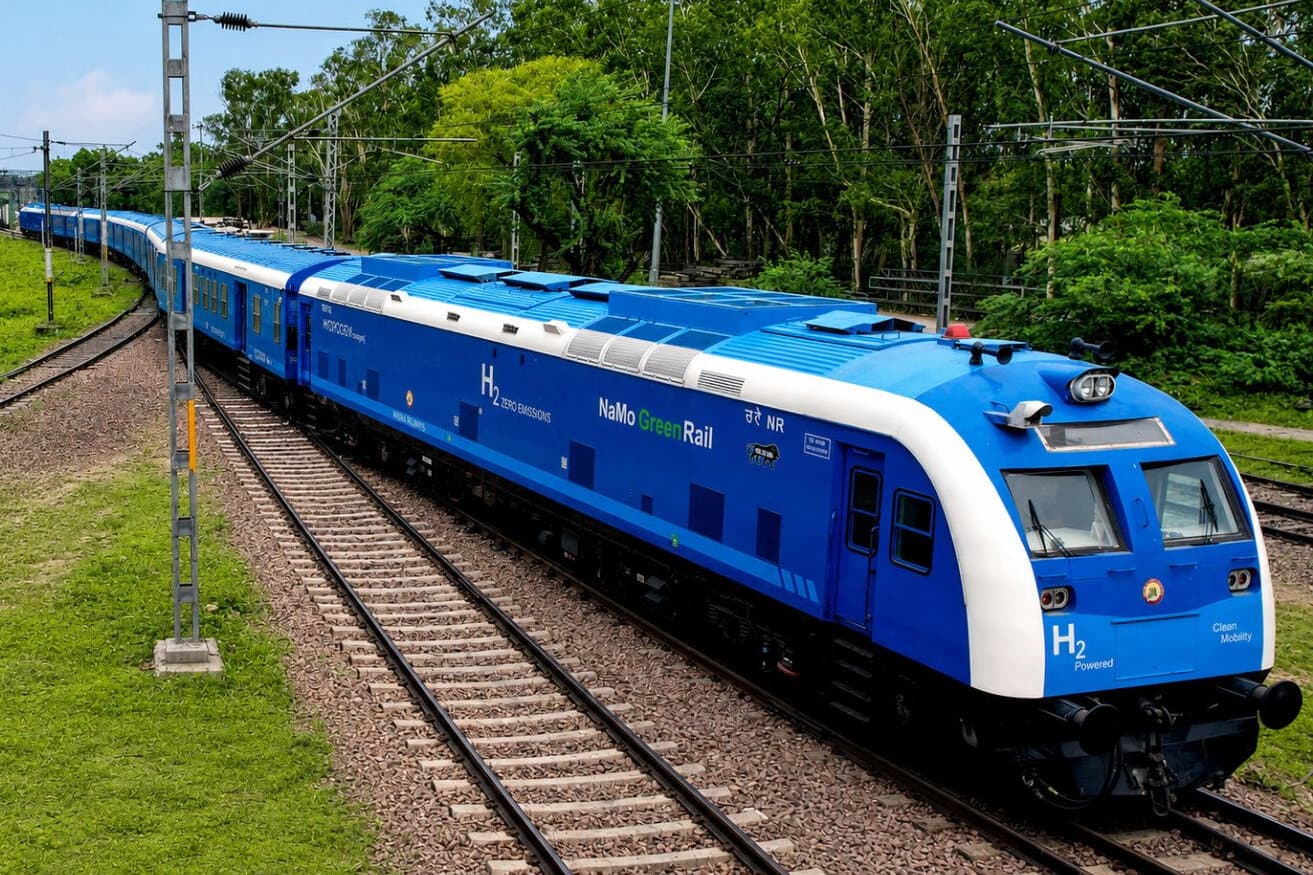
Image: TechXplore
India has launched its first indigenously built hydrogen-powered train, marking a new step in its push to bring cleaner energy to one of the world’s largest rail networks.
The train, called “NaMo Green Rail,” was inaugurated by Prime Minister Narendra Modi at Jind railway station in Haryana on Friday. It consists of two hydrogen-powered driving cars and eight passenger coaches, and will operate in the northern state.
Railway officials said the train can reach 75 kph (47 mph) and carry about 2,600 passengers. The project also includes hydrogen storage and refueling infrastructure, designed to test how the technology could work more broadly across India’s rail system.
In a post on X, Modi said:
“This is a very significant day in the direction of self-reliant India and sustainable development.”
The nickname “NaMo” is a common abbreviation of Modi’s first and last names.
Recommended reading
Evolute i-Sky slips to fall 2026 launch
Hydrogen fuel cells produce electricity by combining hydrogen and oxygen, with water vapor as the only direct emission. Several countries have already introduced hydrogen-powered trains as an alternative to diesel on routes that are not fully electrified.
The launch fits into India’s wider green hydrogen strategy and its effort to cut carbon emissions. The country has set a net-zero emissions target for 2070, while Indian Railways is studying hydrogen as a diesel replacement on some routes.

Frontier Editor
Dan is our resident futurist, covering electric mobility, space exploration, and the smart home. He's interested in atoms just as much as bits. Whether it's a new battery chemistry, a reusable rocket, or a protocol that finally makes IoT devices talk to each other, Dan breaks down the engineering that pushes humanity forward.
via TechXplore