• 2 min read
Engine-free NGTU platform targets swamps, snow, and ice
Researchers at R. E. Alekseev NGTU unveiled a powered transport platform that helps vehicles cross swamps, snow, mud, and ice without its own engine.
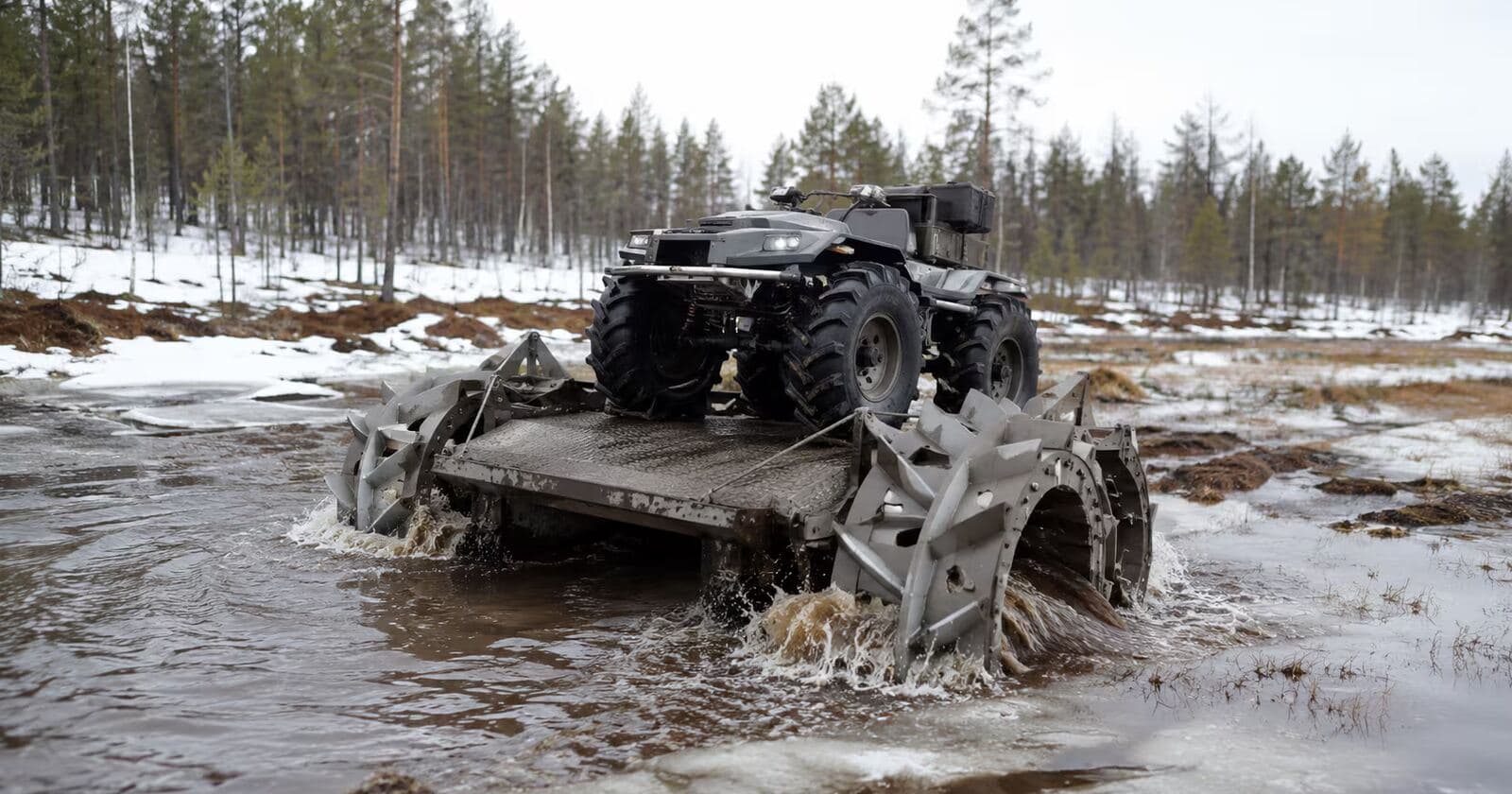
Image: ITzine
Researchers at R. E. Alekseev NGTU have presented a transport platform designed to help equipment cross swamps, snow, mud, and icy terrain without using a dedicated onboard engine. A vehicle drives onto it much like a trailer, then powers the platform itself through its own engine and hydraulic system.
The concept is straightforward: instead of building a separate all-terrain machine for every job, the university wants ordinary equipment to handle short stretches of terrain where wheels typically fail. The platform is built around rotary-screw propulsion. Two side-mounted screws receive power from the transported vehicle.
On snow, water, and thick mud, the screws work like propellers. On ice and firm ground, traction comes from grips on the blades. Steering is handled by the driver of the vehicle being carried, with turns performed using a scheme similar to a tracked vehicle.
According to the university, a single platform could work with different kinds of machines, from tractors to robotic systems. That is the main practical argument for the design: one transport base could replace part of a fleet of narrowly specialized all-terrain vehicles. For northern regions, construction sites, geological exploration, and emergency services, that could be cheaper than buying full-fledged screw-propelled vehicles.
The idea of screw propulsion itself is not new. Screw-rotor vehicles were used in the USSR, including in search-and-rescue systems for cosmonauts, where mobility across bogs and virgin snow was critical. But traditional designs have drawbacks: they are typically slow, noisy, and awkward on normal surfaces. NGTU’s platform tries to avoid some of those limits by supplementing existing vehicles rather than replacing them entirely.

Recommended reading
Evolute i-Sky slips to fall 2026 launch
The source notes that demand for this kind of machine in Russia is easy to understand. Rosstat estimates that a significant share of the country lies in areas with difficult natural conditions, while demand is growing in the Arctic and the north for equipment deliveries tied to extraction projects and infrastructure.
What happens next depends on testing under load. If the platform proves it can handle different vehicle weights and demonstrates durability for its screw mechanism on ice and in mud, it may move beyond a university prototype.

Frontier Editor
Dan is our resident futurist, covering electric mobility, space exploration, and the smart home. He's interested in atoms just as much as bits. Whether it's a new battery chemistry, a reusable rocket, or a protocol that finally makes IoT devices talk to each other, Dan breaks down the engineering that pushes humanity forward.
via ITzine