• 4 min read
Kimi K3 challenges Claude and GPT benchmarks
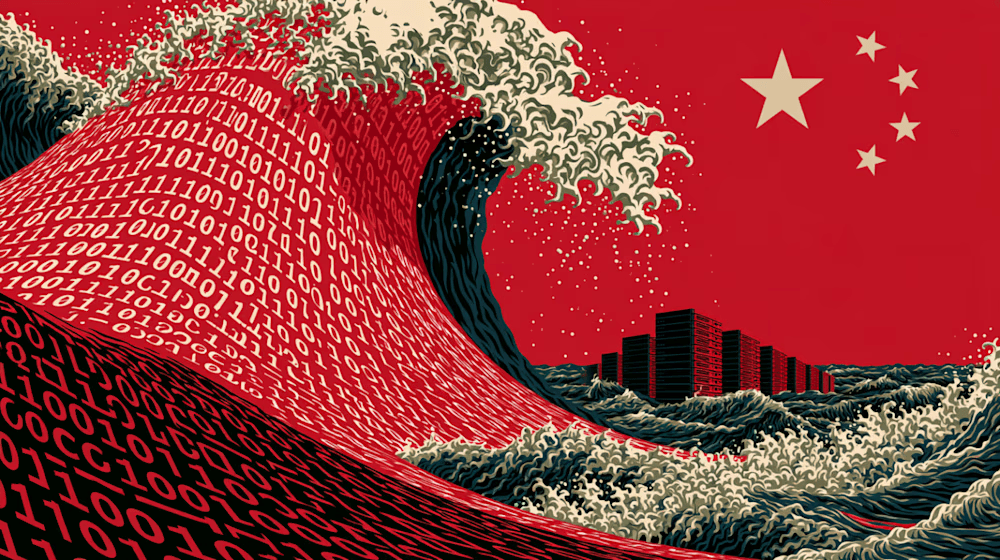
Moonshot AI says its open-weight Kimi K3 nears top Anthropic and OpenAI models, with weights due on July 27.
Image: ITzine
Moonshot AI, the Alibaba-backed startup, has unveiled Kimi K3 — and the launch cuts two ways for US labs. In independent tests, the new Chinese model came close to top closed systems from Anthropic and OpenAI. In one frontend development ranking, it even moved ahead of them.
The bigger issue is the release model. Moonshot says Kimi K3 has 2.8 trillion parameters, and that its weights will be published on July 27. If that happens on schedule, it would become the largest open-weight model on the market, available to run locally rather than only through a cloud API.
In its own blog, Moonshot says K3 still trails Claude Fable 5 and GPT-5.6 Sol overall, but argues the gap is now small in some tasks. External benchmarks point in the same direction. Artificial Analysis ranked Kimi K3 just behind the leaders among proprietary models in its Intelligence Index and in evaluations closer to real-world use. In Arena.ai’s frontend development ranking, Moonshot’s model climbed 17 places versus the earlier Kimi K2.6 and finished above the two strongest US rivals.
That is a sensitive signal for the market. At the start of 2025, the common view was that the best Chinese labs were still months — or even a full model generation — behind OpenAI and Anthropic. That gap now looks much narrower. Claude Fable 5 arrived only a month ago, while GPT-5.6 in Sol, Terra, and Luna variants was shown only last week.
Sanctions debate returns
Kimi K3 is also likely to sharpen the political fight around export controls. Open-weight models matter differently from closed ones: developers, cloud providers, and enterprise customers can deploy them inside their own infrastructure, fine-tune them for specific stacks, and avoid depending on a US API.
Recommended reading
Hassabis says STEM makes you 10x better at AI
That is why Kimi K3 is being discussed as more than a benchmark story. In January 2025, DeepSeek released R1, a lower-cost model that proved competitive with US alternatives. The market reaction was sharp: the combined market value of global tech companies fell by about $1 trillion. Investors suddenly had to consider a future in which US AI leadership might be cheaper — and more fragile — than expected.
After DeepSeek, the debate in Washington widened from pricing pressure to national security. The White House and Congress pushed harder on export restrictions, especially around Nvidia accelerators and other advanced equipment shipped to China. The goal was simple: limit access to compute and training tools so Chinese labs would remain behind. Kimi K3 makes that argument look less convincing.
A separate flashpoint involves distillation. Several months ago, Anthropic accused Moonshot, DeepSeek, and MiniMax of violating its service rules to extract Claude’s capabilities “illegally.” The allegation centered on distillation, where outputs from a stronger model are used to improve another system. The technique is common across the industry, but in Washington it has increasingly been framed as a hostile method of technology copying.
What happens after July 27
Moonshot’s progress suggests the issue is no longer just access to chips. Chinese labs appear to have built enough engineering depth, data, and applied experience to narrow the gap quickly even in frontier AI.
Market data backs that up. According to the Stanford AI Index for 2025, the US still led in the number of notable foundation models, but China was rapidly closing the gap and already dominated in the number of AI publications and patents. At the same time, major Chinese groups including Alibaba, Tencent, and ByteDance continue to pour billions of dollars into computing infrastructure and their own models. Moonshot is not an outlier; it is part of a broader state-backed and corporate race.
For the open-weight market, that also puts pressure on Meta, long seen as the main Western supplier of relatively open models through Llama. If Kimi K3's results hold up under broader testing, developers may start to see Chinese models as the stronger base for applied products. That would shape not just prestige, but ecosystems: which tools, frameworks, and clouds teams choose worldwide.
The next test comes quickly, after July 27, when Moonshot says it will release Kimi K3's weights. If independent developers confirm the model’s quality in coding, agentic tasks, and enterprise workloads, the US debate over whether export controls work at all is likely to flare up again. For OpenAI and Anthropic, there is also a direct commercial risk: according to IDC, the global generative AI market could exceed $150 billion by 2030.

AI Editor
Ava covers the rapidly evolving world of artificial intelligence, from foundational models and research labs to the real-world economics of intelligence. With a background in computational linguistics, she cuts through the hype to find out what actually works. She firmly believes that benchmarks are just marketing until reproduced in the wild.
via ITzine