• 3 min read
Why an LLM Critic Still Spent $9,838 on Tokens
A developer argues most criticisms of LLMs are valid, yet still relies on them heavily—even after spending $9,838.85 on tokens in June 2026.
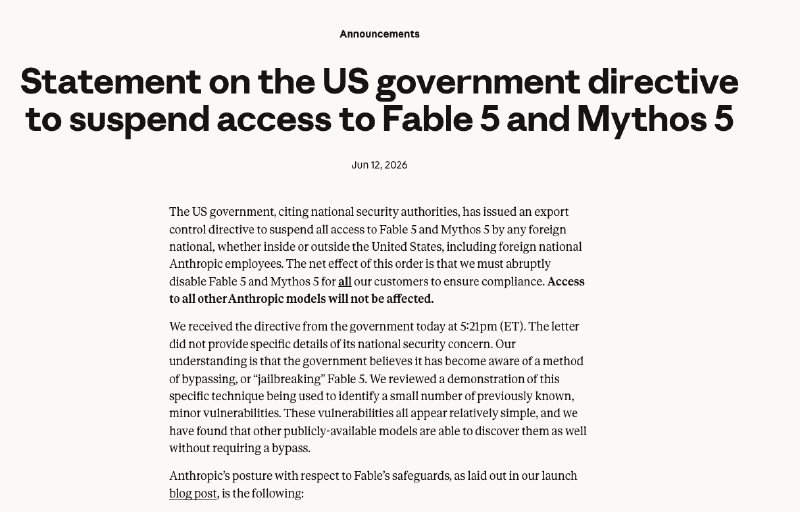
Image: Free to grab from the gist.
The dissonance around LLMs is getting harder to ignore. In a post published on July 15, 2026, developer Theocharis says he agrees with most of the core arguments against the technology—copyright concerns, environmental costs, low-quality output, distorted incentives in software, and geopolitical risk—but continues to use it heavily anyway.
That tension was on display at Local-First Conf in Berlin, where he says developers applauded criticism of LLMs while visibly using tools such as Claude Code. He recounts asking Armin Ronacher—creator of Flask, an early Sentry team member, and now founder of Earendil, which builds Pi.dev, an “open-source coding agent harness”—how the company handles a flood of LLM-generated pull requests. Ronacher’s answer, according to the post: they auto-close almost all PRs and issues.
The author sees that as a broader warning for open source. If maintainers can no longer tell whether a contribution reflects real human effort or an automated blast from a fresh GitHub account, basic trust starts to erode. He argues that projects such as Zig and Gentoo already rejecting LLM-generated PRs shows how serious the problem has become, even if he doubts bans are enforceable.
Recommended reading
Avito eyes free dating inside its app
He also points to labor concerns inside engineering teams. LLMs can make it harder for senior developers to judge whether junior engineers actually understood the code they submitted, and they reduce the incentive to hire or mentor juniors at all when routine tasks can be offloaded.
Geopolitics is another fault line. Theocharis cites Anthropic’s June 12, 2026 statement saying a US export-control directive forced it to abruptly disable Fable 5 and Mythos 5 for all customers.
He also quotes Martin Kleppmann from the conference:
“the probability of a conflict between Europe and the US is still very low. But last year, it was zero.”
Why he still uses LLMs
Despite all that, the post argues that local and open-weights models are becoming a practical hedge against both corporate control and government cutoff risk. Theocharis says the strongest use case is not replacing thought, but amplifying it: brainstorming, revising prose, stress-testing ideas, and accelerating implementation when a human is still accountable for the result.
His standard is blunt: if you would not read the text aloud in front of an audience, it is probably slop.
The scale of his own usage is unusually explicit. He says he spent almost 10k USD on tokens in the previous month, then gives the exact figure: 9,838.85 USD in June 2026.
He says he has since reduced use of Fable because of the cost, and now uses OpenRouter and cheaper models such as GLM 5.2 for pure code execution.
The post ends by sketching a practical pattern he finds useful: forcing the model to interrogate requirements before writing code. His preferred prompt, adapted from Matt Pocock’s “grill me” technique, starts with: “Interview me relentlessly about every aspect of this until we reach a shared understanding.”

Computing Editor
Tomas lives in the terminal. He covers chips, laptops, and operating systems with a focus on performance and efficiency. He reads kernel changelogs the way other people read fiction, and he's always on the hunt for the perfect mechanical keyboard switch. If it processes data, Tomas has an opinion on it.
via Hacker News