• 4 min read
Meta’s AI watermark arrives late and looks half-baked
Meta has launched Content Seal to label Muse-generated images, but its tool is limited, late, and still less useful than rivals like Google’s SynthID.
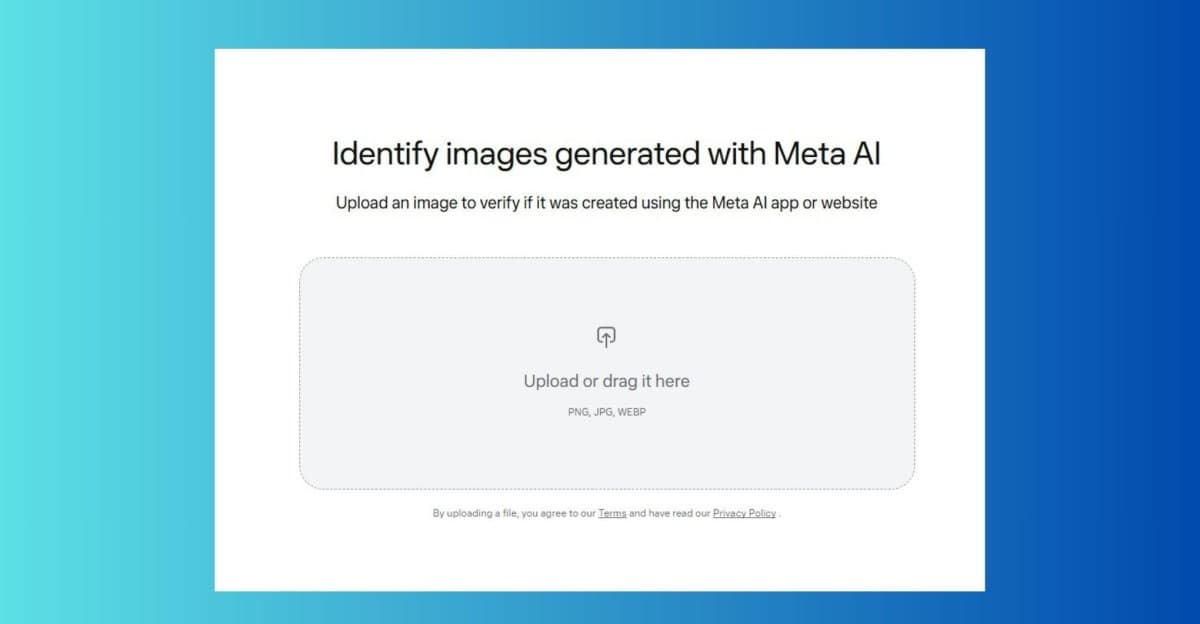
Image: The Verge
Meta has finally launched its own AI watermarking system, but Content Seal looks less like a breakthrough than a late, narrower version of tools already on the market.
The move follows a call in March from Meta’s Oversight Board, which urged the company to “meet its public commitments and employ its own tools” to help curb deceptive generative AI content across its platforms. Meta answered in July with Content Seal, an invisible watermarking system for images generated by its new Muse model, though it was introduced almost as a side note in the broader Muse launch.
By Meta’s description, Content Seal works much like Google’s SynthID. It embeds a hidden provenance marker into AI-generated images that can later be scanned by a detection tool, and Meta says the marker should survive if an image is cropped, compressed, resized, or screenshotted. That raises an obvious question: why build another system at all?
Meta is already on the steering committee for C2PA, alongside Google, and OpenAI has already adopted SynthID. But Meta chose to create a separate standard anyway, and right now it comes with some clear limitations.
Content Seal detection is limited to Muse images
At launch, Content Seal only applies to images generated by Muse in the Meta AI app and on the Meta.ai website. It does not cover content made with Meta’s older AI models, and support for generated video is not available yet, though Meta says it is coming “soon.”

Recommended reading
Google readies Frozen v2 chip for Gemini efficiency leap
Users also can’t check for Content Seal inside Meta’s consumer products yet. Detection is currently limited to a dedicated web tool Meta is testing, unlike Google’s approach of building similar capabilities into Gemini. Meta spokesperson Faith Eischen told The Verge that the company is “exploring ways to bring detection closer to where people encounter AI-generated content.”
Meta has also put a daily rate limit on image checks through the detection tool. Eischen said that is meant to support “normal usage” while preventing misuse, though Meta did not explain what misuse would involve. Google and OpenAI also impose rate limits on their detection tools, while C2PA does not.
Support outside Meta’s platforms is still unclear
On Facebook and Instagram, Meta says it uses unspecified metadata alongside Content Seal watermarking to help identify AI-generated content. But when asked whether Meta was giving other platforms such as TikTok and LinkedIn guidance on detecting Content Seal, Eischen only said the company is “determined to work with our industry peers to make sure users have the best experience possible.”
That suggests broader ecosystem support is still unsettled. The Verge reports that when it tested a Muse-generated image in Gemini and the official C2PA detection portal, neither system identified it as AI-generated.
Eischen told The Verge:
“Like others, we built Content Seal natively towards our own technical specifications and products. It takes multiple approaches working together to address this across the ecosystem, and we’re glad to be contributing to that effort.”
Meta has offered AI image generation tools since 2023, which means a large backlog of Meta-made synthetic media remains outside this new system. The company also rolled out AI labels on Instagram and Facebook in 2023, drawing criticism after some real photos were incorrectly marked as “Made by AI.”
The uncertainty is visible at the leadership level too. In a podcast interview with Lenny Rachitsky, Instagram head Adam Mosseri said people who dislike AI-generated content should be able to avoid it in their feeds, then later said, “I don’t think we should filter out AI content,” while also arguing users should be told whether content is AI-generated.
For now, Meta’s new watermarking system looks incomplete: it only works with the company’s latest model, depends on a separate detection site, and may not interoperate cleanly with the broader labeling tools people already use. Reuters also found that Content Seal failed to detect more than half of the Muse-generated images it tested after they had been cropped.

AI Editor
Ava covers the rapidly evolving world of artificial intelligence, from foundational models and research labs to the real-world economics of intelligence. With a background in computational linguistics, she cuts through the hype to find out what actually works. She firmly believes that benchmarks are just marketing until reproduced in the wild.
via The Verge