• 3 min read
Moonshot’s Kimi K3 jolts US AI leaders
Moonshot’s Kimi K3 is being hailed as a top coding model, with some saying it rivals Claude and ChatGPT at about half GPT-5.6 Sol’s price.
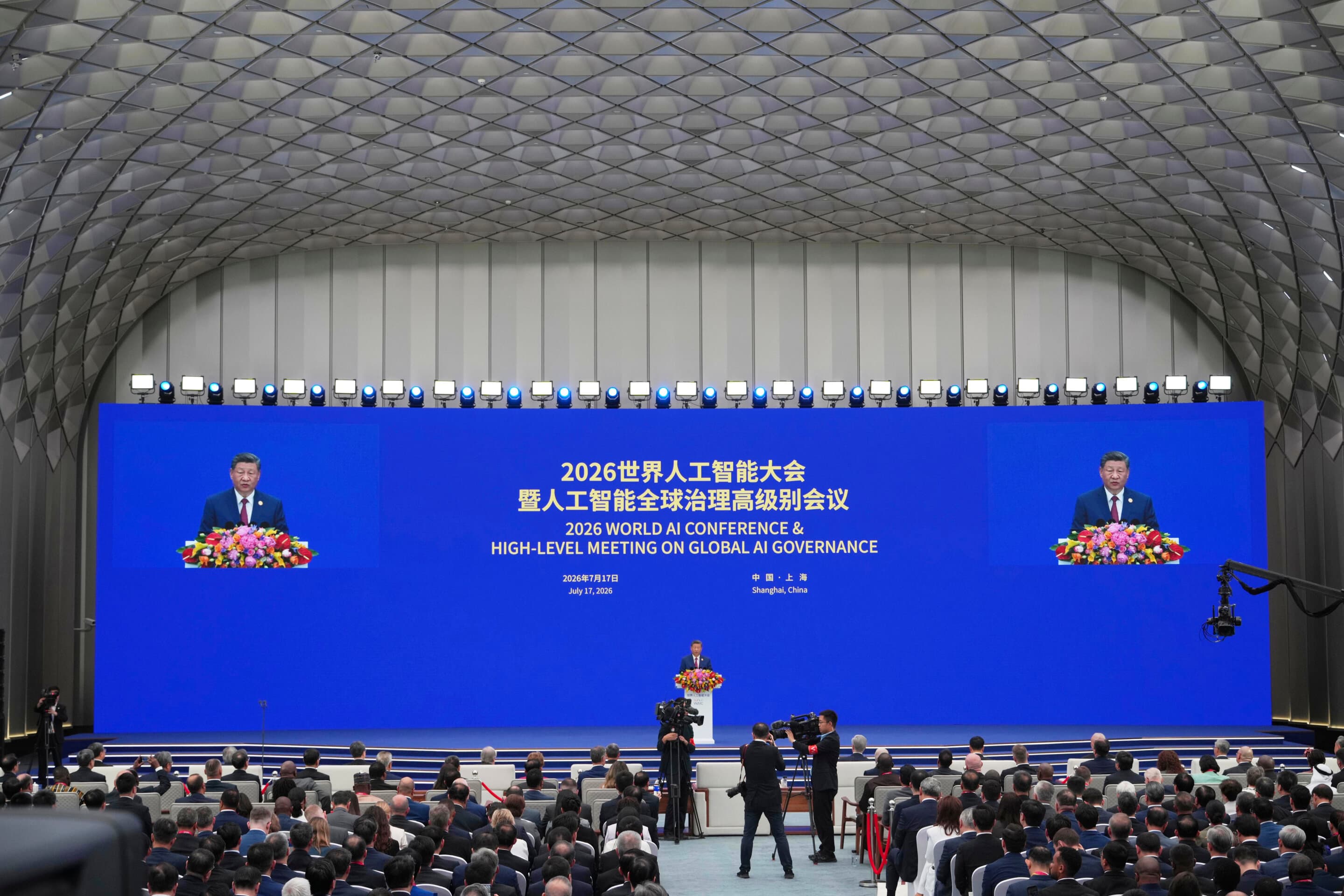
Image: TechXplore
A new AI model from China has caught the U.S. tech industry off guard. Kimi K3, released Friday by Beijing-based startup Moonshot, is already being described as a serious challenger to the best versions of Anthropic’s Claude and OpenAI’s ChatGPT.
Anastasios Angelopoulos, co-founder and CEO of Arena, said the launch could be “the single biggest release of the year” and a sign that open-source Chinese models are moving ahead of closed U.S. models. K3 has already reached the top of Arena’s ranking for front-end coding capability, which measures large language model performance.
“This may be the single biggest release of the year,”
The timing was notable. K3 was unveiled shortly before Chinese President Xi Jinping opened the country’s annual World Artificial Intelligence Conference in Shanghai on Friday, July 17, 2026. At the event, Xi said AI development should be a “symphony of global cooperation” rather than a one-country effort.

Recommended reading
Google rebuilt Pelé’s lost 1959 goal with Veo
China’s progress has accelerated as U.S.-led restrictions have limited access to some of the world’s most advanced technology, pushing Chinese firms to build more of their own stack. During the conference, Huawei showcased its Atlas 950 SuperPoD AI computing system, underlining China’s push for domestic hardware despite import limits affecting companies such as Nvidia. Moonshot has not disclosed what hardware was used to build K3, though it is a Huawei partner.
K3 follows another major Chinese model launch last month from Zhipu, or Z.ai, whose GLM-5.2 is already widely used by software developers who say it performs close to top U.S. models at a lower price. According to a Friday report by Bank of America research analysts, K3 is the most expensive Chinese AI model yet, but still costs half as much as OpenAI’s GPT-5.6 Sol.
Not everyone is convinced the reaction is proportionate. Tech analyst Patrick Moorhead said on social media that the response resembles the panic that followed DeepSeek’s model release in early 2025, calling it an “overreaction shockingly similar” to that episode. He said the shift could help some parts of the AI sector while creating a revenue problem for Anthropic and OpenAI.
The release also revives a major dispute over distillation. U.S. politicians and companies including Anthropic and OpenAI have accused Chinese model makers of using distillation to extract capabilities from American systems, an allegation Beijing has called “groundless.” In February, Anthropic specifically accused DeepSeek, Moonshot, and MiniMax of campaigns to “illicitly extract Claude’s capabilities to improve their own models.” Anthropic has said distillation can be legitimate, but not when rivals use it to gain powerful capabilities far faster and more cheaply than building them independently.
That traffic goes both ways. San Francisco startup Anysphere, which makes the coding tool Cursor, has acknowledged that one of its leading products was based on Moonshot’s K2.5 model. The article also says Elon Musk’s SpaceX is planning to close a deal to buy Cursor for $60 billion later this year.
Moonshot is led by co-founder and CEO Yang Zhilin, who earned his Ph.D. in 2019 at Carnegie Mellon University and was known there for his love of Pink Floyd. His former adviser, Russ Salakhutdinov—also a former director of AI research at Apple—praised the release as a win for the open-source community.

AI Editor
Ava covers the rapidly evolving world of artificial intelligence, from foundational models and research labs to the real-world economics of intelligence. With a background in computational linguistics, she cuts through the hype to find out what actually works. She firmly believes that benchmarks are just marketing until reproduced in the wild.
via TechXplore