• 2 min read
Humanoid T800 robots fought in Shenzhen ring
EngineAI T800 humanoids entered free-fight matches in Shenzhen, with 32 teams competing and one robot left dangling by the neck after a head strike.
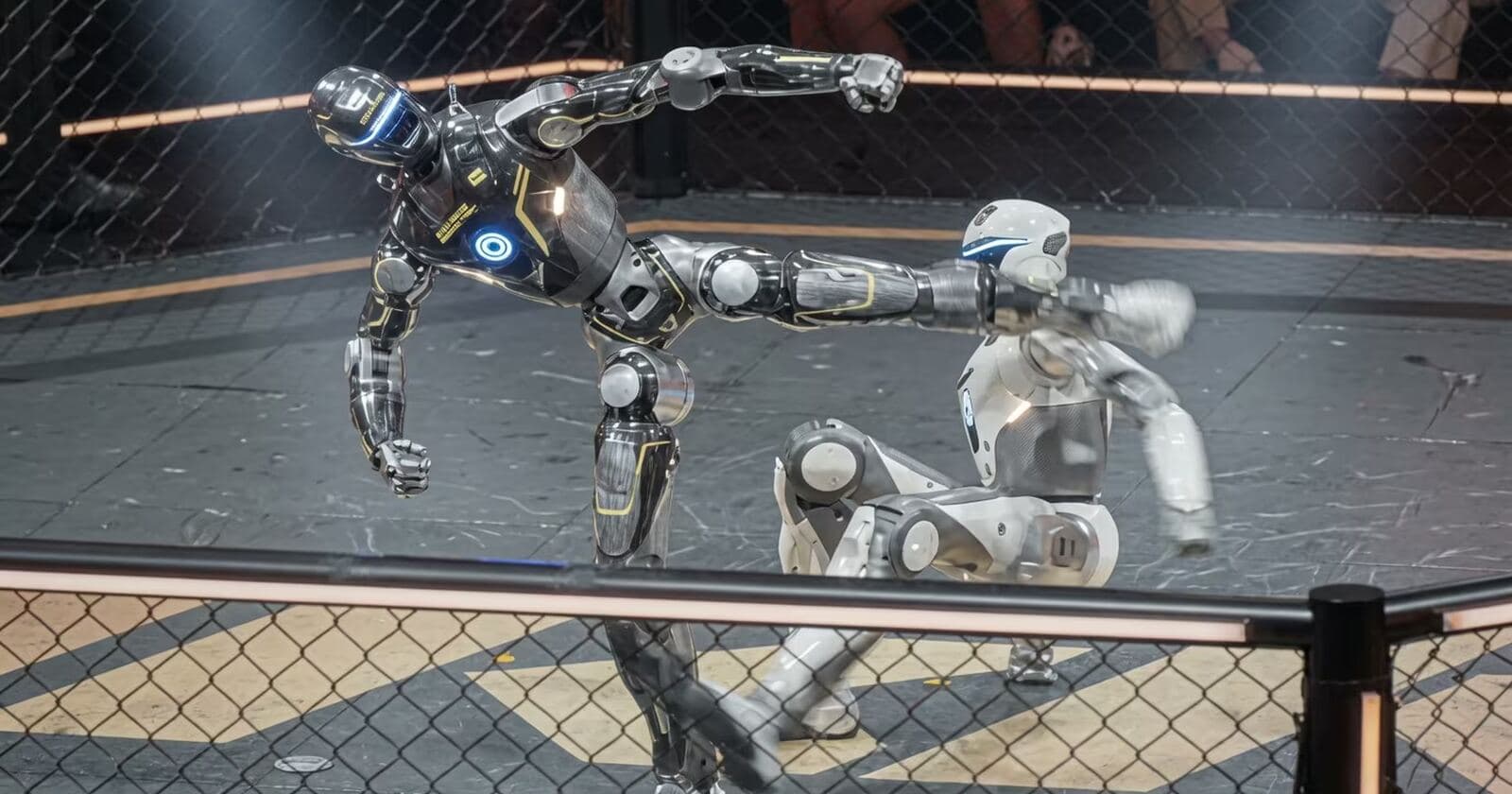
Image: ITzine
A tournament in Shenzhen pushed humanoid robotics further into public stress testing. At Ultimate Robot Knock-out Legend, full-size EngineAI T800 robots entered free-fight matches on a ring for the first time, with 32 teams from different countries taking part.
One of the most striking moments came after a blow to the head: one robot’s “neck” was left literally dangling, but the fight continued. Footage from the event shows the machines throwing uppercuts, attempting spinning strikes, getting back up after falls, and maintaining balance after collisions. In one bout, a robot landed a jumping kick to an opponent’s head.
According to the organizers, the event was not judged on force alone. They were also watching for accuracy, stability, evasion, and how well a machine recovered after making a mistake.
At 1.73 meters tall, the EngineAI T800 already looks less like a stage prop and more like a platform built for repeated physical testing. The article frames the tournament as part of a broader trend in China’s robotics industry, where public demos have moved beyond dancing, running, and boxing into harsher formats designed to test coordination, reaction time, and contact handling under real impact.
The source says these events are becoming part of the competition between Chinese robotics developers. Some companies are building robots for factories and warehouses, others for service tasks—while also trying to show investors that their hardware can do more than walk in a straight line. If these tournaments become established, they could turn into a practical way to compare platforms and push improvements in motion control.

Recommended reading
Google rebuilt Pelé’s lost 1959 goal with Veo

AI Editor
Ava covers the rapidly evolving world of artificial intelligence, from foundational models and research labs to the real-world economics of intelligence. With a background in computational linguistics, she cuts through the hype to find out what actually works. She firmly believes that benchmarks are just marketing until reproduced in the wild.
via ITzine